It’s been a month since my last vegetable garden update, so I thought I’d take you out into the garden today and show you what’s growing!
Fair disclosure – I adore watching other people’s garden tours. I’m sure they make up a good portion of my watch history on Youtube. It’s horribly nosy but there it is. Seeing what everybody is growing, how they organize their space and deal with the inevitable problems that spring up every year; it’s just awesome to be immersed in the gardening community in that way. It only seemed fair that I offer something too!
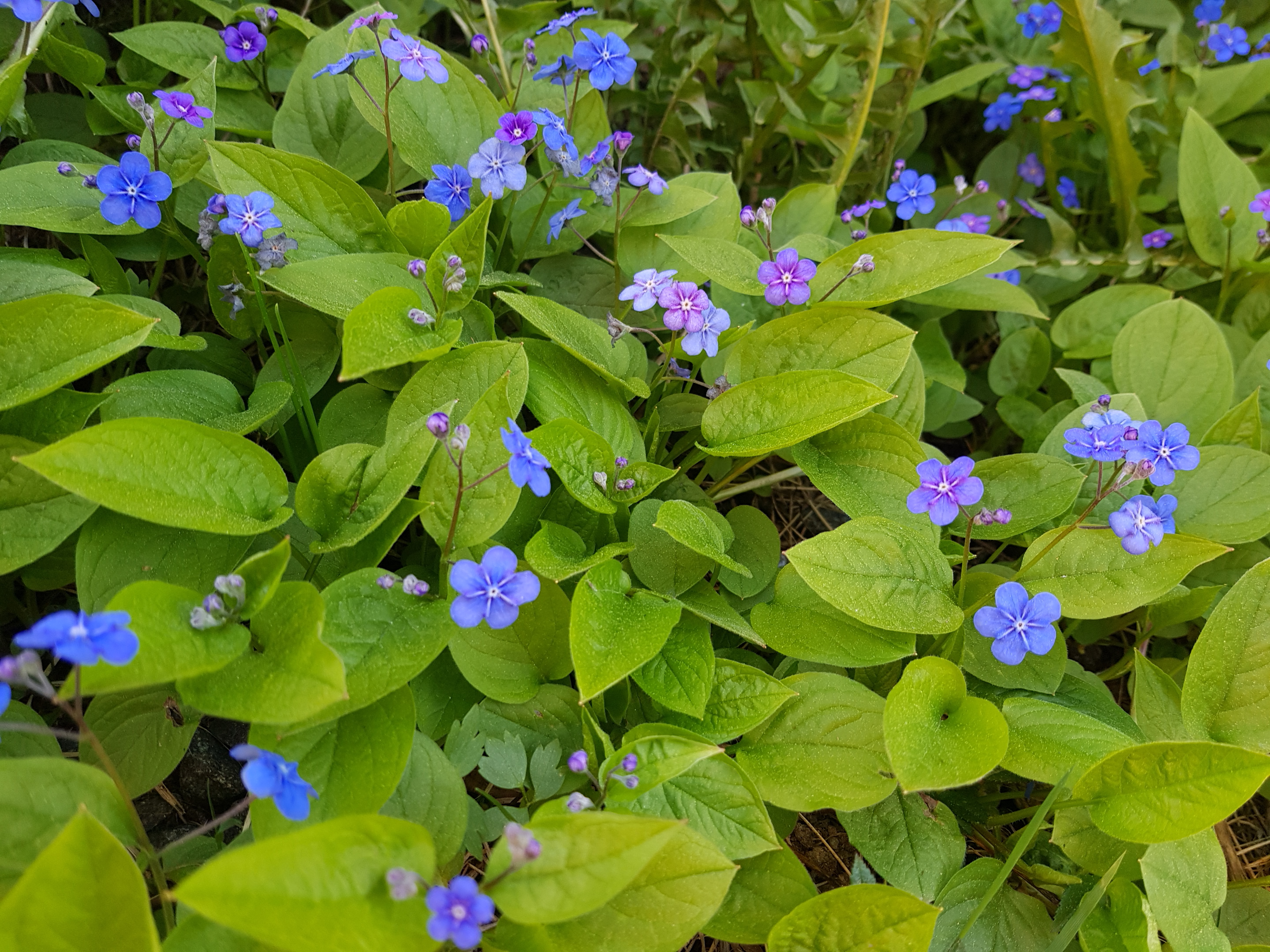
This pretty little groundcover is one of the first things I see in the mornings upon leaving the house, since it carpets the flower bed just next to our front steps. At first, I mistook them for forget-me-nots, but closer inspection showed plenty of differences.
Turns out, they are Omphalodes verna (kevätkaihonkukka), also known as blue-eyed Mary. This patch predates our arrival at the house and comes back reliably in early spring. The bright blue flowers are only about the size of a fingernail each, but they are produced profusely just when some color is needed. Looking back through my albums, I’ve stopped and snapped a picture of them almost every year because it’s always exciting to see flowers again after a long dark winter. Along with the tulips and dicentra, they make the front of the house look very cheerful all spring.
As small plants go, they’re easy to forget once the bustle of the planting season starts. That’s unfair to them, though, because they are a reliable and useful perennial even when not in flower. The light green leaves make a great living mulch to keep the bed moist for the other woodland plants living there. It fills out fast and covers the ground before much else can, making the need for weeding very minimal in that bed.
Final count:
Omphalodes verna – one well-established large patch
I do enjoy spring ephemerals. They’re the sort of things that we could never grow when I lived in California because the springs were never cool enough. During most summers here in Finland, they’ll stick around at least until midsummer.
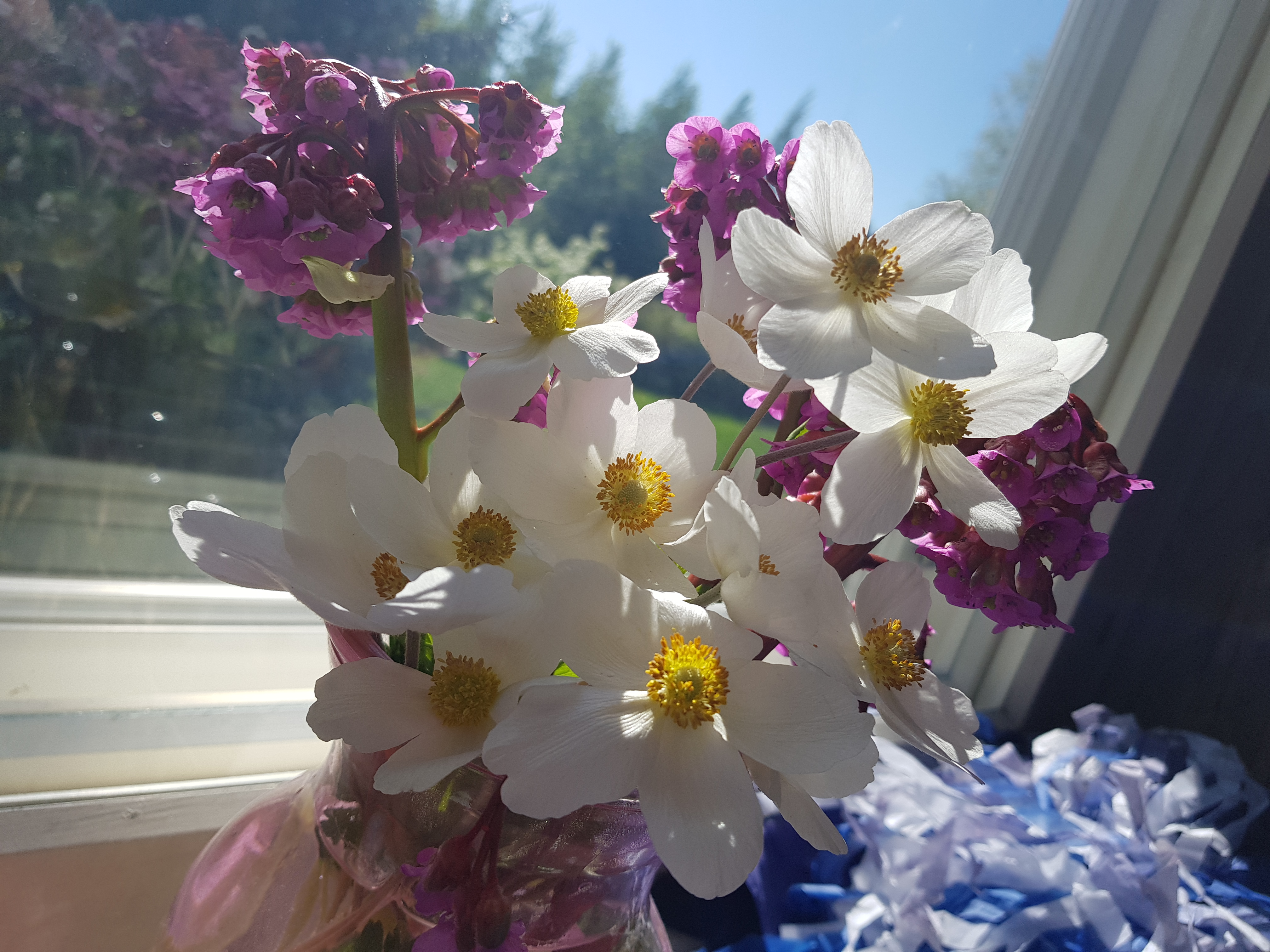
This is Anemone sylvestris (arovuokko), the snowdrop anemone. Not to be confused with the wood anemone, which we also have. This species has larger flowers and is mostly a garden resident. They also have much longer stems than their wild cousins, making them great for little bouquets. They flower so prolifically that I don’t feel at all guilty about grabbing a handful to keep inside.
Our little patch was planted by the previous owners, but I didn’t discover it until a few years ago because it grew on the side of the property that always gets a bit overgrown and difficult to manage. Once I do get that bit of the garden cleaned up, I’d like to put in a few other varieties of anemones for contrast. A whole pastel rainbow of them every spring would be gorgeous.
Final count:
Anemone sylvestris – one small but progressively growing patch
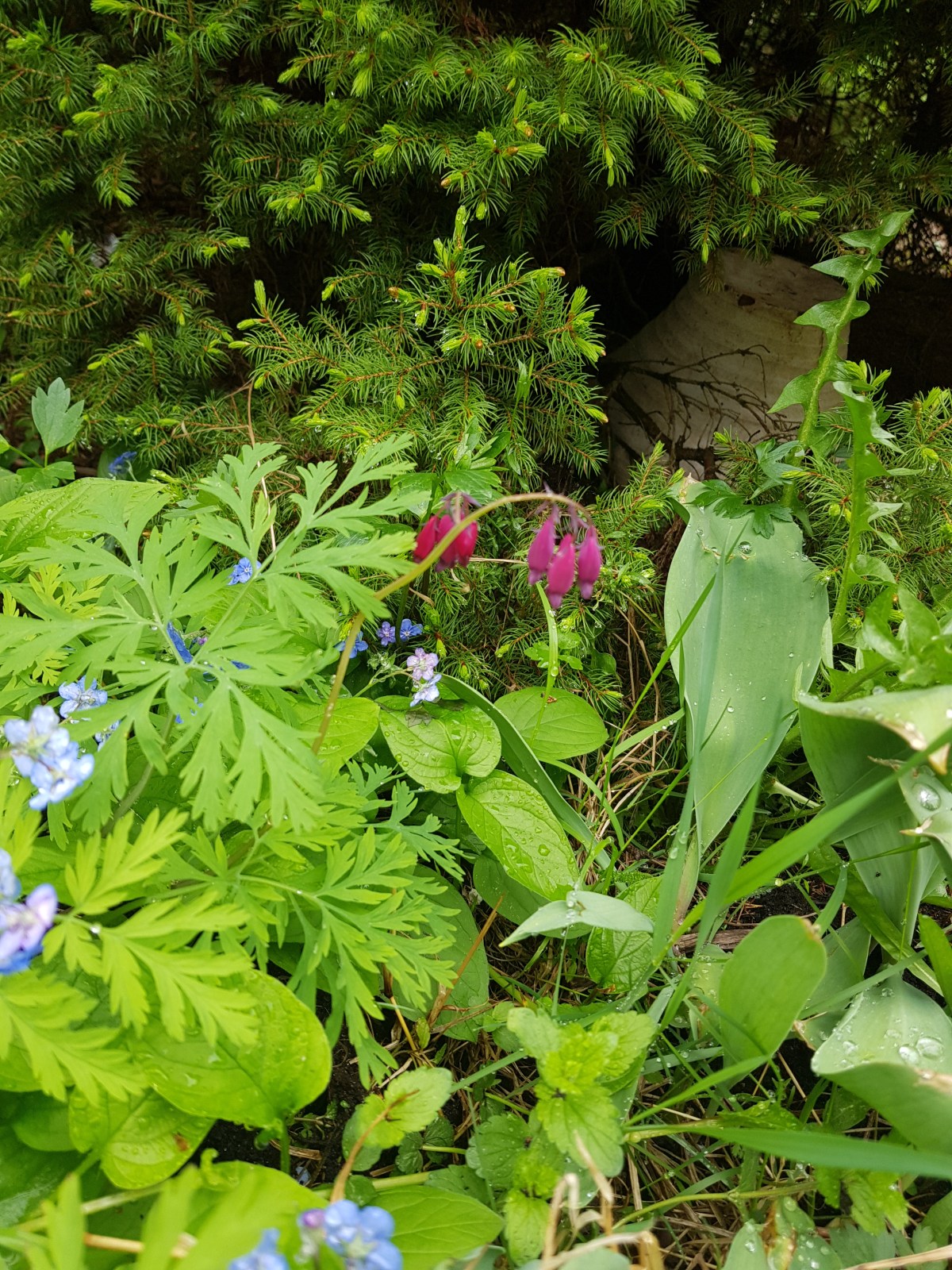
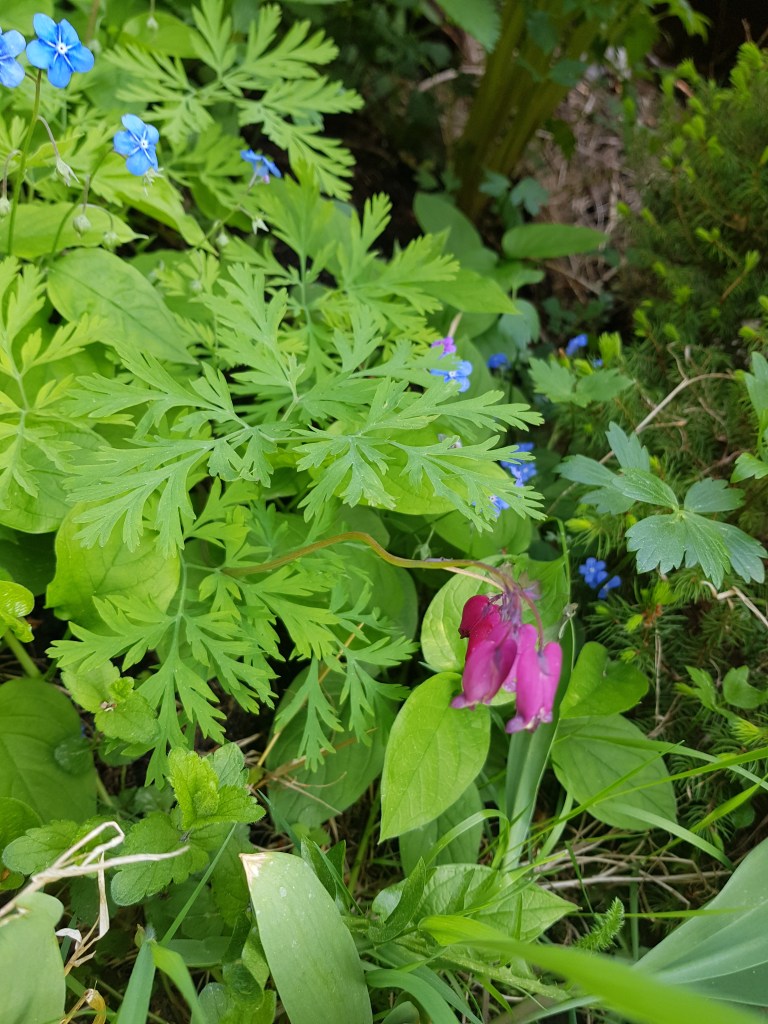
This is my first Dicentra formosa (purppurapikkusydän), the fern-leaf bleeding heart, variety ‘Luxuriant’. It came in the same order last spring as my white spectabilis and seems to be slower to start growing. However, it was also accidentally covered by garden equipment for half the season last year so didn’t have the most ideal start. Let’s see how it fares in 2023.
One side note — I am so glad that I let this bed get a little weedy because the fern-like leaves on this plant look similar to some common weeds. They might very well have been accidentally plucked out if I had gone in there more aggressively.
Now that I know it’s actively growing, I’ll have to clear some space to give it more breathing room. It’s got three flower stalks already and this species is supposed to have a longer flowering season than spectabilis. Hopefully, more will develop as the weather warms up.
Final count:
Dicentra formosa ‘Luxuriant’ – 1
**I have my eye on a white variant of this, which is available from a nursery within a reasonable driving distance, so this space might be updated soon!**
A few days ago, I stumbled upon a much more established Finnish garden at Vanha Talo Suomi and was especially impressed with her neatly organized specimen list. At last count, I have four different spreadsheets and three apps around to keep track of things, and somehow manage to not efficiently update any of them. This seems like a much more tidy solution, especially since I can add to it slowly and amass information about each plant in one place.
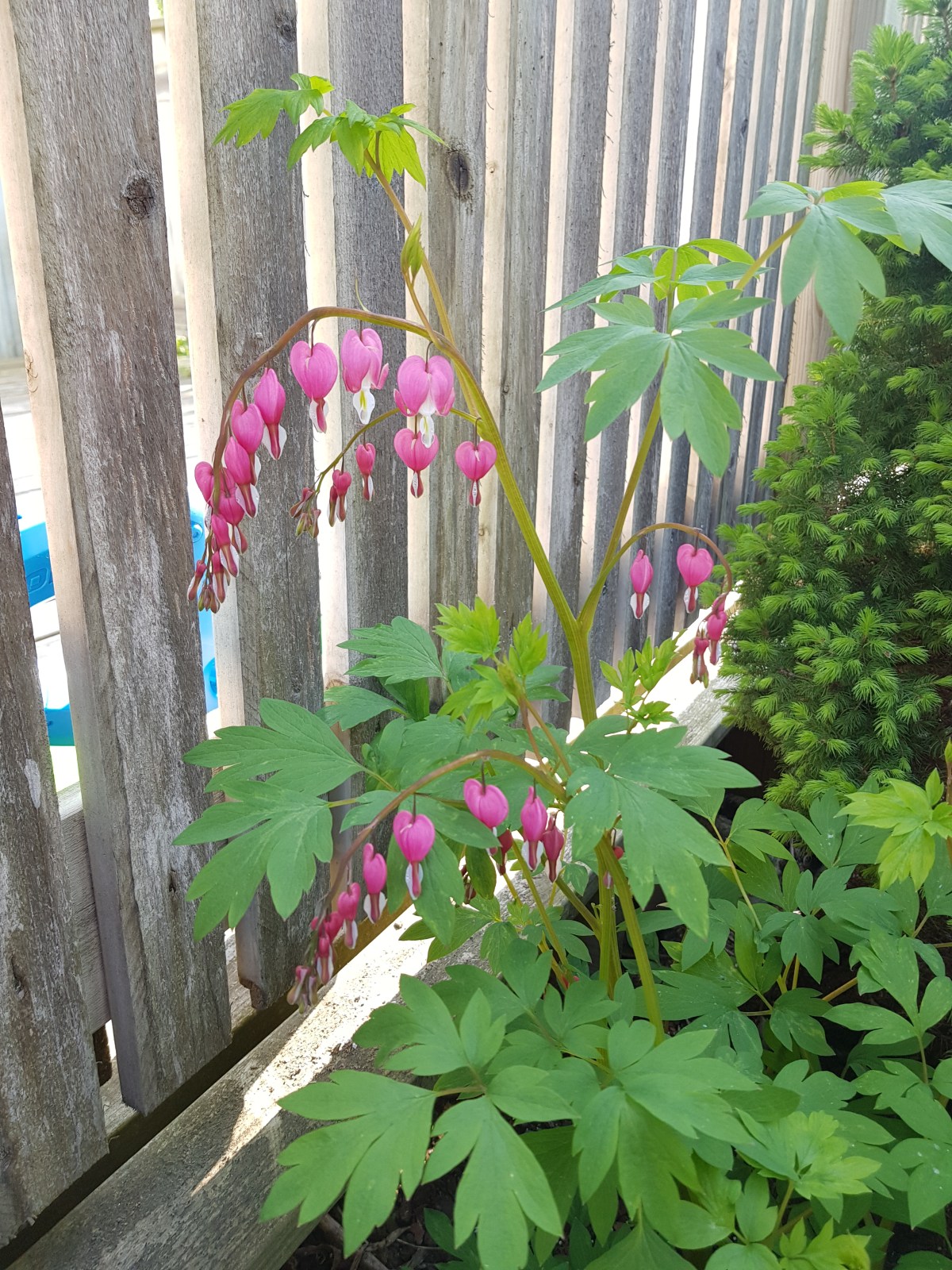
I’m starting with Dicentra spectabilis, the bleeding heart (särkynytsydän), because it was one of the first perennials that I was set on planting. Not long after moving here, we visited some family friends at their rambling old Victorian house. Their garden had truly huge specimens that reached chest height and were stunning to see in full flower. I immediately wanted some for our house as well… then forgot about it for several years.
In mid-May 2020, I finally got around to visiting the local nursery and picking up these two little guys. They grew a bit and then disappeared in the autumn, exactly like they’re supposed to. At that point, I sort of forgot about them again.
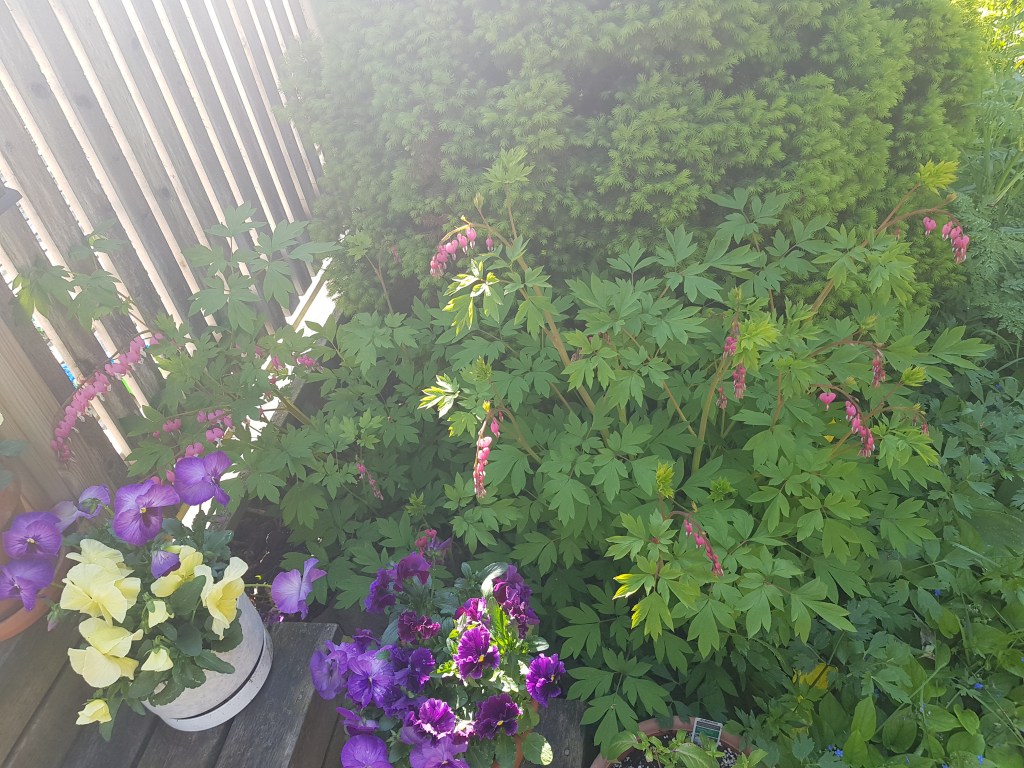
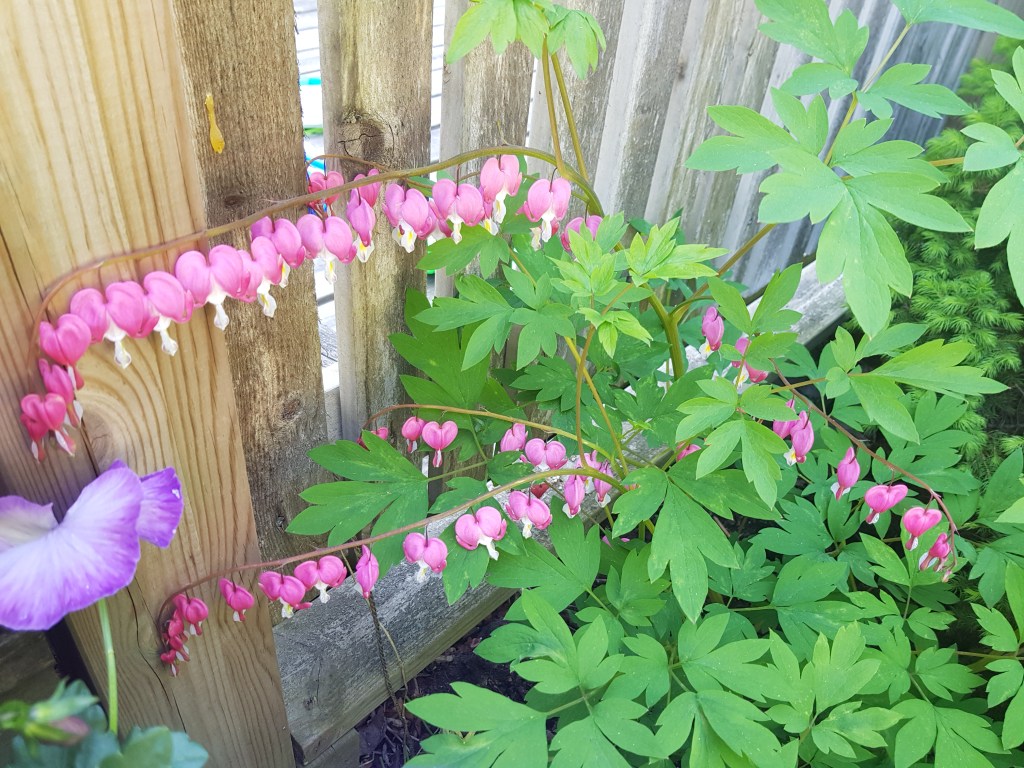
Then the next spring, in 2021, having no idea when they would pop out of the ground, I started fretting and bought another plant. Just in case. That ended up going in right behind one of the previous ones. Which then emerged a week later and rapidly grew to triple its size from the year before. That’s the older one in front, in the picture on the right. The newer one is closer to the fence and looks very dwarfed.
Now, you’d think I would’ve calmed down by the next year. Instead, I decided that I needed the white-flowered variant (Dicentra spectabilis ‘Alba’) and ordered it online. It went right in front of the older plant on the other side.
This spring, the biggest plant (now in its fourth year) has 9 flower stalks, the one behind it (3rd year) has 8, the one squished between the trees (4th year) has only 5, and the Alba (2nd year) has 4. If the latter two don’t catch up next year, I will consider moving one to give them more space.
These are the first stalks of green garlic I have ever picked. Up until last year, I didn’t even know such an option existed. Everyone knows about the dried bulbs, sure. I also knew that I’d have a bumper crop of garlic scapes later this year since our climate is most suited to hardneck varieties. Picking garlic while it was still immature, though? I never made that connection despite almost always having green onions on hand in the kitchen. Thankfully, gardening videos on Youtube quickly set me right.
Green garlic is easier to grow because you don’t have to deal with the pulling, drying, and peeling process that comes with whole garlic bulbs. I’d already started a perennial hardneck garlic bed last year, so it was as simple as picking the stalks that would be most helpful in thinning out the patch. Most of the bulbs that had reached maturity last year sprouted as clumps of greens this year, so I picked a few that were about pencil-thickness to use for dinner. It’s instant gratification in garlic form.
They look so much like green onions but have that distinct garlicky aroma. They’re as easy to handle as green onions, too — other than peeling off the outer leaf for cleaning purposes, all I did was cut up both the white and green parts thinly using a pair of scissors, right over the pan. Also, they’re an awesome two-for-one deal that can be substituted in recipes that usually would require spring onions and garlic. Recipes such as the shrimp fried rice in which these particular ones got used.
It turned out really tasty. Green garlic has a more gentle flavor and if I were making this for only myself I would have probably used more of it. I don’t think I’ll be using garlic any other way until I have no choice in the dead of winter.
Has anyone else out there been harvesting green garlic? I’d love a recipe that features it more.
For the past few years, I have been looking forward to the end of May because it means… jelly-making time! We’ve always observed an unofficial sort of No-Mow May, if only because things don’t really dry out and start growing until June anyway. Even the weeds take a while to get going this far north, so there doesn’t seem to be any point in fueling up the mower. Meanwhile, our lawn got a lot of impatient glares as I kept peeking out to see if there were enough fluffy yellow blooms yet to warrant getting out of my jam jars.
And finally, at the end of last week, there they were! Which was good, because our supply from last year was just about depleted. Out of all the flower jellies I have experimented with, dandelion was the only one that leaped to “be sure to make enough to last for the year” status. It tastes like honey, but in a scoopable jiggly format, which makes it especially kid-friendly.
There are tons of recipes online for making floral jelly, so I’m not going to format one here. My food blog days are far behind me and this is mostly a diary to share with family and friends. Also, I use a mishmash of US and EU measurements that I’m sure will annoy people on both sides of the Atlantic.
Right! I make my infusions in 1.8L IKEA jars because we have so many of them around for storing dry goods. Each one gets 4-4.5 cups of dandelion petals. I think one of the best parts of making this jelly is sitting in a patch of flowers on a sunny day, lazily plucking petals and listening to audiobooks.
Once the jar is full, it’s filled with boiling water and steeped for 24 hours. It gets moved to the fridge after it cools down a bit. Actual cooking process, speed run: 8 cups infusion, 1.5 teaspoons citric acid, 35g pectin powder, and 7 cups sugar. With bulk pectin powder, I find it easier to mix half the sugar and all the pectin in a shaker, then slowly stir it into the warm infusion. Everything dissolves so much easier that way. When the liquid is looking smooth, turn the heat up and stir in the rest of the sugar, then let it boil for one minute. Meanwhile, the hot water canner is warming up the jars and the lids, which are then pulled out just in time to be filled with jelly. They are processed for 10 minutes, then tucked away in the root cellar to set and store.
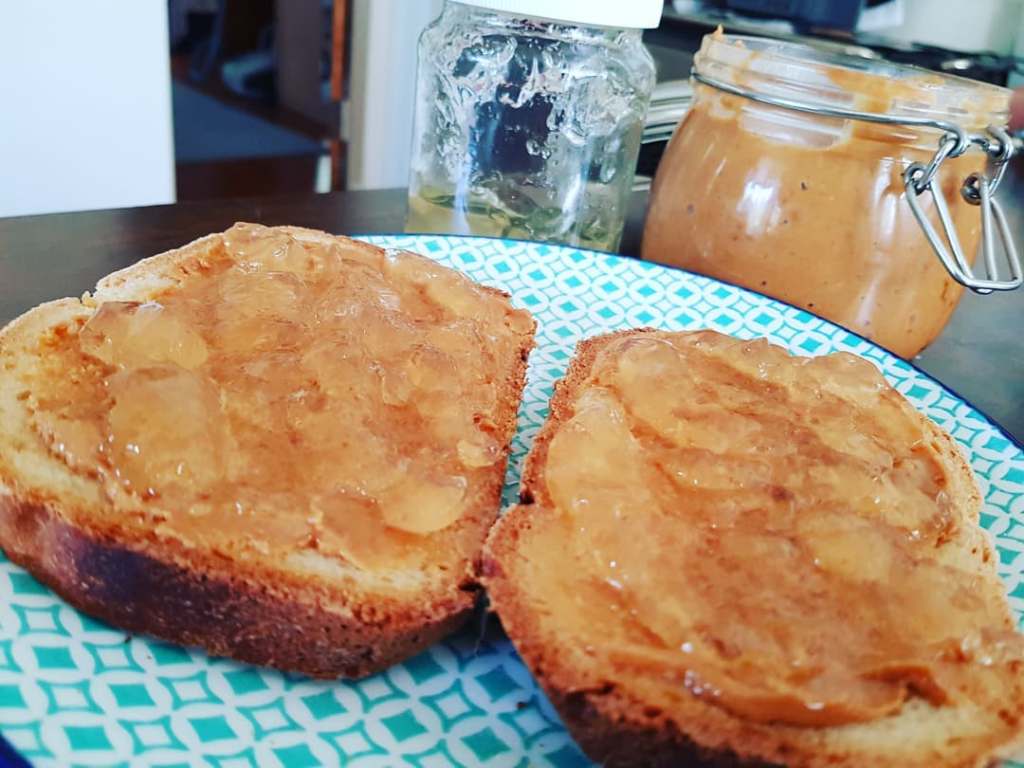
What do we use all that jelly for? Sandwiches, mostly. I also like it in porridge and yogurt. The picture above is of homemade peanut butter and dandelion jelly sandwiches from a couple of summers ago. Which reminds me, I really should be make more bread this summer…
That’s a bowl of baby spinach, about 6 cups worth. You can see there’s a lot more in the bed and I will be trying to use up as much of it as possible. Yes, partly because I love spinach and am thrilled that I can now get it fresh from the garden. Sadly, also because it’s starting to bolt already, despite the plants being tiny.
Google says this might have something to do with the days being too long (summer here is also midnight sun season), despite temperatures being perfect. Also, I suspect that I seeded a little too heavily (I was using up old seed packets) so they were starting to feel crowded and stressed. Add to that the fact that it’s been an unseasonably dry and warmish spring. Whatever the case was, some of my spinach plants had barely grown their first true leaves before starting to send out flower shoots, which was probably the earliest I’ve ever seen that happen.
Usually, with our mild humid summers, spinach is something that I can succession sow throughout the entire season and then forget about until it’s time to figure out how to fit it all in the freezer. With the changing climate, though, I might have to start finding shadier patches of the garden for my salad crops.
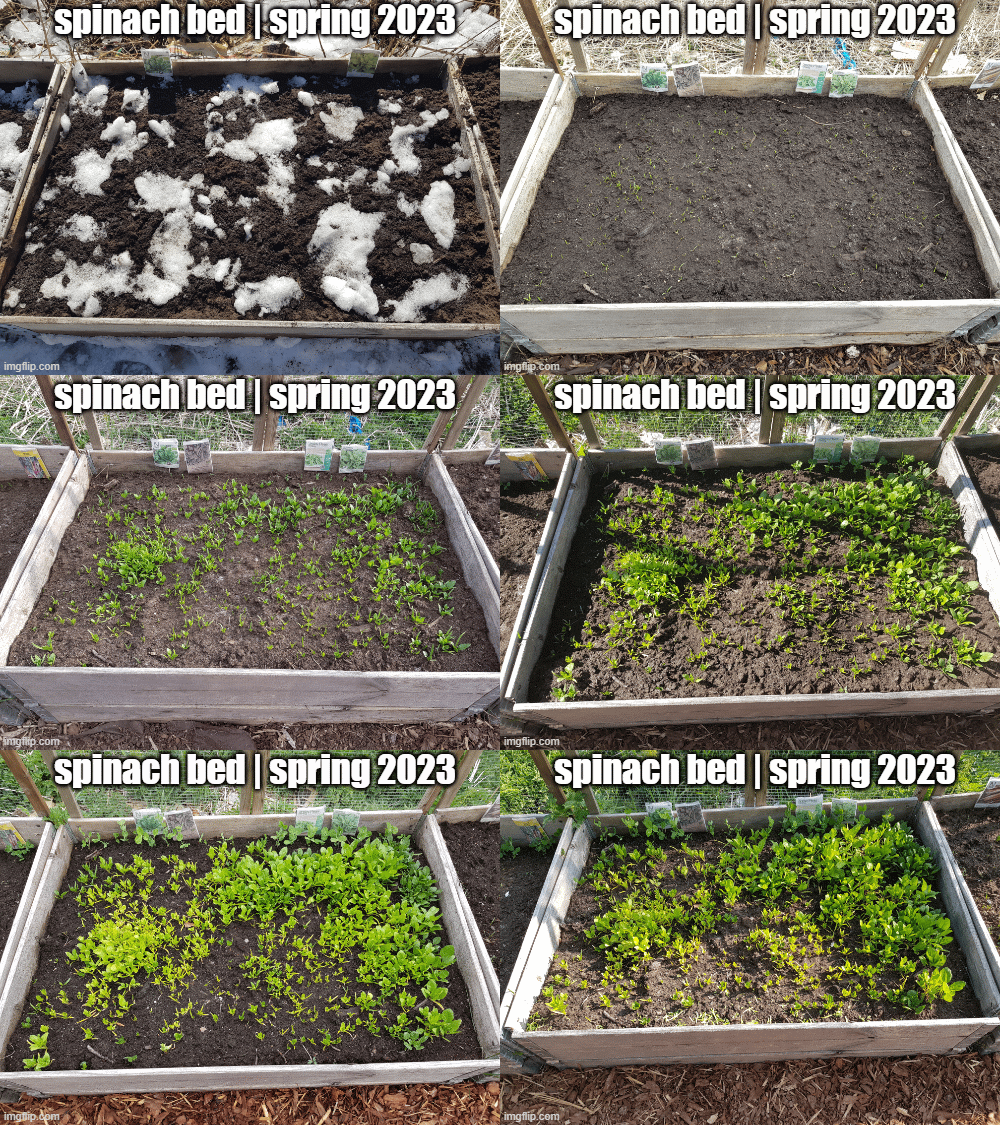
Enough about what went wrong — there’s another part to this story that I’m happier about: I winter sowed the spinach bed this year instead of waiting for spring to come! While the first week of April is technically spring, the ground here is frozen and snowy still; our last frost date is usually not until mid to late May at best. This blog and video from Sara Bäckmo in Sweden inspired me to try sowing on top of that snow anyway and it turned out great.
I covered one of my autumn-prepared raised beds with a layer of compost, sprinkled the seeds on, covered them lightly with more compost, then chucked a layer of snow over the top and let it be. They germinated a couple of weeks later and I had leaves that were ready for picking by the second half of May! I must emphasize that a large portion of people in my area are just starting their gardens at that point, so this is pretty exciting stuff. If anything, I’m tempted to start a bit earlier next year and see how far the timing can be pushed.
This is what I made with the first batch of spinach. It’s Delish’s Tuscan Chicken Pasta and I suspect my kid picked it mainly because of the bacon. However, everybody got a bit of fresh homegrown spinach into them that evening, so I’ll take that as a win.












 Little Blue and White House