
For the past few years, I have been looking forward to the end of May because it means… jelly-making time! We’ve always observed an unofficial sort of No-Mow May, if only because things don’t really dry out and start growing until June anyway. Even the weeds take a while to get going this far north, so there doesn’t seem to be any point in fueling up the mower. Meanwhile, our lawn got a lot of impatient glares as I kept peeking out to see if there were enough fluffy yellow blooms yet to warrant getting out of my jam jars.

And finally, at the end of last week, there they were! Which was good, because our supply from last year was just about depleted. Out of all the flower jellies I have experimented with, dandelion was the only one that leaped to “be sure to make enough to last for the year” status. It tastes like honey, but in a scoopable jiggly format, which makes it especially kid-friendly.


There are tons of recipes online for making floral jelly, so I’m not going to format one here. My food blog days are far behind me and this is mostly a diary to share with family and friends. Also, I use a mishmash of US and EU measurements that I’m sure will annoy people on both sides of the Atlantic.
Right! I make my infusions in 1.8L IKEA jars because we have so many of them around for storing dry goods. Each one gets 4-4.5 cups of dandelion petals. I think one of the best parts of making this jelly is sitting in a patch of flowers on a sunny day, lazily plucking petals and listening to audiobooks.
Once the jar is full, it’s filled with boiling water and steeped for 24 hours. It gets moved to the fridge after it cools down a bit. Actual cooking process, speed run: 8 cups infusion, 1.5 teaspoons citric acid, 35g pectin powder, and 7 cups sugar. With bulk pectin powder, I find it easier to mix half the sugar and all the pectin in a shaker, then slowly stir it into the warm infusion. Everything dissolves so much easier that way. When the liquid is looking smooth, turn the heat up and stir in the rest of the sugar, then let it boil for one minute. Meanwhile, the hot water canner is warming up the jars and the lids, which are then pulled out just in time to be filled with jelly. They are processed for 10 minutes, then tucked away in the root cellar to set and store.
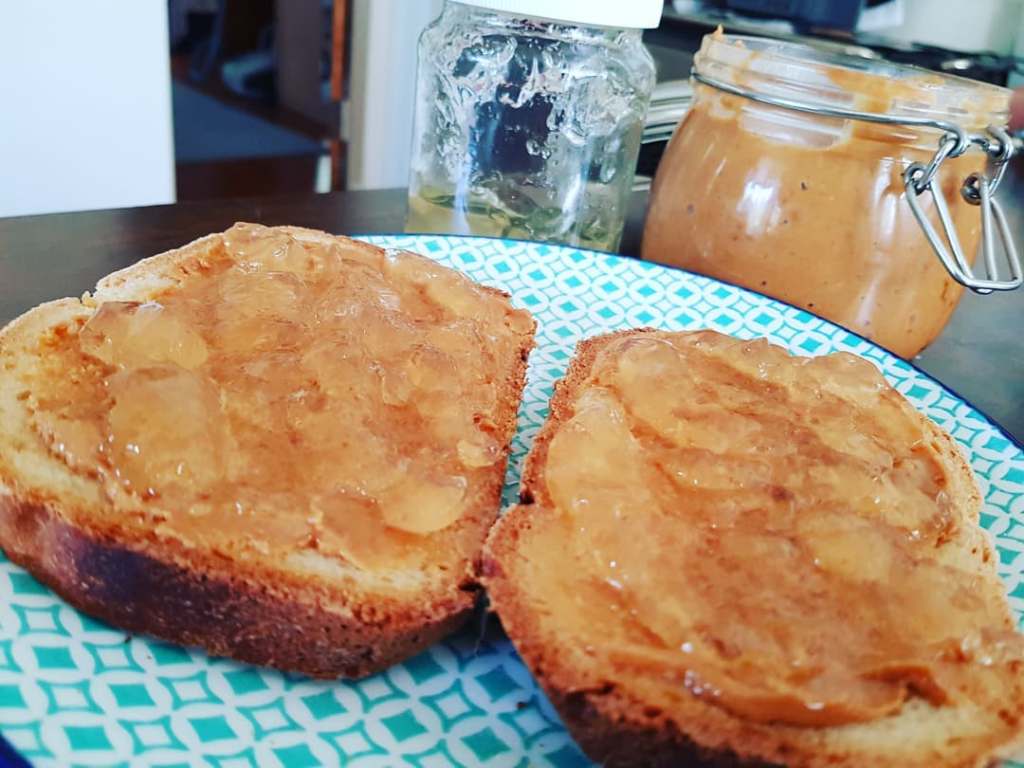
What do we use all that jelly for? Sandwiches, mostly. I also like it in porridge and yogurt. The picture above is of homemade peanut butter and dandelion jelly sandwiches from a couple of summers ago. Which reminds me, I really should be make more bread this summer…
 Little Blue and White House