
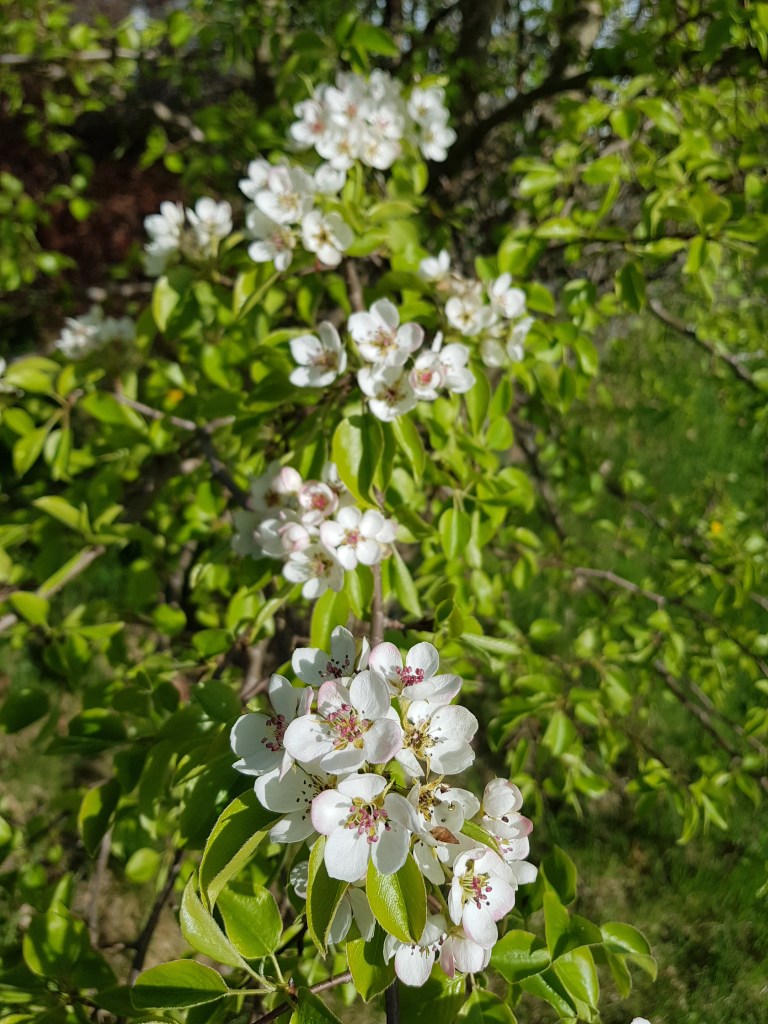

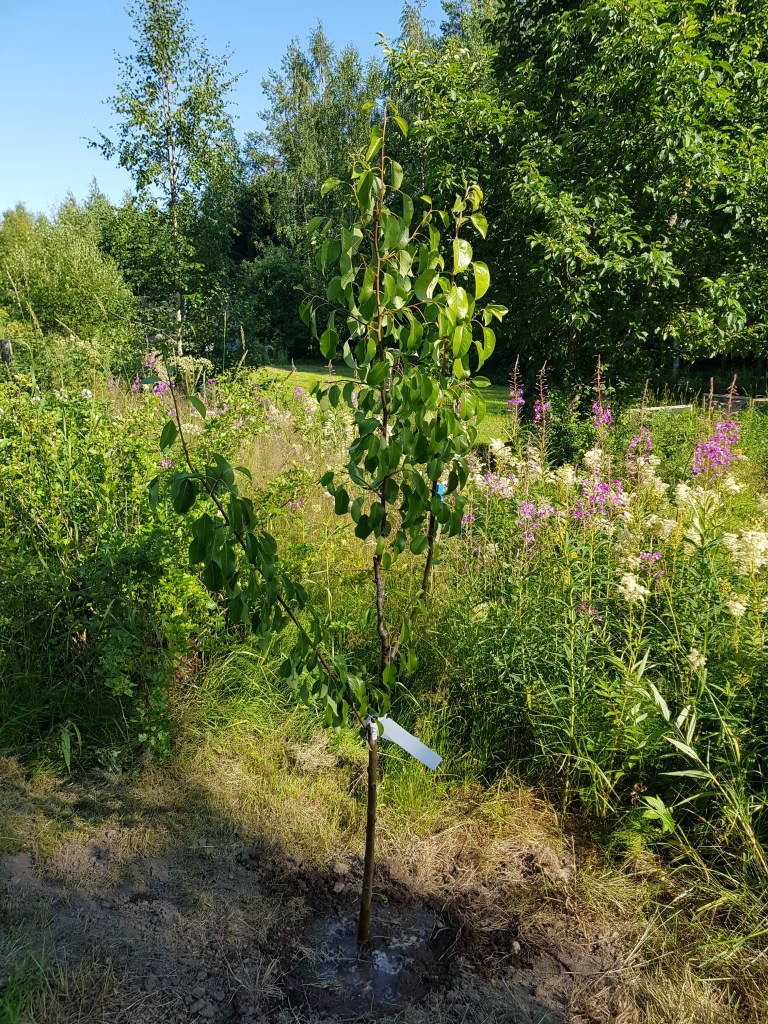
Pyrus communis ‘Pepi’ (päärynä) is a pear tree originally bred in Estonia, so it does great in our cold winters. The fruits are abundant and ready to harvest pretty early for a pear — usually in early September. I’ve read that this is a smaller variety and that pear trees grow slowly, to begin with, both facts which seem to be pretty well-represented here. It is the only tree I don’t have to harvest with a ladder, giving it a special place in my heart.
Unlike the other fruit trees that came with the house, this one is relatively young, having only been planted a few years before we moved in. That still makes it well over a decade old, however, and it has grown remarkably little in that time. Besides being cold-hardy, Pepi has also been super healthy, never having any foliar or insect problems. There was originally another garden pear planted with it, for cross-pollination, but that one died early on and a wild pear has grown from the rootstock to replace it. (That’s the giant green tree directly behind Pepi in the first picture, if you’re wondering).
I also planted a “family” pear this summer, which grows three different varieties on different branches. One of those branches grows ‘Pepi’. That’s the sapling in the last picture. It has not fruited yet, so we will see how that turns out in the following years.
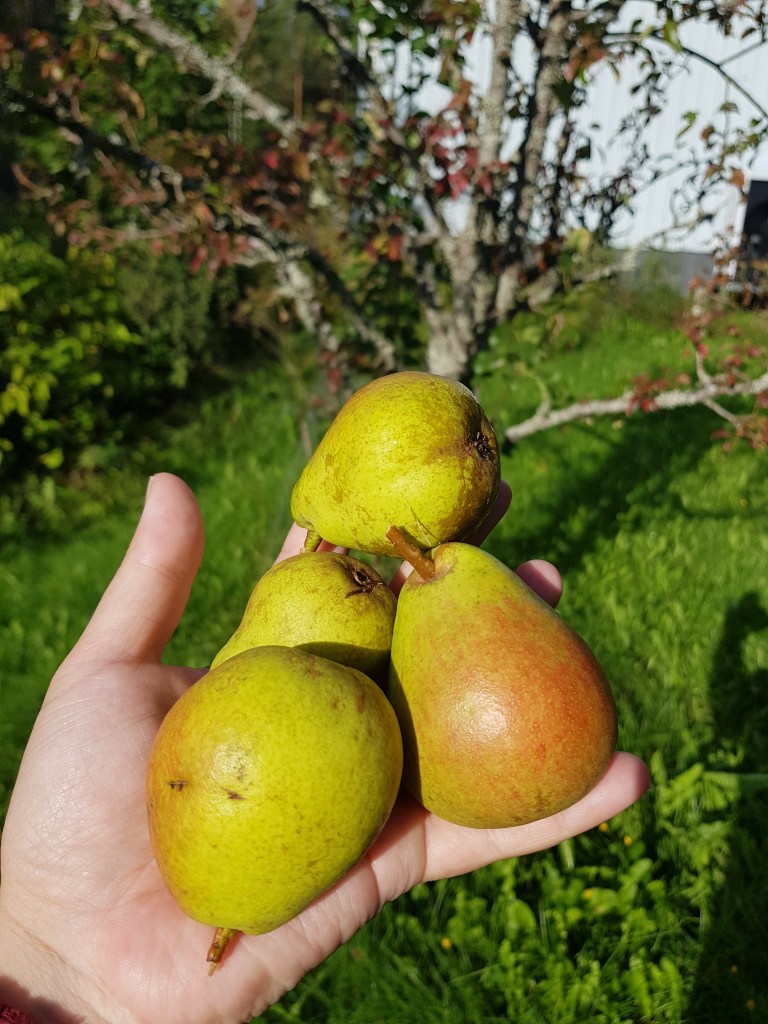

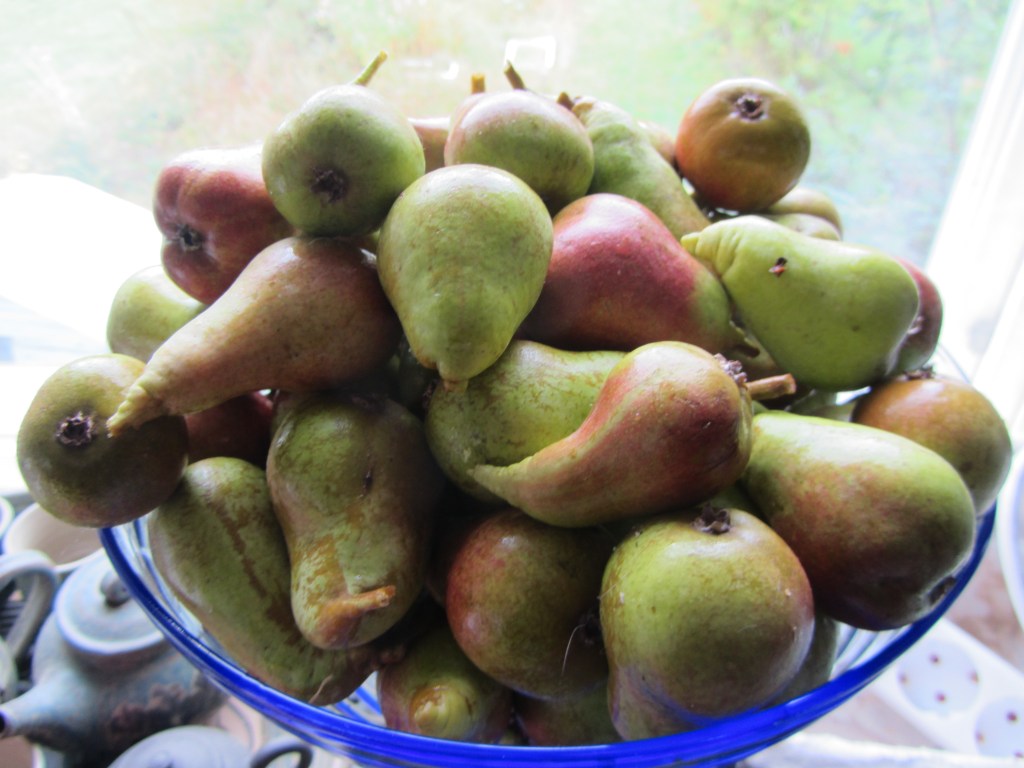
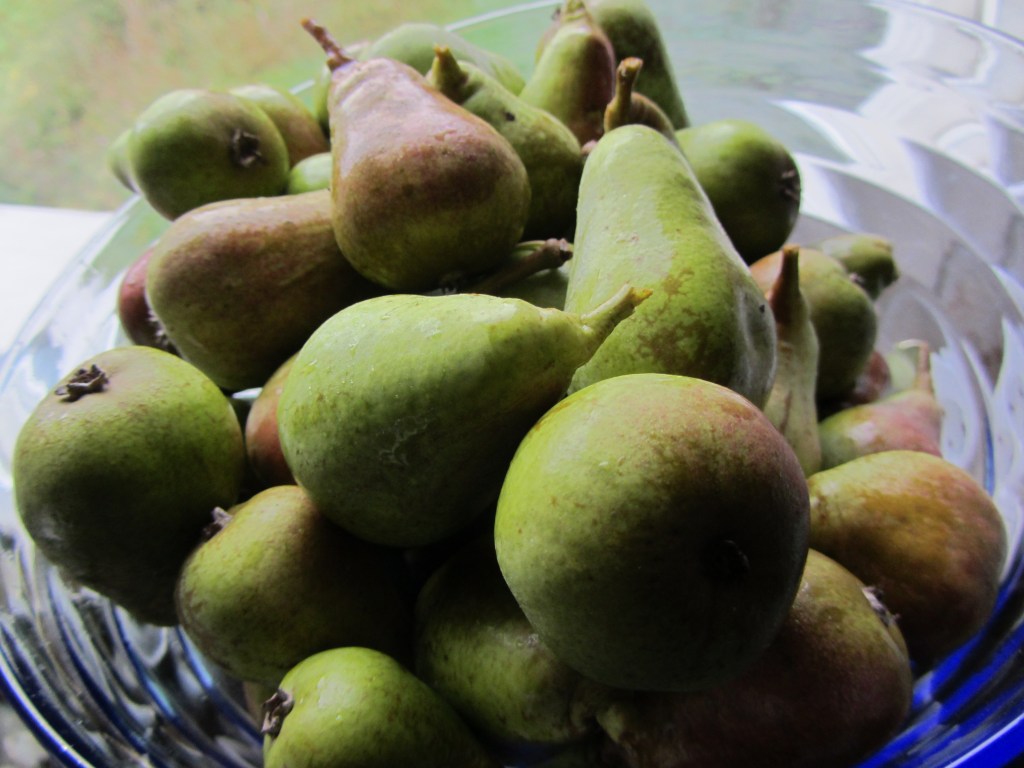

The pears from this tree are sweet and soft… when they are picked on time and ripen successfully. My timing is still a little hit or miss in this regard. In theory, you’re supposed to start tasting them in late August and pick them when they’re sweet and start to get a blush. In practice, most times I’ve run out with a bucket when the first few are falling off the tree. Most of them are good at that point, but there will be several that are a bit overripe and have started turning brown in the middle. Ick.
This year, we ended up with only a few large fruits, due to the double whammy of our pruning the tree last year and wonky pollination issues from this year’s dry spring. Thus, I ended up with a handful of large fruit that I picked too late to be very tasty.
When you do get to them on time, though, Pepi pears are best for fresh eating. They are quite sweet and smooth, though I can’t say I’ve tasted enough different pears to be able to differentiate flavors. I’ve also juiced these in the past and preserved them as canned pear sauce.
Final count:
- Pyrus communis ‘Pepi’ – 1 smallish tree and 1 branch of a multi-variety tree
 Little Blue and White House