Garden Inventory | Paeonia lactiflora ‘Garden Lace’

One more peony before we go back to the older stuff! This young lactiflora was planted in autumn 2022 and shot up really fast in the spring. It produced two huge buds in its first spring, which makes me hopeful for what it will do in the future.

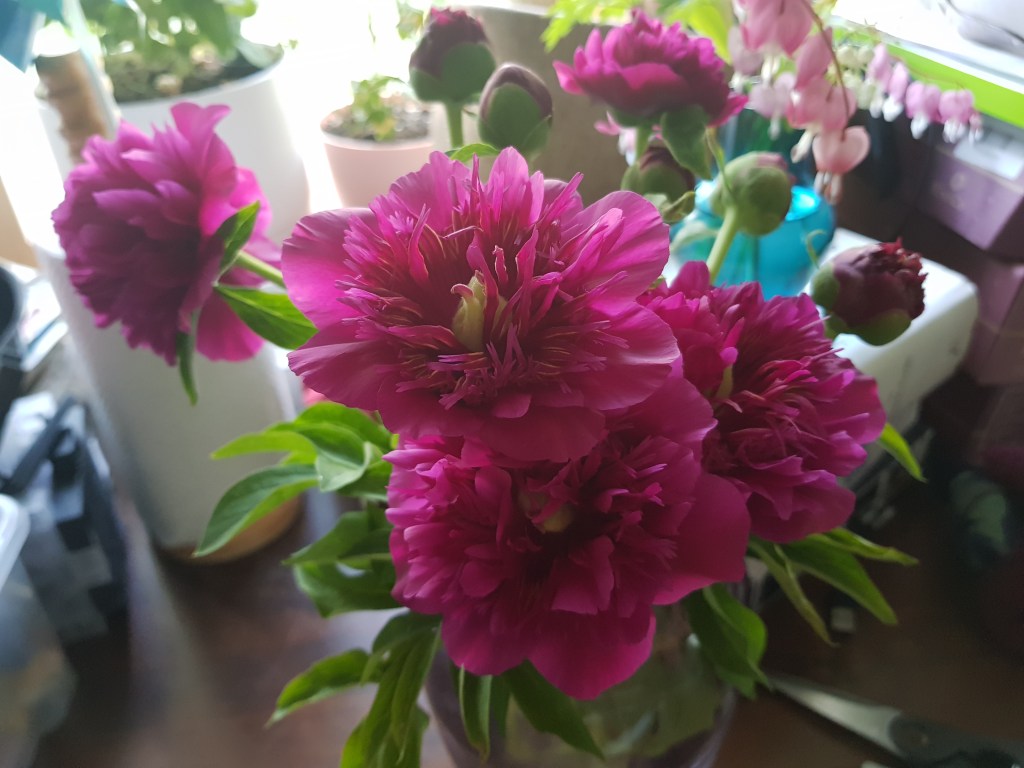
Paeonia lactiflora ‘Garden Lace’ (lactiflora = kiinanpioni) opened just a day or two after ‘Sarah Bernhardt’. It has a Japanese anemone-type flower, which makes it stand out amongst my collection of frilly doubles. Sadly, I didn’t get a picture of the flower while on the plant because I was running around doing emergency thunderstorm cutting. Since this was the first year this plant flowered, I wasn’t certain how it would cope with rain and thought I’d err on the side of caution. I will leave some on the plant next year and see if they really do stand up to water as well as Google is telling me.

Not much in the way of observations yet, since it’s early days, but look at the size of those flowers! Each one was nearly the size of my fully opened hand. I first arranged them in the vase when they were still in bud and kept on having to shift everything around to make more room as they unfurled. The little yellow pom-pom in the middle is just too cute. It’s super fragrant, too!

Final count:

  • Paeonia lactiflora ‘Garden Lace’ – 1

Garden Inventory | Paeonia herbaceous hybrid ‘Lemon Chiffon’
I’m taking a break from cataloguing the older plants today because I wanted to share one of my favorite debuts this season. This peony was planted out late summer/early autumn of last year and you can see what it looked like in the slideshow below. All I ever saw of it were two tiny leaf stalks, while the other three varieties I planted at the same time produced several shoots. It was a bit disconcerting.

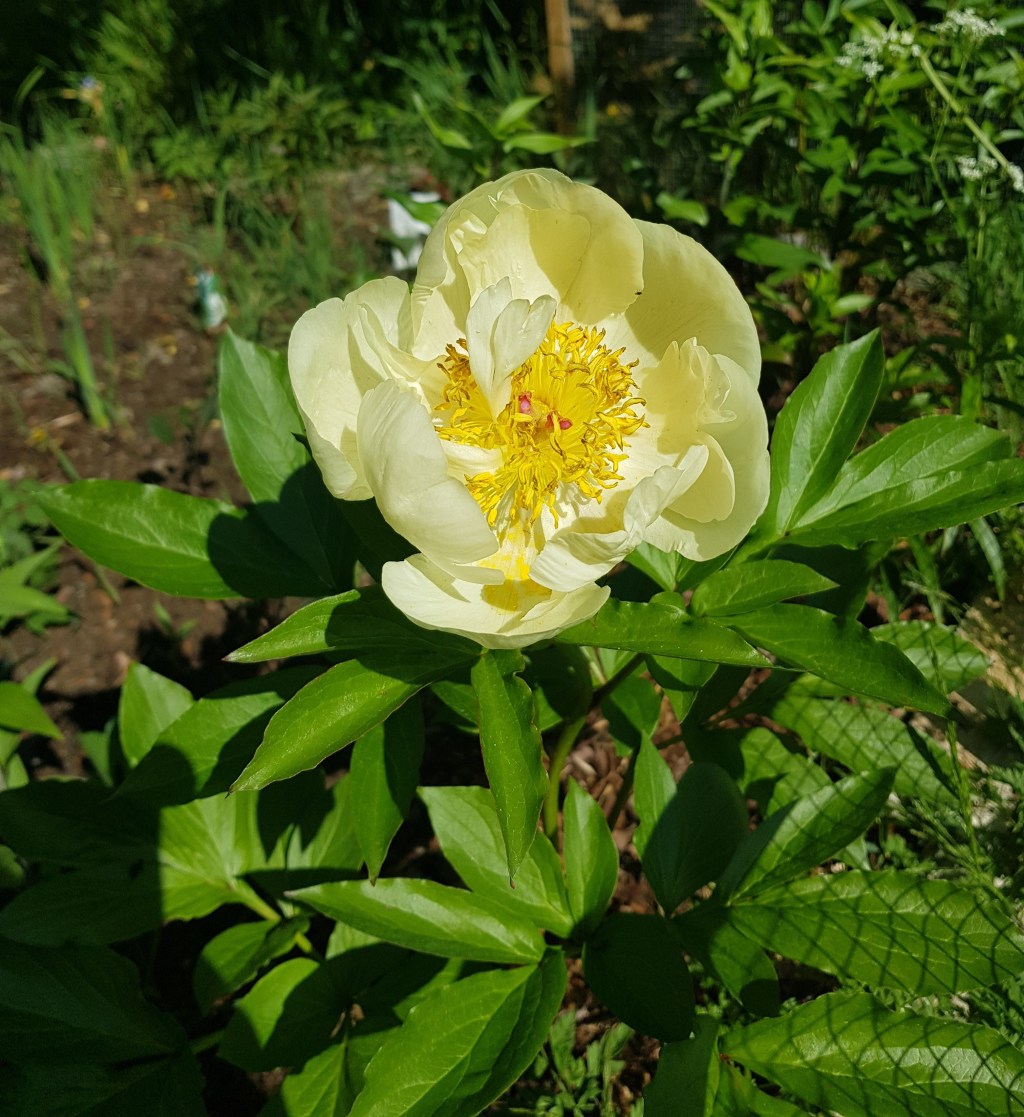
What I found out this year was that although I wasn’t seeing much happening above ground, Paeonia herbaceous hybrid ‘Lemon Chiffon’ was industriously building its root system below. This spring, it once again produced just one large stem but it easily outdistanced all its neighbors in height and leaf size. Although it’s labeled as a lactiflora hybrid, I suspect there must be a tree peony somewhere in its lineage. It also produced a very large and very fragrant creamy yellow bloom — the first peony in the cutting garden to do so. There’s just something so refreshing about yellow peonies. The flowers are supposed to grow more doubled as the plant matures, so I’m looking forward to increasingly spectacular displays from this little one.

Final count:

  • Paeonia herbaceous hybrid ‘Lemon Chiffon’ – one promising ingenue of a plant

Garden Inventory | Paeonia lactiflora ‘Sarah Bernhardt’

You know what they say about making the most mistakes with your first child? It applies well to plants, too. I grew up in southern California, zone 10. We were at the edge of possibility for heat-tolerant roses and peonies were not even a remote possibility. So when we moved into our house (zone 5/6 border), I had plenty of garden experience that ended up being absolutely useless. I killed at least five young roses that first year, planting them in a completely inappropriate location, having not had time to observe what the area was like over the year. I also planted one peony with them, which I’d bought on a whim because it was on sale. Guess which one is still alive and kicking?

Paeonia lactiflora ‘Sarah Bernhardt’ (lactiflora = kiinanpioni) was my first peony. I’ve got a good collection of thriving peonies nowadays, but back in 2012, Sarah was a complete novelty. It happened to be sitting on the shelf next to the roses and it looked like it might go well with them, so it came home with me.

Since I knew that roses and peonies had similar soil and light requirements, I then made the mistake of treating it exactly like a rose and planting it relatively deep. All the plants grew well enough their first spring and summer, only for everything to be flattened the first winter because the location I had chosen happened to be where our roof sheds the majority of its snow for half the year.

The roses did not return. The peony did, but I didn’t even notice it because it was just green foliage that was rapidly engulfed by the large bank of weeds that sprung up around it. Also, it never bloomed. The first few years, Google assured me that this was probably because of transplant shock. By year five, I was pretty sure there was another explanation and that perhaps it should be moved. However, I was dealing with a young toddler by then and not at all tempted to go wading through the jungle to find one ornery plant.

So there it stayed. For another four years. Yes, this thing sat in one place for nine years, neglected and throwing out nothing but leaves in a pile of weeds. I’d pretty much given up on it.

Then, three years ago, I saw something utterly unexpected — a big pink powder puff of a flower amongst the rampant horsetails and bergenias. Sarah had somehow managed to produce a flower. Last year, she gave us two. This year, there were four buds. Something had obviously happened. I hypothesize that the small maple (one of those weeds that never got pulled) growing next to it finally grew big enough that its roots pushed the peony upwards to a more comfortable depth. Some soil erosion possibly helped, too. Whatever the case, it has now achieved some sort of balance after nearly a decade of hanging tough.

Happy ending, more or less. Stubborn as this plant is, though, you can expect that there’s a twist. For the past three years that it has flowered, Sarah has inevitably managed to do so on the day of the first summer thunderstorm. I learned the first year that heavy rain will shatter double peonies faster than you can blink. It’s like she’s sitting there with a timer, waiting for the most inconvenient time to unfurl those flowers in some sort of cranky protest, willing the rain to get to them before I can.

Still, I’m glad that she’s still around, even if I have to run out before the storm every year.

Final count:

  • Paeonia lactiflora ‘Sarah Bernhardt’ – one stubborn but beautiful plant

Garden Inventory | Rosa pimpinellifolia ‘Plena’

Today we are continuing with the theme of old-fashioned garden plants that are particularly associated with Finnish midsummer! This rose is more common than the peony in my previous post and is still sold regularly in garden stores. It’s more surprising to see an established garden here without one than with. Ours came with the house and I wouldn’t be surprised if it was one of the original plants in the garden.

If there’s one thing I can say about Rosa pimpinellifolia ‘Plena’ aka the midsummer rose (Juhannusruusu), it is that it does exactly what it says on the label. By the second half of June every year, it is reliably covered in pretty little semi-doubled flowers that perfume the air for several meters in every direction. The pollinators go nuts for them and it’s magical to see the better part of an entire wall covered in creamy white roses.

Except. Of course there’s an except.

Except that, this thing is a very big, very mature specimen. We have shorter fruit trees. It’s also wide. Sprawling. The plant description states that it should be between one to two meters tall but I’m pretty sure ours is just short of three. It’s about that wide as well. I saw one webpage that described it as “thicket-forming” and might have snorted laughing. My only consolation is that it has most certainly reached the upper limit of its growth potential.

Also, it has an annoying habit of turning crispy and brown by July and then sitting around looking very sorry for itself for weeks on end. It’s amazingly tolerant of all kinds of weather, though, and is back to its lush self within a week of good rain.

To be fair, the complaints I have about this plant are mostly our fault for never having pruned or cared for the thing since moving in here. If you had something that big and spiney, though, you’d have second thoughts about going near it without heavy-duty tools and armor too. This is problematic because we now have a giant hedge of thorns, a la Sleeping Beauty’s enchanted castle, blocking the emergency exit ladder. While I’m sure none of us would have qualms about kicking aside a spikey shrub if there was a fire, it’s still not a situation I’d like to find ourselves in.

I suppose what all this comes down to is that my to-do list now has “cut back monster rose thicket” on it. It has just finished flowering, which is supposedly the best time to be doing this task. Armed with heavy-duty hedge trimming shears and a pair of leather gardening gauntlets, I will hopefully have this thing tamed in a future update.

Final count:

  • Rosa pimpinellifolia ‘Plena’ – one absolute unit of a shrub

Garden Inventory | Paeonia officinalis ‘Nordic Paradox’
Last week was Midsummer (Juhannus in Finnish) and it’s a pretty big deal out here. The entire country goes on holiday to enjoy the endless sunshine and balmy (especially this year) weather. There are a few old-fashioned garden plants that are particularly associated with midsummer here because they tend to flower around that time. Now seemed like the best time to showcase them!

Meet Paeonia officinalis ‘Nordic Paradox’ aka the midsummer peony (Juhannuspioni). I’m not sure if it that’s an officially recognized name, by the way — it just appears in a research paper that I keep seeing online. They call it Nordic Paradox because it seems to be very common and recognized in Nordic gardens, but doesn’t exist much outside of them. I can’t weigh in on the subject, since I only got into peonies after moving out here to begin with.

But yes! The midsummer peony truly is something straight out of everyone’s Finnish grandmother’s garden. I don’t know of anyone who purposely planted one, but they got it with the house and there it will stay for future generations as a sign of just how old your garden is. In our case, this used to be my friend’s grandmother’s garden, but the same idea applies.

Our plant is doing quite well considering it’s seen half of the last century. It puts out at least a dozen large blooms every spring in mid-June, lasting right through midsummer, and marks the beginning of our peony season.

I used to take these flowers in to make bouquets in the past, before I had a cutting garden, but prefer to leave them on the plant these days. This is mostly because they seem especially prone to shattering within a couple of days of opening, which leaves a huge mess on the table for a very short period of enjoyment. They also don’t have much of a scent, which I remember finding quite disappointing the first year. Still, those vivid pink frills are something I look forward to every June, a bright burst of color after spring’s subdued pastels.

Final count:

  • Paeonia officinalis ‘Nordic Paradox’ – one very large and well-established individual

Garden Inventory | Omphalodes verna

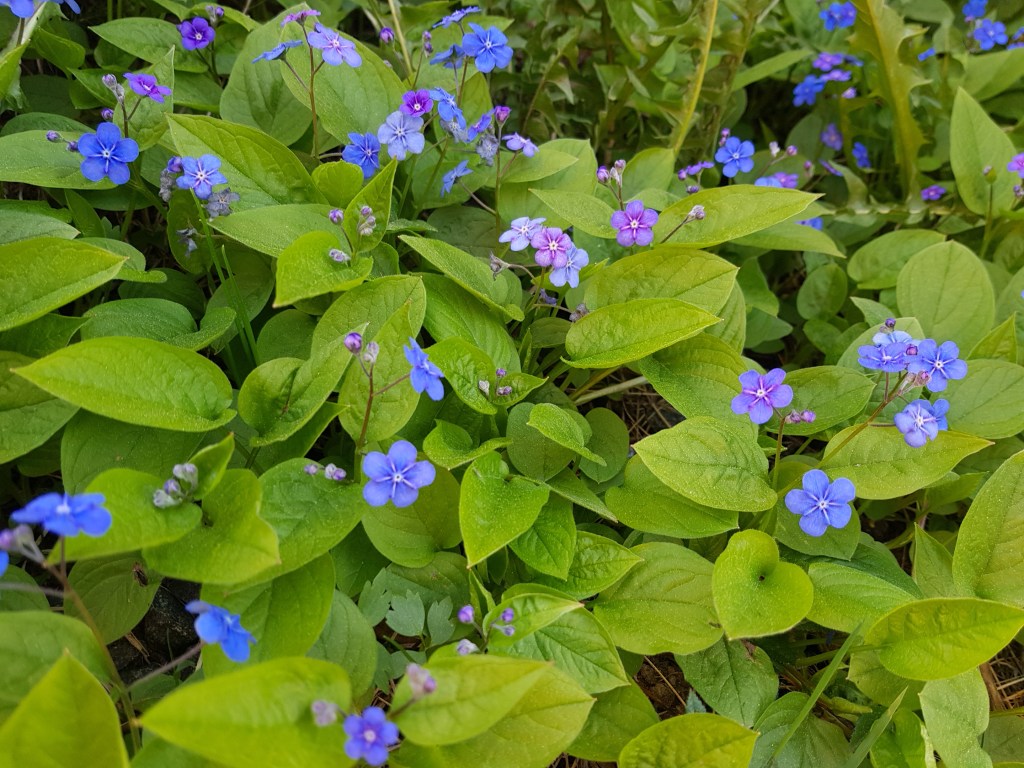
This pretty little groundcover is one of the first things I see in the mornings upon leaving the house, since it carpets the flower bed just next to our front steps. At first, I mistook them for forget-me-nots, but closer inspection showed plenty of differences.

Turns out, they are Omphalodes verna (kevätkaihonkukka), also known as blue-eyed Mary. This patch predates our arrival at the house and comes back reliably in early spring. The bright blue flowers are only about the size of a fingernail each, but they are produced profusely just when some color is needed. Looking back through my albums, I’ve stopped and snapped a picture of them almost every year because it’s always exciting to see flowers again after a long dark winter. Along with the tulips and dicentra, they make the front of the house look very cheerful all spring.

As small plants go, they’re easy to forget once the bustle of the planting season starts. That’s unfair to them, though, because they are a reliable and useful perennial even when not in flower. The light green leaves make a great living mulch to keep the bed moist for the other woodland plants living there. It fills out fast and covers the ground before much else can, making the need for weeding very minimal in that bed.

Final count:

  • Omphalodes verna – one well-established large patch

Garden Inventory | Anemone sylvestris

I do enjoy spring ephemerals. They’re the sort of things that we could never grow when I lived in California because the springs were never cool enough. During most summers here in Finland, they’ll stick around at least until midsummer.

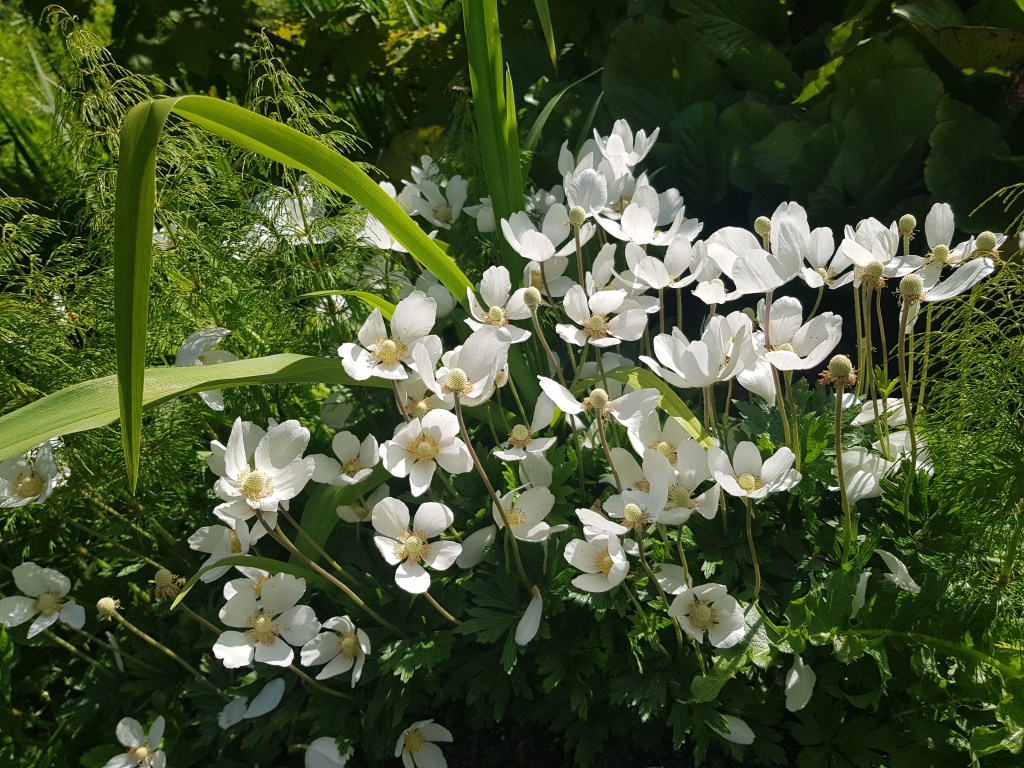
This is Anemone sylvestris (arovuokko), the snowdrop anemone. Not to be confused with the wood anemone, which we also have. This species has larger flowers and is mostly a garden resident. They also have much longer stems than their wild cousins, making them great for little bouquets. They flower so prolifically that I don’t feel at all guilty about grabbing a handful to keep inside.

Our little patch was planted by the previous owners, but I didn’t discover it until a few years ago because it grew on the side of the property that always gets a bit overgrown and difficult to manage. Once I do get that bit of the garden cleaned up, I’d like to put in a few other varieties of anemones for contrast. A whole pastel rainbow of them every spring would be gorgeous.

Final count:

  • Anemone sylvestris – one small but progressively growing patch

Garden Inventory | Dicentra formosa

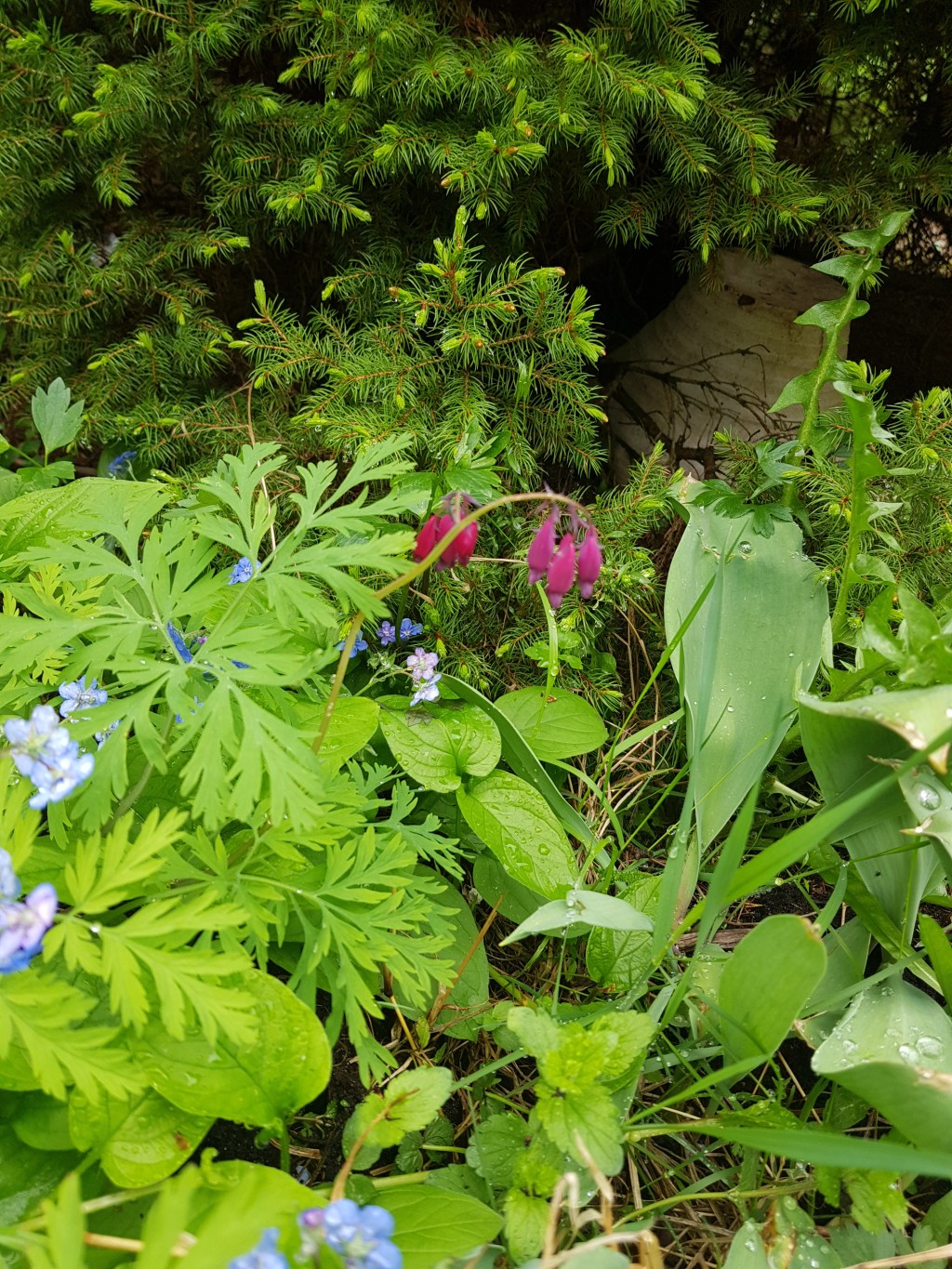
This is my first Dicentra formosa (purppurapikkusydän), the fern-leaf bleeding heart, variety ‘Luxuriant’. It came in the same order last spring as my white spectabilis and seems to be slower to start growing. However, it was also accidentally covered by garden equipment for half the season last year so didn’t have the most ideal start. Let’s see how it fares in 2023.

One side note — I am so glad that I let this bed get a little weedy because the fern-like leaves on this plant look similar to some common weeds. They might very well have been accidentally plucked out if I had gone in there more aggressively.

Now that I know it’s actively growing, I’ll have to clear some space to give it more breathing room. It’s got three flower stalks already and this species is supposed to have a longer flowering season than spectabilis. Hopefully, more will develop as the weather warms up.

Final count:

  • Dicentra formosa ‘Luxuriant’ – 1

**I have my eye on a white variant of this, which is available from a nursery within a reasonable driving distance, so this space might be updated soon!**

Garden Inventory | Dicentra spectabilis
A few days ago, I stumbled upon a much more established Finnish garden at Vanha Talo Suomi and was especially impressed with her neatly organized specimen list. At last count, I have four different spreadsheets and three apps around to keep track of things, and somehow manage to not efficiently update any of them. This seems like a much more tidy solution, especially since I can add to it slowly and amass information about each plant in one place.

I’m starting with Dicentra spectabilis, the bleeding heart (särkynytsydän), because it was one of the first perennials that I was set on planting. Not long after moving here, we visited some family friends at their rambling old Victorian house. Their garden had truly huge specimens that reached chest height and were stunning to see in full flower. I immediately wanted some for our house as well… then forgot about it for several years.

In mid-May 2020, I finally got around to visiting the local nursery and picking up these two little guys. They grew a bit and then disappeared in the autumn, exactly like they’re supposed to. At that point, I sort of forgot about them again.

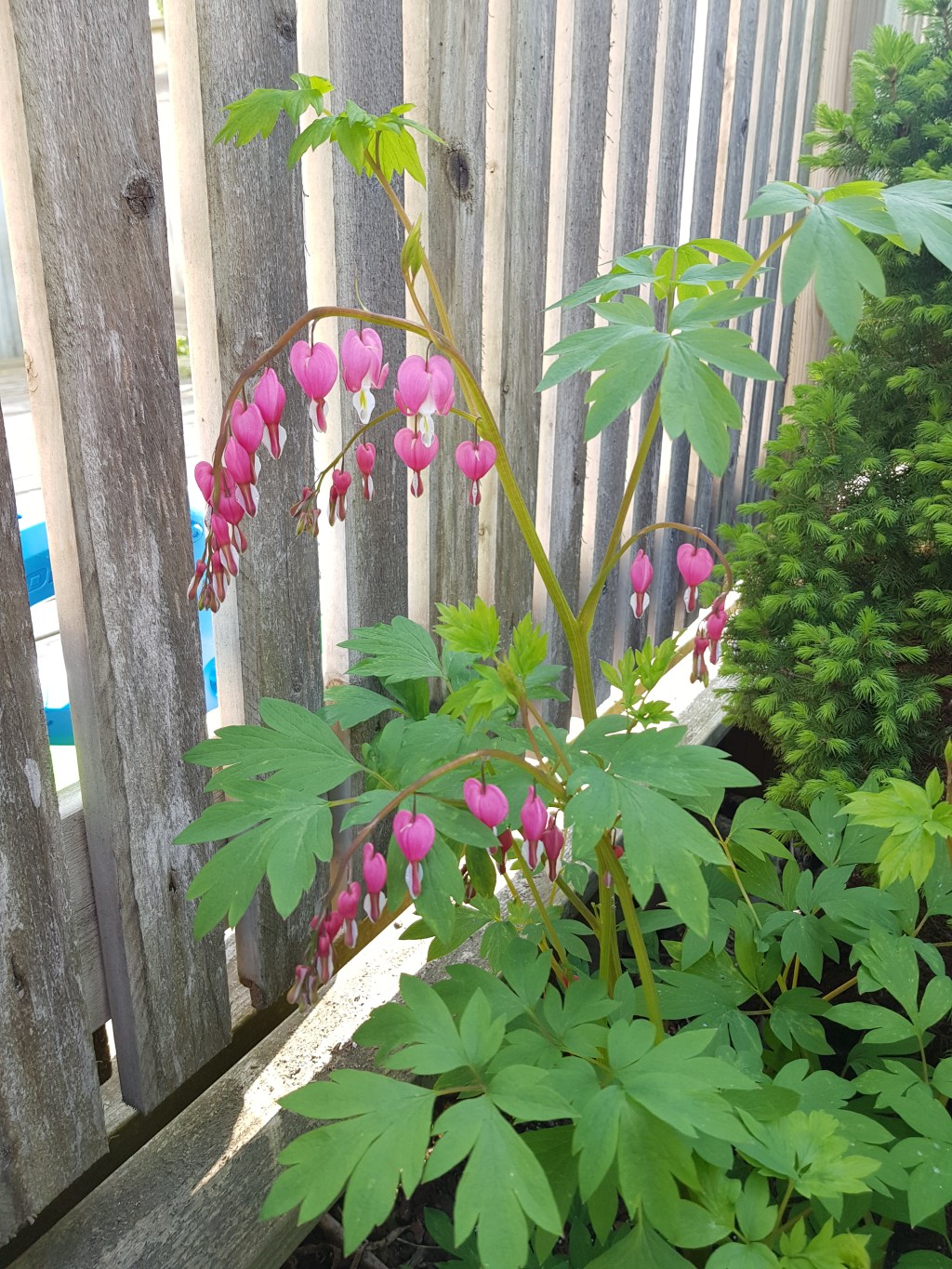
Then the next spring, in 2021, having no idea when they would pop out of the ground, I started fretting and bought another plant. Just in case. That ended up going in right behind one of the previous ones. Which then emerged a week later and rapidly grew to triple its size from the year before. That’s the older one in front, in the picture on the right. The newer one is closer to the fence and looks very dwarfed.

Now, you’d think I would’ve calmed down by the next year. Instead, I decided that I needed the white-flowered variant (Dicentra spectabilis ‘Alba’) and ordered it online. It went right in front of the older plant on the other side.

This spring, the biggest plant (now in its fourth year) has 9 flower stalks, the one behind it (3rd year) has 8, the one squished between the trees (4th year) has only 5, and the Alba (2nd year) has 4. If the latter two don’t catch up next year, I will consider moving one to give them more space.

Final count:

  • Dicentra spectabilis (pink flowered) – 3
  • Dicentra spectabilis ‘Alba’ (white flowered) – 1