Garden Inventory | Rosa ‘The Poet’s Wife’

Finally, we have the third plant from my 2022 rose batch. I’m so happy that all three ended up being such healthy plants, allaying my fears about growing roses in cold climates. Why did it take me so long to get roses, after having so many in our garden growing up? A dumb mistake, really.

I made one earlier attempt to plant roses during our first year at the house, back in 2012. My bad choice of location (a sunny but rocky slope with very poor soil and heavy snow dump over the winter) led to those not surviving the year. Perhaps the lesson in this is mostly about observing your garden for a year before trying to make any long-term plantings. After that, I tried to figure out solutions by reading articles about overwintering with burlap sacks, special mulches, and complicated pruning regimens, all of which only made me more anxious. It was only after I’d built my gardening confidence with a few years of vegetable garden success that I felt up to the challenge of trying roses again, only to discover that the first try had been nothing but a piece of bad luck. I’m catching up on a lot of lost gardening time now.

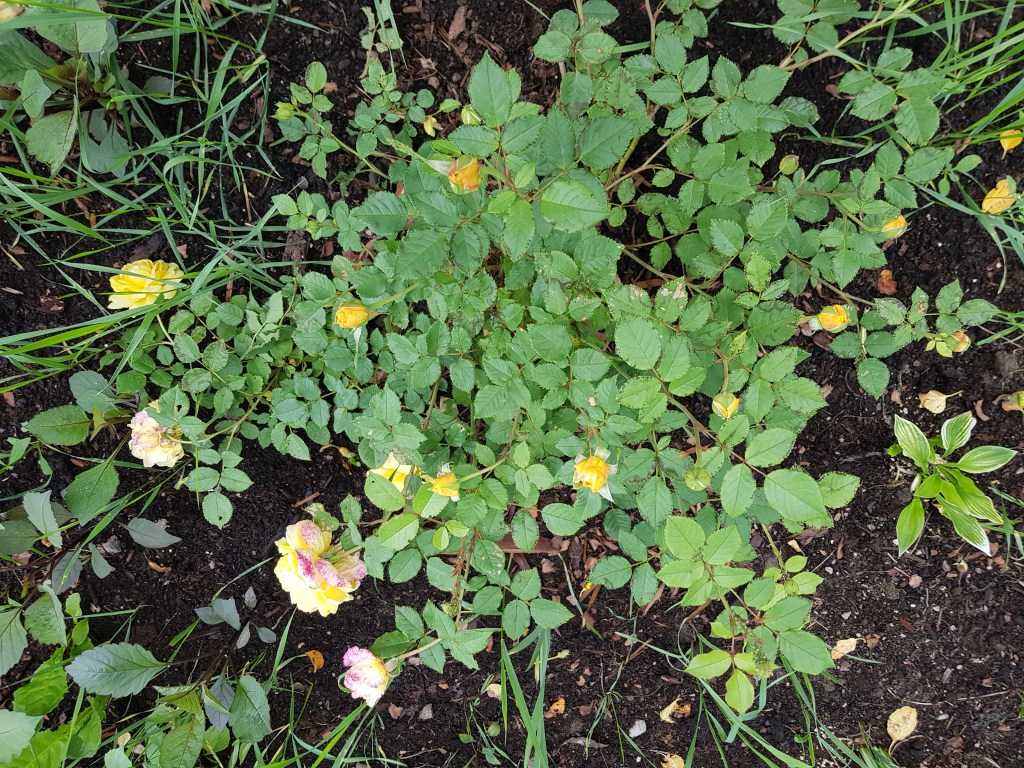
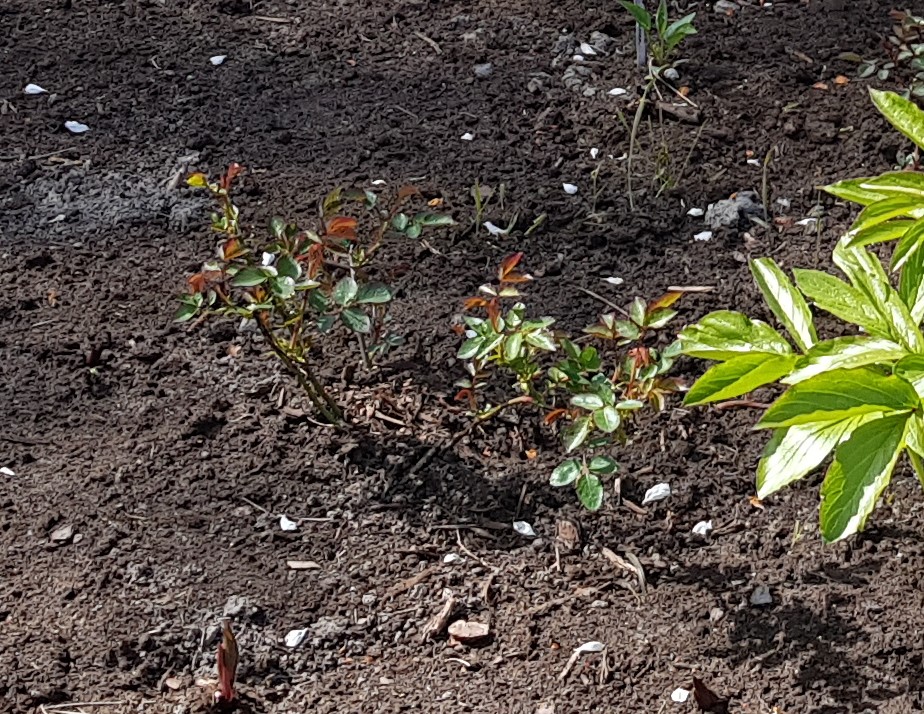
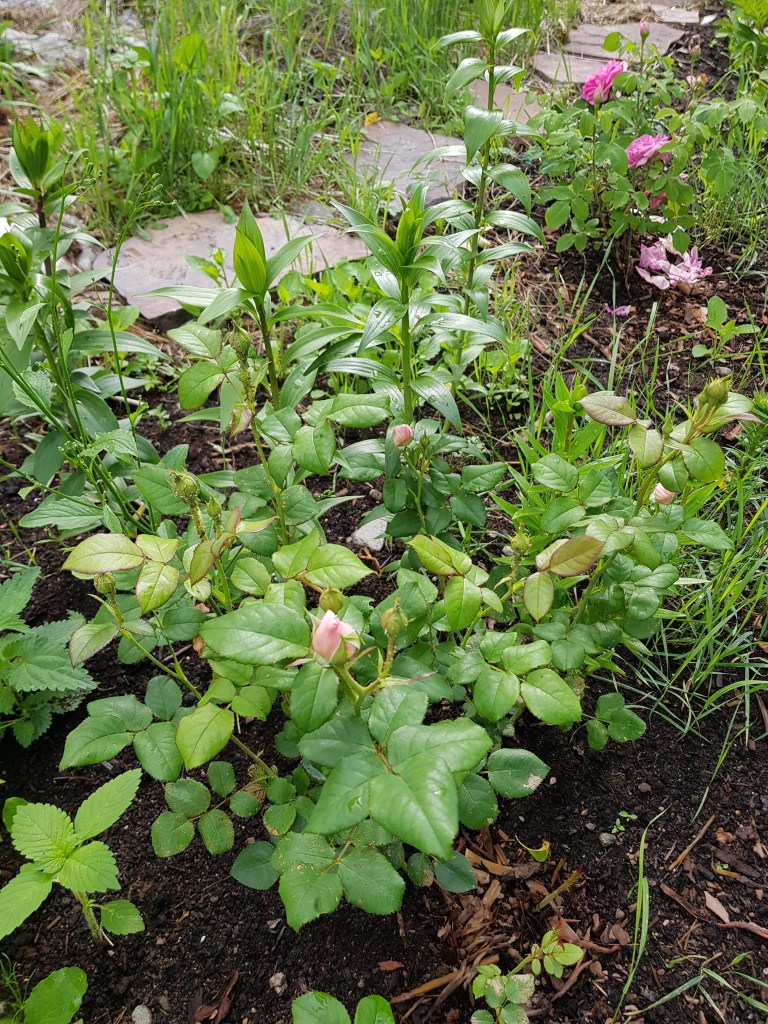
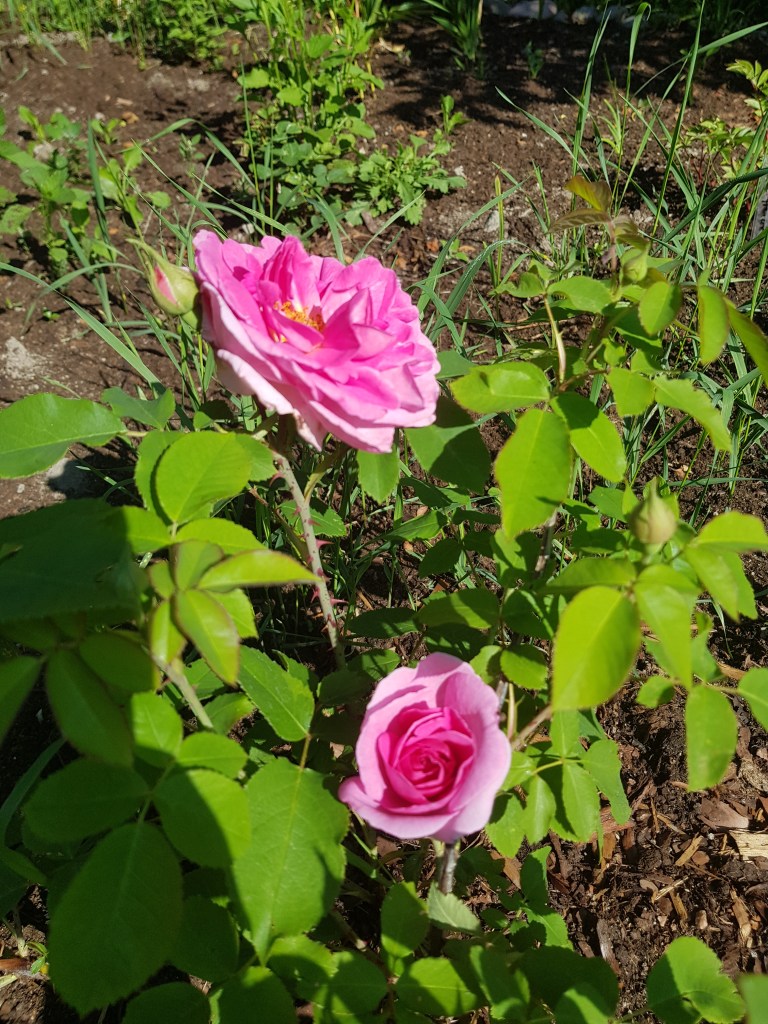
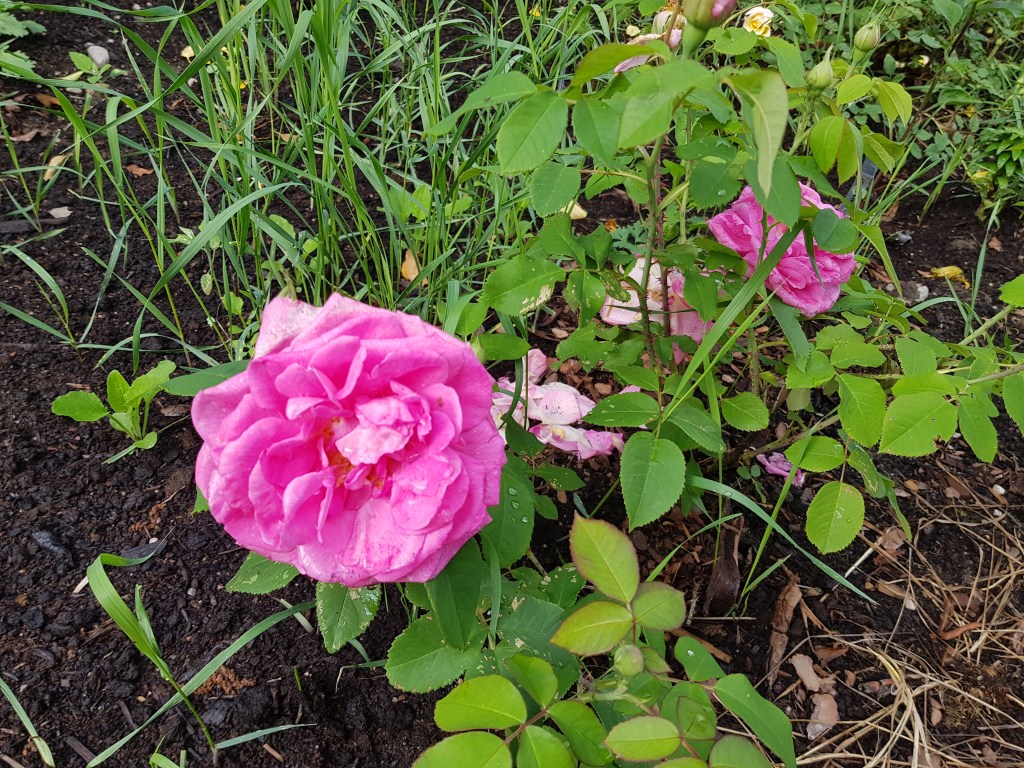
Rosa ‘The Poet’s Wife’ (ruusu) blooms not long after ‘Gertrude Jekyll’ and has been absolutely prolific this year. It is also, I’ve discovered, a sprawler. It’s been interesting to see how each plant can have such a different growth habit. I think one of its stems has managed to layer itself and is in the process of becoming a separate plant. Since it’s planted in the cutting garden amongst bulbs and annuals, this isn’t much of a problem so I’m letting it have its head to see how big it will get. I might just give it an arch if it gets too tall since it’s pretty close to the front of the garden anyway.

Final count:

  • Rosa ‘The Poet’s Wife’ – one rapidly expanding shrub

Garden Inventory | Rosa ‘Scepter’d Isle’

This Austin rose, from the same January 2022 batch as ‘Gertrude Jekyll’, struggled a little starting out but has made up for it over the past year. Aesthetically, it’s probably my favorite out of the three, though it’s a close race since they have all been charming in different ways.

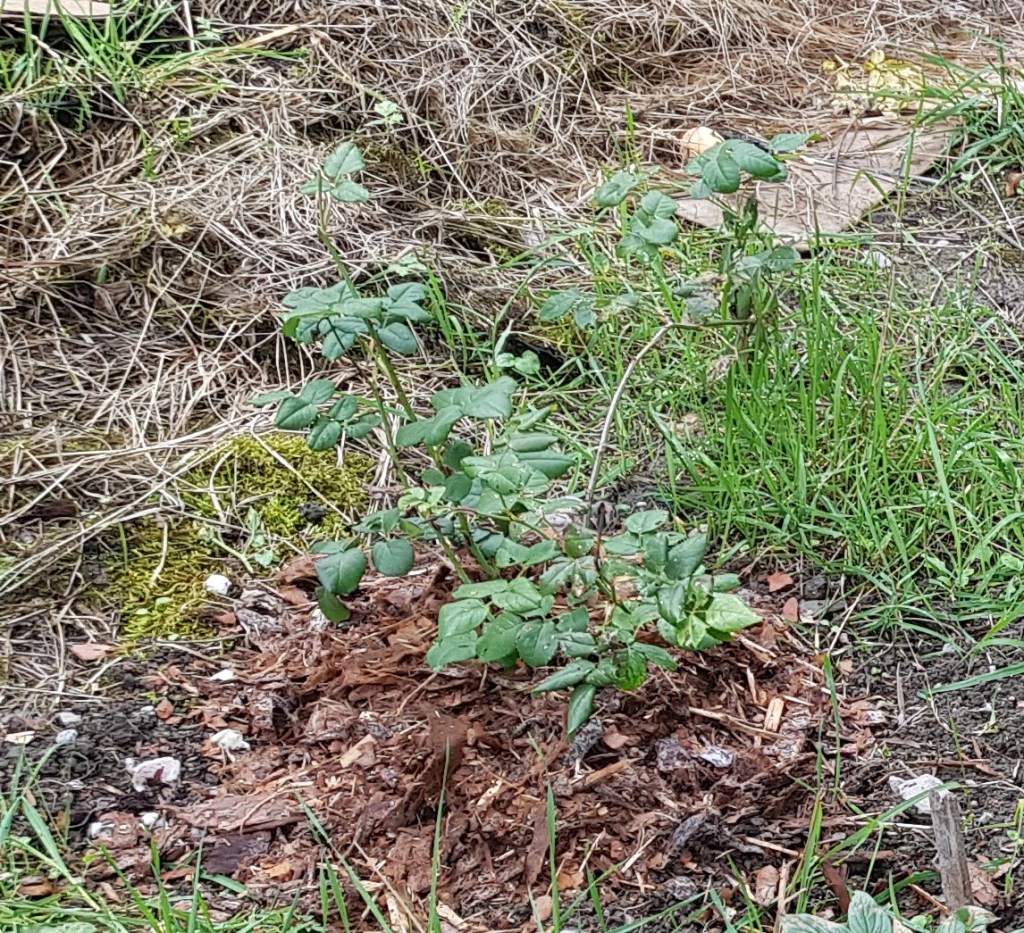
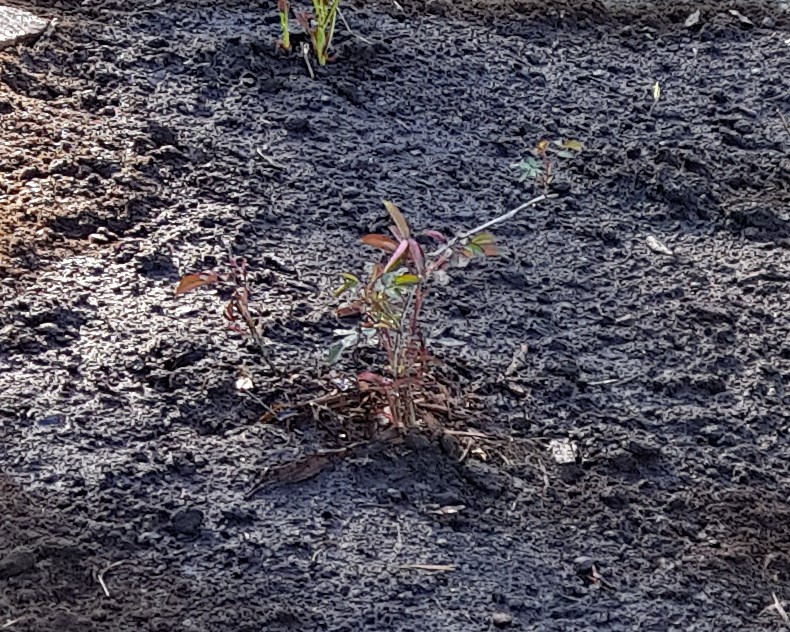
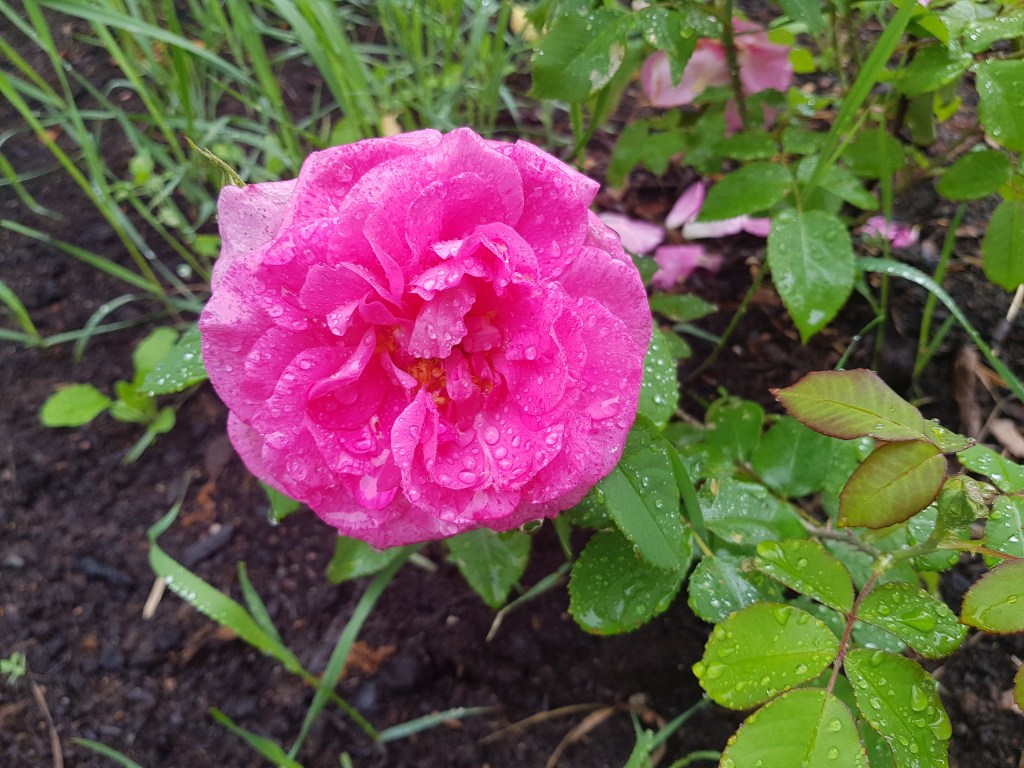
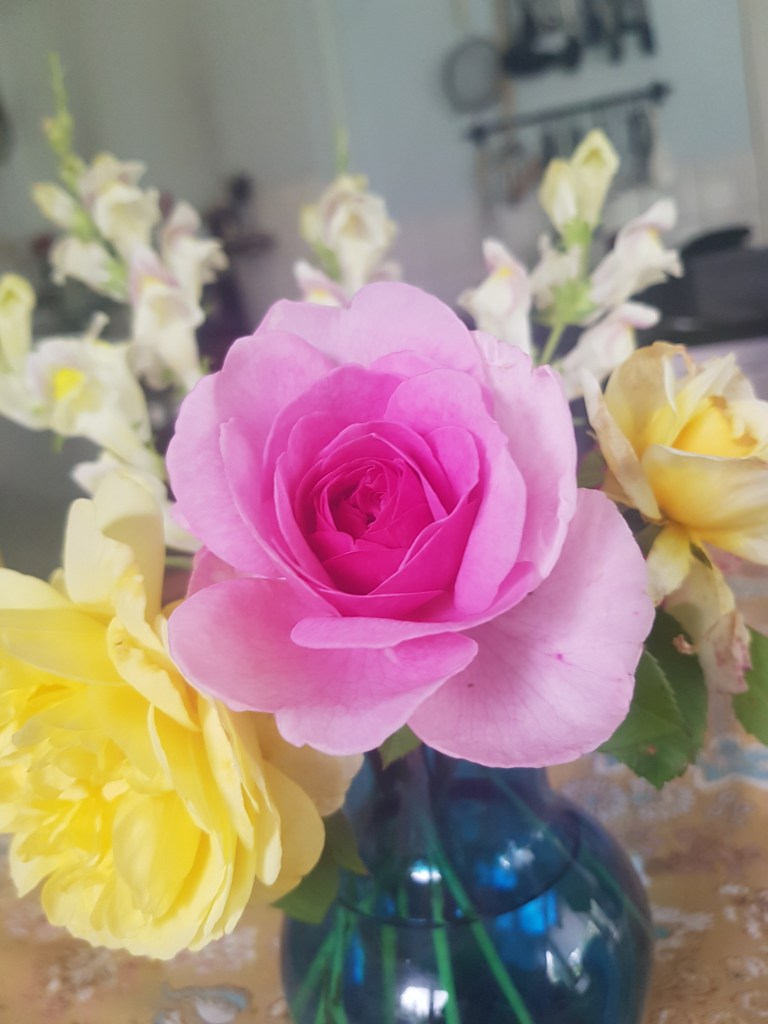
Rosa ‘Scepter’d Isle’ (ruusu) is the last of my roses to bloom in the spring, but it makes up for it by offering big cupped blooms on stems that don’t seem to droop as much as the others. This plant had a little trouble in the start, shriveling in its pot despite having received a good soaking upon arrival. I was almost ready to email for a replacement when a new shoot appeared from just above the planting line. It has recovered well since then, gone through two flushes of blooms, and donated flowers for several vases over this past year. This particular plant is significant also because it marks the grave of my son’s late gerbil, so it is one of the few plants that will never be moved in the cutting garden.

Not too many notes yet, since these plants are still young, but I look forward to seeing how these little roses fill out over the next few years. They have already done a lot of growing in this season alone and changed my mind about how difficult keeping roses in our climate might be.

Final count:

  • Rosa ‘Scepter’d Isle’ – one rapidly expanding shrub

Garden Inventory | Rosa ‘Gertrude Jekyll’

The very first David Austin rose I bought was ‘Fair Bianca’, back when I was in Southern California. It was a small perky shrub, happy to live in a stoneware pot in our very sunny front yard. Although that garden had towering hybrid teas and extravagant floribundas growing along most of the walls, ‘Bianca’ was the first rose that I chose for myself. Its shape and scent set it apart from the others and I’ve been wanting to grow more varieties ever since.

More than a decade later, we bought a house in Finland with plenty of room for a rose garden. It would take a little longer still to set it up, but in January of 2022, I placed my first order for roses straight from the David Austin online store. Sadly, ‘Bianca’ would be discontinued by then, though I still keep an eye out for it whenever possible. Instead, I went with three that topped the list for being fragrant and floriferous, and those are the ones I’ll be writing about in the next few posts.

Rosa ‘Gertrude Jekyll’ (ruusu) was the first rose in my basket that year and it has been the first to flower each spring since. It’s put on a good amount of growth this year and I look forward to seeing how big it gets in subsequent years since most bloggers seem to agree that it’s extremely vigorous.

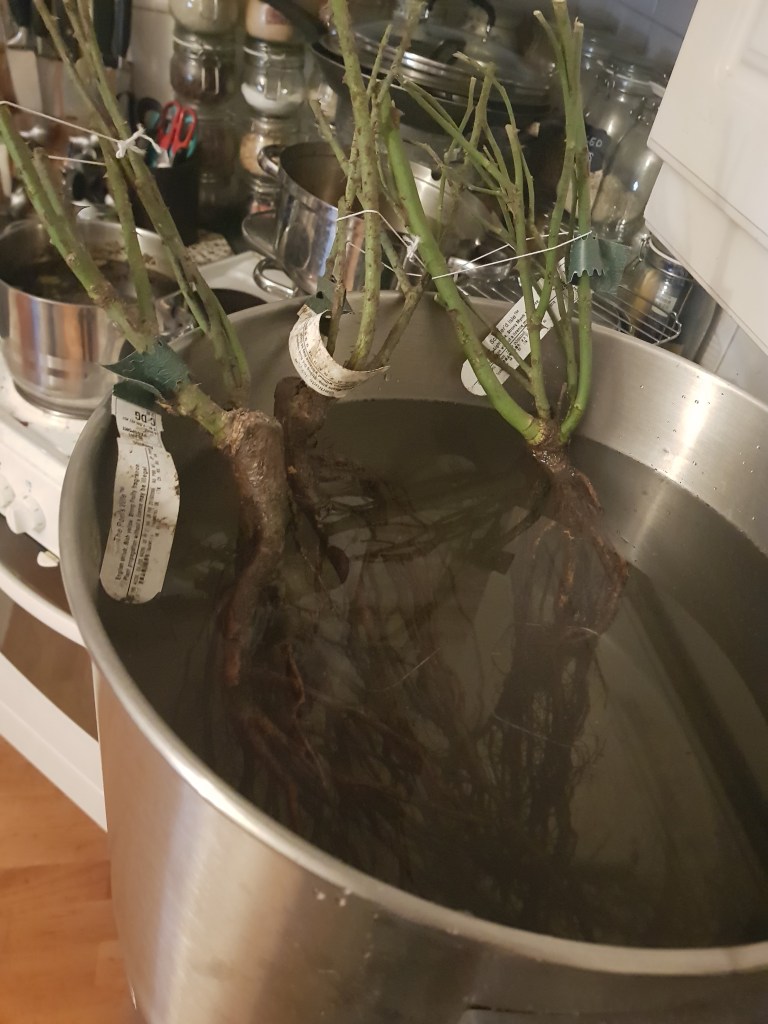
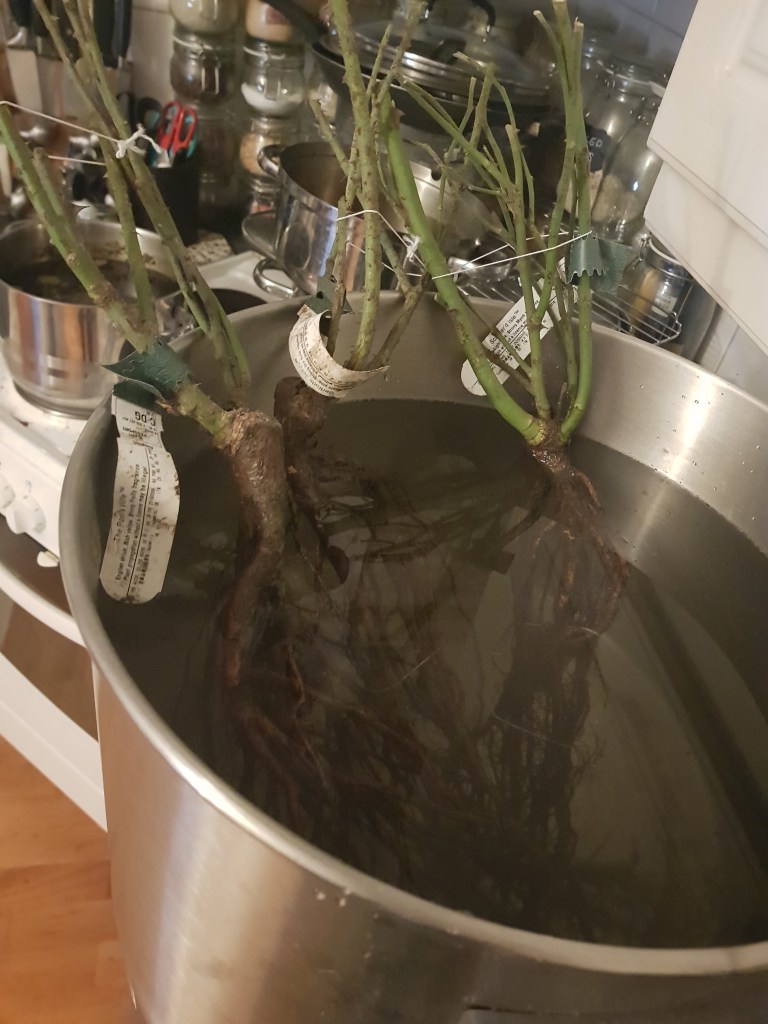
In the beginning, though, I wasn’t so sure that it would even survive. The roses arrived in March, which is still the dead of winter for us. Having never ordered bare-rooted plants before, I couldn’t help being worried by their denuded state, despite having done enough research to know they should be fine. My hot water canner got called into service as a soaking container since there was nothing else big enough after the baby tub went into storage. Then the plants got potted up and placed by the windowsill, where they stayed until temperatures were warm enough for them to transition outside about two months later.

Gertie was by far the easiest to maintain during that early period and ever since, sprouting eagerly in its pot and eventually giving me flowers before they were even planted into the ground. It remains very fuss-free in the garden as well and I cannot recommend it enough, thorns and all. I was able to cut stems of highly perfumed roses to take inside for weeks during the first flush, and the autumn flush has been just as generous. Overwintering involved nothing more than mounding up some extra mulch and compost around the base of the plant at first frost. Depending on how tall it manages to get (and based on the reports, I’ve every belief it will be quite a bit), I might be adding some more of this rose to the mixed hedge in future years.

Final count:

  • Rosa ‘Gertrude Jekyll’ – one rapidly expanding shrub

Garden Inventory | Malus domestica ‘White Transparent’

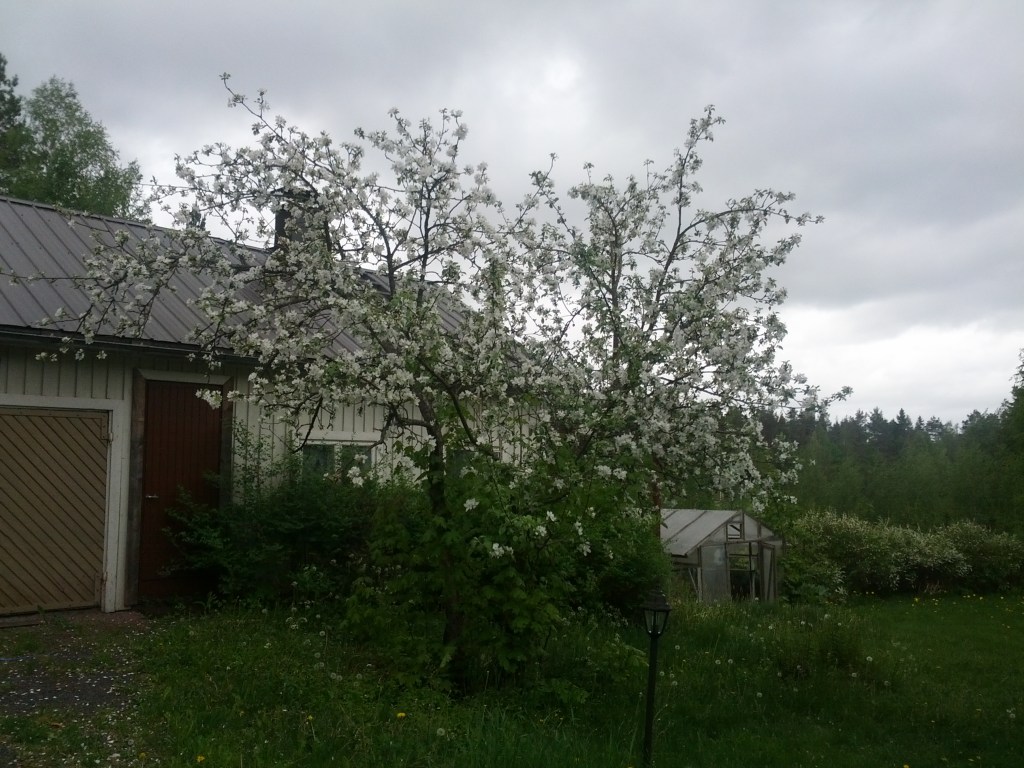
Having just talked about our plum trees, it seemed the right time to segue into the rest of our fruit tree collection. Unlike the plums, which went unnoticed for the first few years, the apple trees were impossible to miss. They are all large, mature trees growing in clear areas with little to obstruct one’s view of them. We often use them as landmarks when we’re trying to explain where something is on the property.

One of the main reasons I wanted to buy a home with more history was the high likelihood of mature apple trees being in the garden. You know what they say about fruit trees — the best time to plant one is 10 years ago. The next best time is today. Or better yet, just move somewhere where someone else planted them more than 10 years ago.

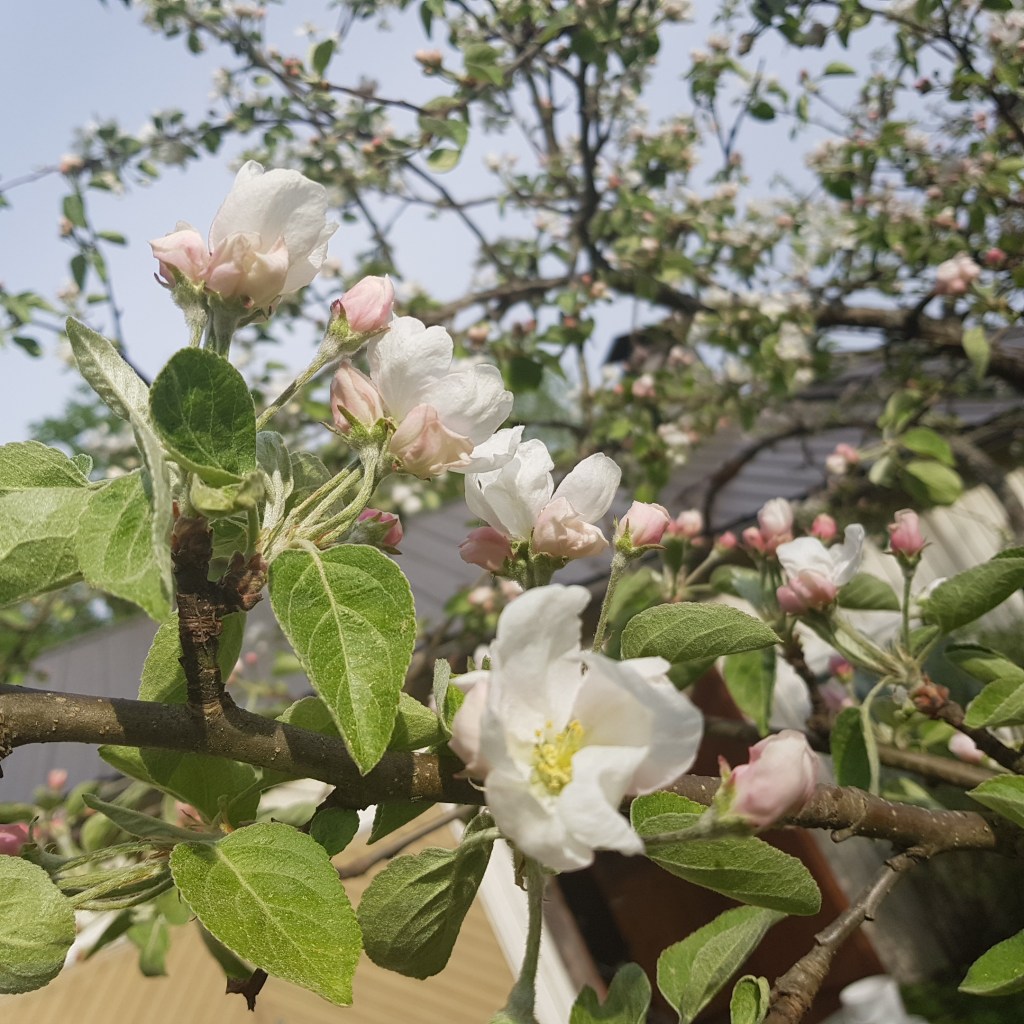
This particular tree is a cultivar called Malus domestica ‘White Transparent’ (omena ‘Valkea kuulas’), also known as ‘Yellow Transparent’ in North America. It was very popular across Europe in the 19th century and is still sold in some nurseries today. Its main claim to fame is being a very early variety that will provide ripe fruit by the tail end of summer in most places. This makes it especially nice to combine with the many soft fruits and berries that are usually ready to harvest around the same time.

The tree, like most of the other heirloom plant varieties in our garden, was planted in the 1950s. By all accounts, it should be nearing the end of its lifespan (50-80 years). It doesn’t seem to have realized this and has provided us with a glut of apples almost every year that we’ve been here. We only recently started learning how to prune fruit trees and thin fruit, so I am hoping to help it stay in good form for another few decades.

We usually start picking the apples when the first few turn pale yellow to creamy white. We eat those right away since they don’t last long when that ripe. The greener ones can sit in boxes awaiting processing for up to a week. The fruit is juicy, with a nice balance of sweet and tart that you don’t find in most supermarket apples.

Apples are useful for such a wide variety of recipes that I doubt I’ll remember all the ways I’ve cooked them over the years! I bought an apple coring and peeling gadget and a steam juicer specifically to get through the glut more efficiently — one season of doing everything by hand was more than enough.

About 3/4 of the apples are peeled, cored, then run through the steam juicer. The white flesh of these apples makes a beautiful clear golden juice that is easy to mix with other drinks. The remaining pulp is made into applesauce, apple butter, and apple leather. A good portion of the apples are also sliced and frozen for use in baked desserts such as apple pies, apple crisps, and apple brownies. I just saw a video on how to make apple cider vinegar, so it looks like I will even have a use for the cores and peels this year as well!

Final count:

  • Malus domestica ‘White Transparent’ – 1 elderly but productive tree

Garden Inventory | Prunus domestica ‘Victoria’

That’s right, two Victorias in a row. Different genus, but still in the fruit category. This does make me wonder just how many plants were named after that particular queen at the height of her popularity. Surely enough to make an interesting garden collection, given how long she reigned.

Names aside, the other reason I loosely associate these two plants is that, much like our rhubarb, our plum trees are also very old and prolific. The oldest one might very well have been planted when the farm was first built, but we had to cut that down a few years back because it was 80% dead wood. It had spawned several saplings from the copious loads of fruit it produced, though, so we still have two overgrown stands of Victoria plums that need severe pruning.

Prunus domestica ‘Victoria’ (luumu) came to Finland by way of Sweden, where it was a popular garden variety throughout the late 19th century. It’s still sold in stores, though I’m not sure how many people need them these days. I know I’ll happily give away as many as anyone can take. Did I mention that these things self-seed like mad?

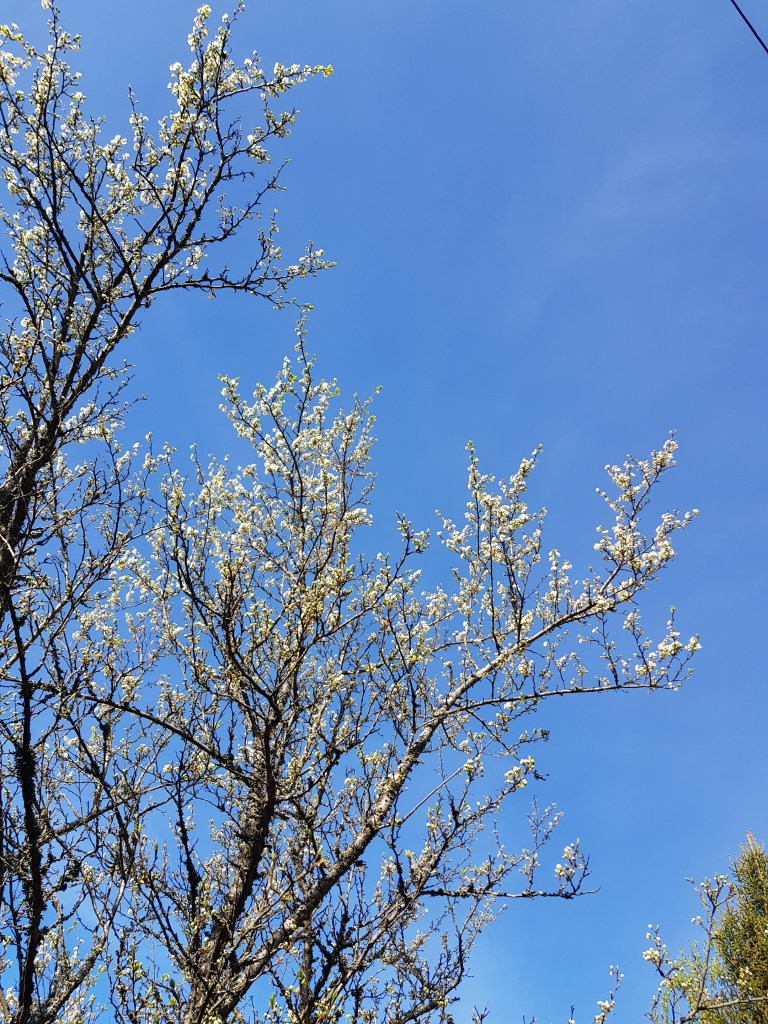
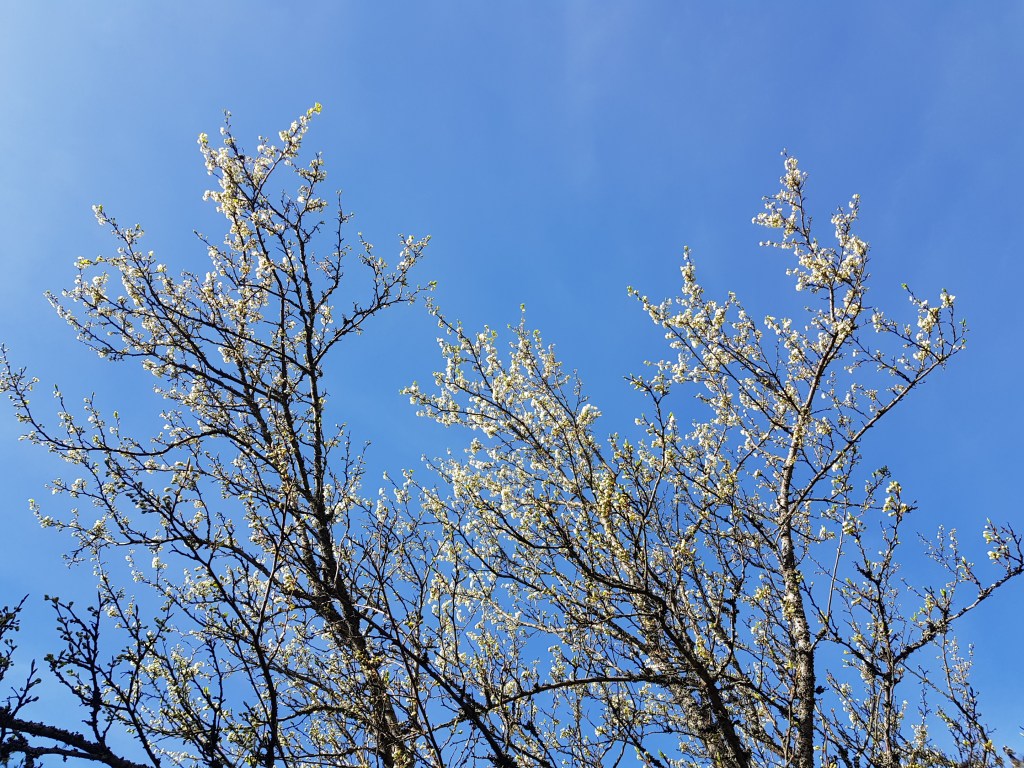
Also, this tree grows annoyingly tall. I usually only notice that it is flowering when I see the upper branches covered in foamy white from my second-story bedroom window. Since all those flowers are so high up, all the fruit are very high up too, and the only way to get them is to wait for them to drop at the beginning of autumn. Before I began developing the vegetable garden and food forest, we didn’t go into that part of the garden much at all. This explains why I never even noticed we had plum trees until we had been living here for a few years.

Yes, you can tell I have a love/hate relationship with these trees. The fruit are really sweet and bountiful and I’m quite happy to have them… when we can get to them. My new tactic for next month will be to prune and harvest simultaneously, so we can start cleaning up all those wild branches and tame these trees into something more garden-friendly.

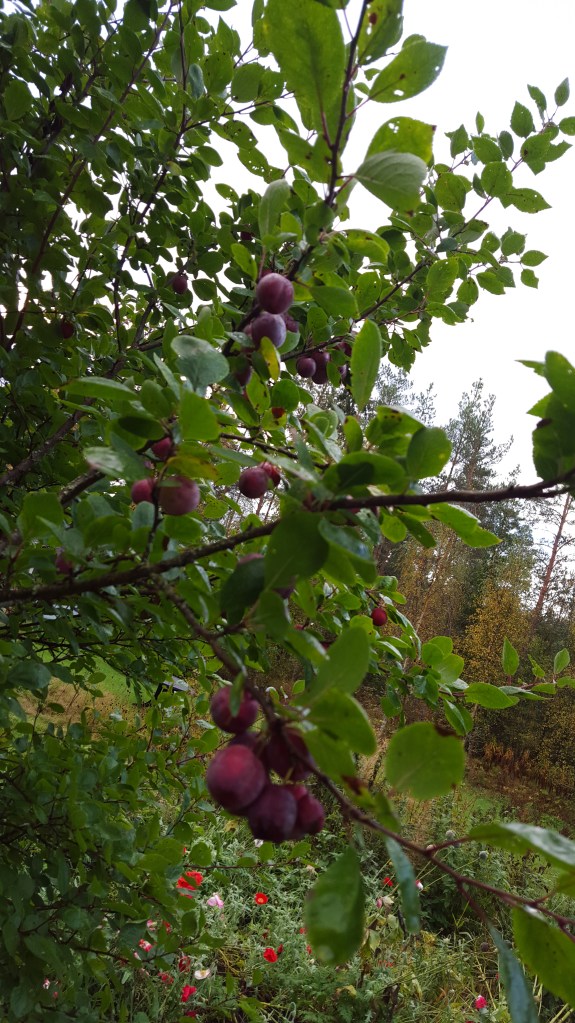
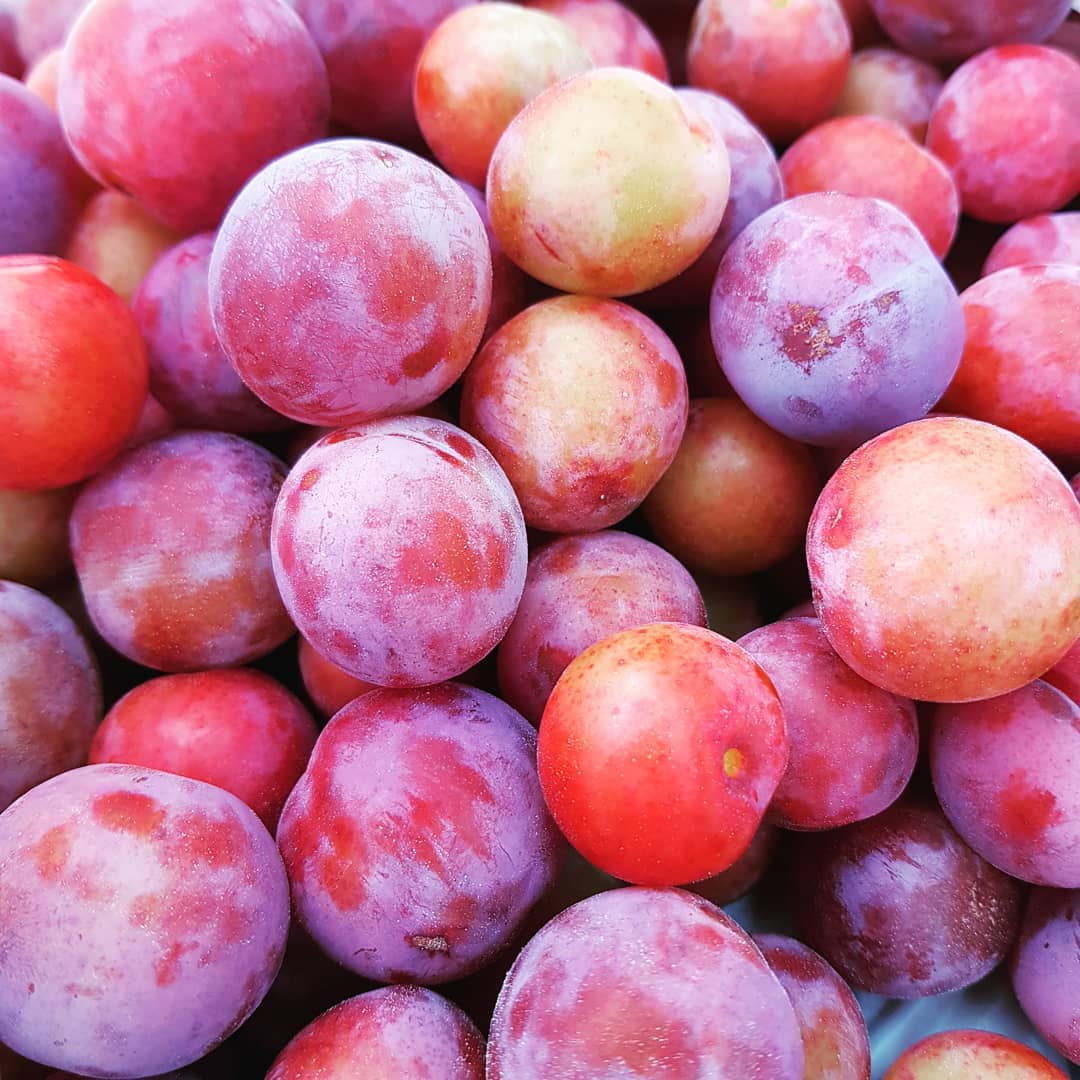
A large number of these plums are eaten fresh off the tree. They are smaller than the round supermarket plums — more like large grapes — and sweeter, too. The perfect size for school-aged kids, who can eat an entire bowlful in a single sitting if given the chance. When the glut inevitably overwhelms even the most ambitious of frugivores, I pit and halve them with a handy little kitchen gadget and freeze them in 1-liter bags for processing later in winter. In recent memory, I have made plum cobbler, plum juice, and plum jelly.

Final count:

  • Prunus domestica ‘Victoria’ – 2 large and prolific stands

Garden Inventory | Rheum rhabarbarum ‘Victoria’

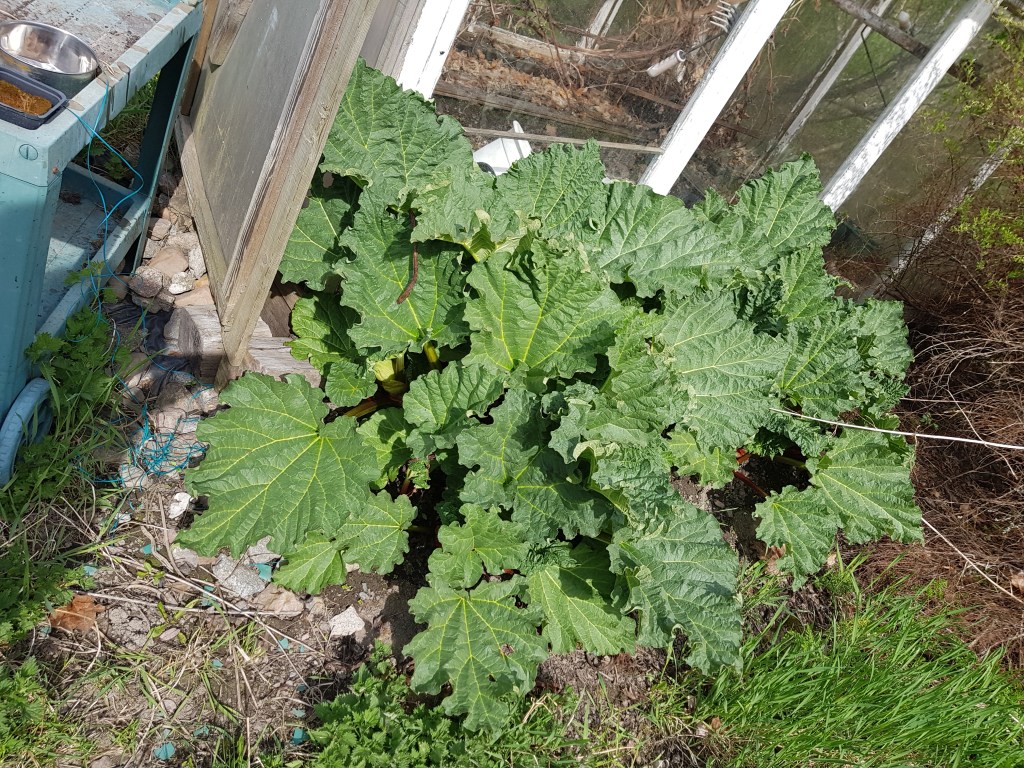
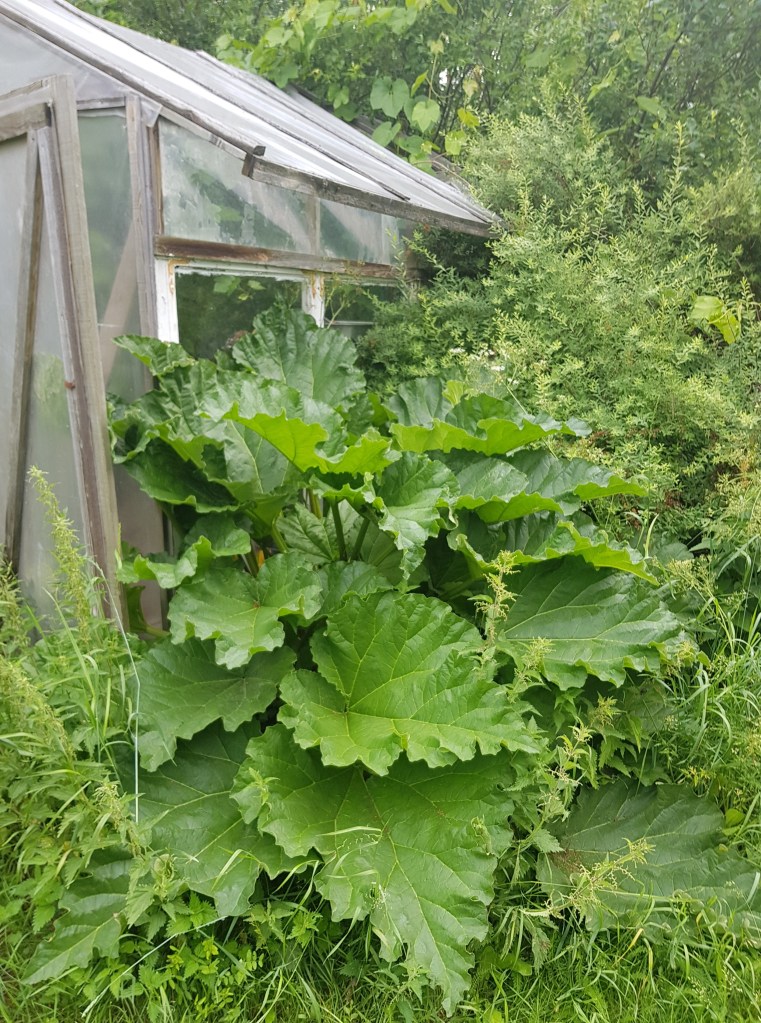
Today, I’m going back to cataloging our oldest plants, if only so that I can have all their information in one place rather than bothering my poor friend (who lived here before us) whenever I forget. Possibly some of the oldest plants we have, this rhubarb patch dates back to the 1950s when the farm was first built. It was one of the first things I noticed when we did a tour of the property since the buds were just breaking the ground and looked like bright red dinosaur eggs. It’s still one of my favorite spring sights, and I usually end up taking a picture every year.

Rheum rhabarbarum ‘Victoria’ (raparperi) is another one of those things that just doesn’t exist where I grew up. As a kid, I’d always try to imagine what rhubarb must be like from descriptions in books, but seeing it for the first time was a total surprise. Watching them grow from shiny crimson eggs into plants taller than me was quite eye-opening.

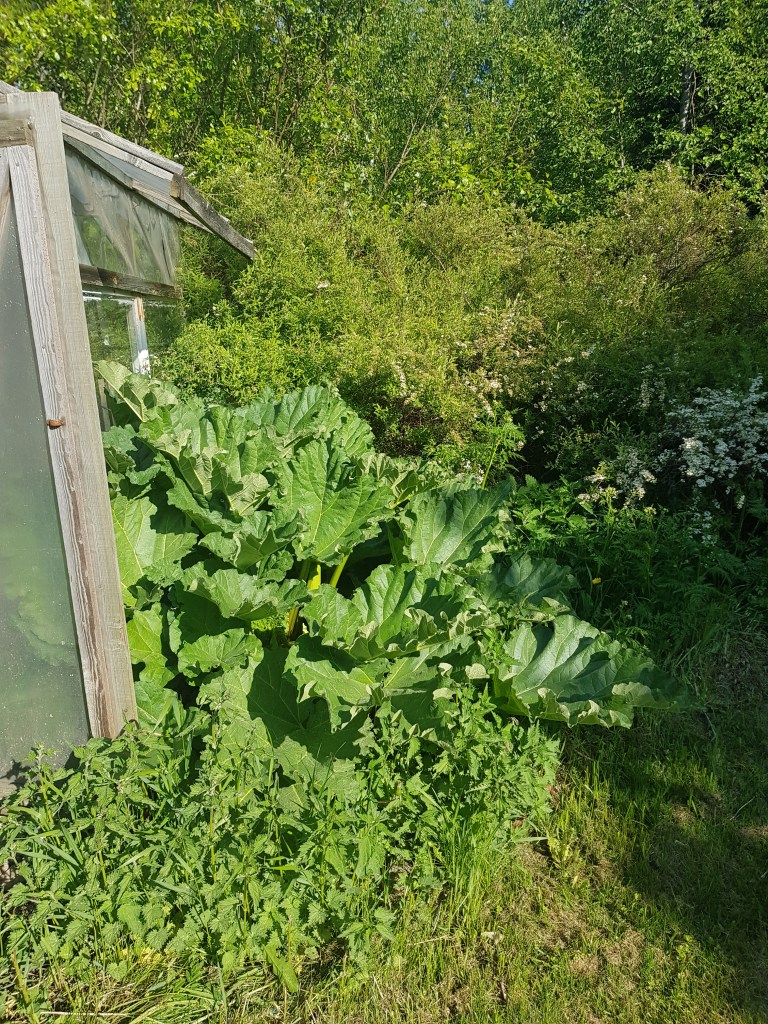
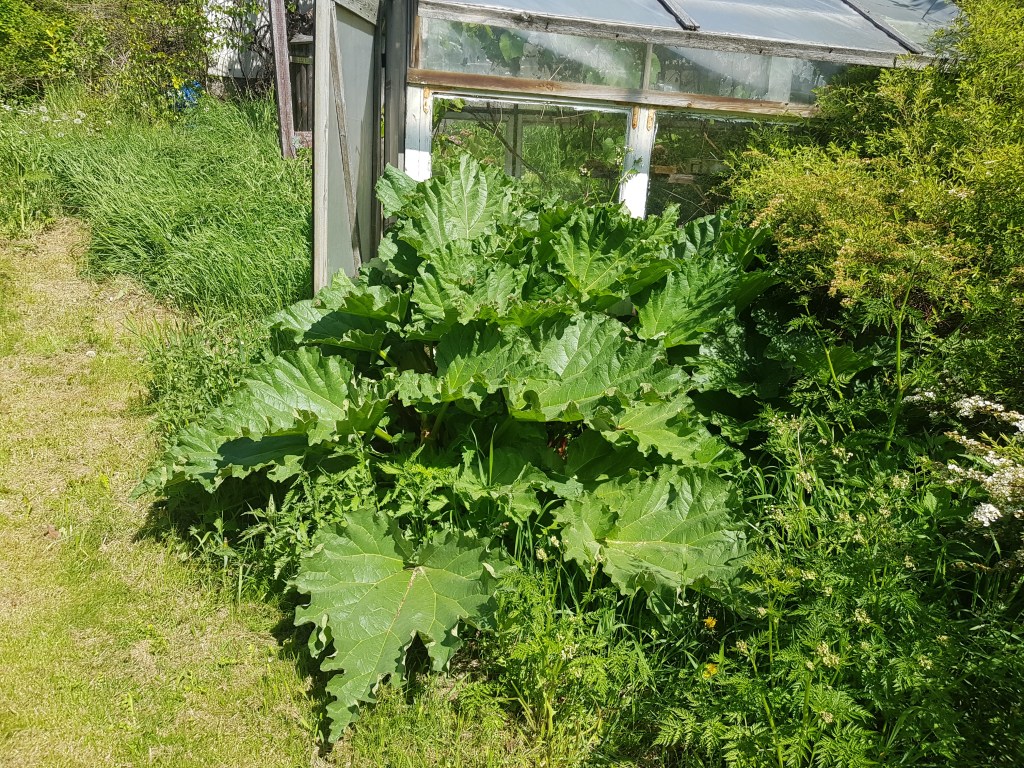
I have since learned that most rhubarb plants do not grow large enough to engulf small buildings every year, but we do have some very large specimens of a vigorous variety planted in a spot where they are very happy. There’s something about the mild and endless light of northern summers that does it for them because another friend mentioned how her grandmother in Alaska also grows gigantic rhubarb. ‘Victoria’ is the most popular variety in Finnish gardens, and I’m guessing this is one of the reasons why.

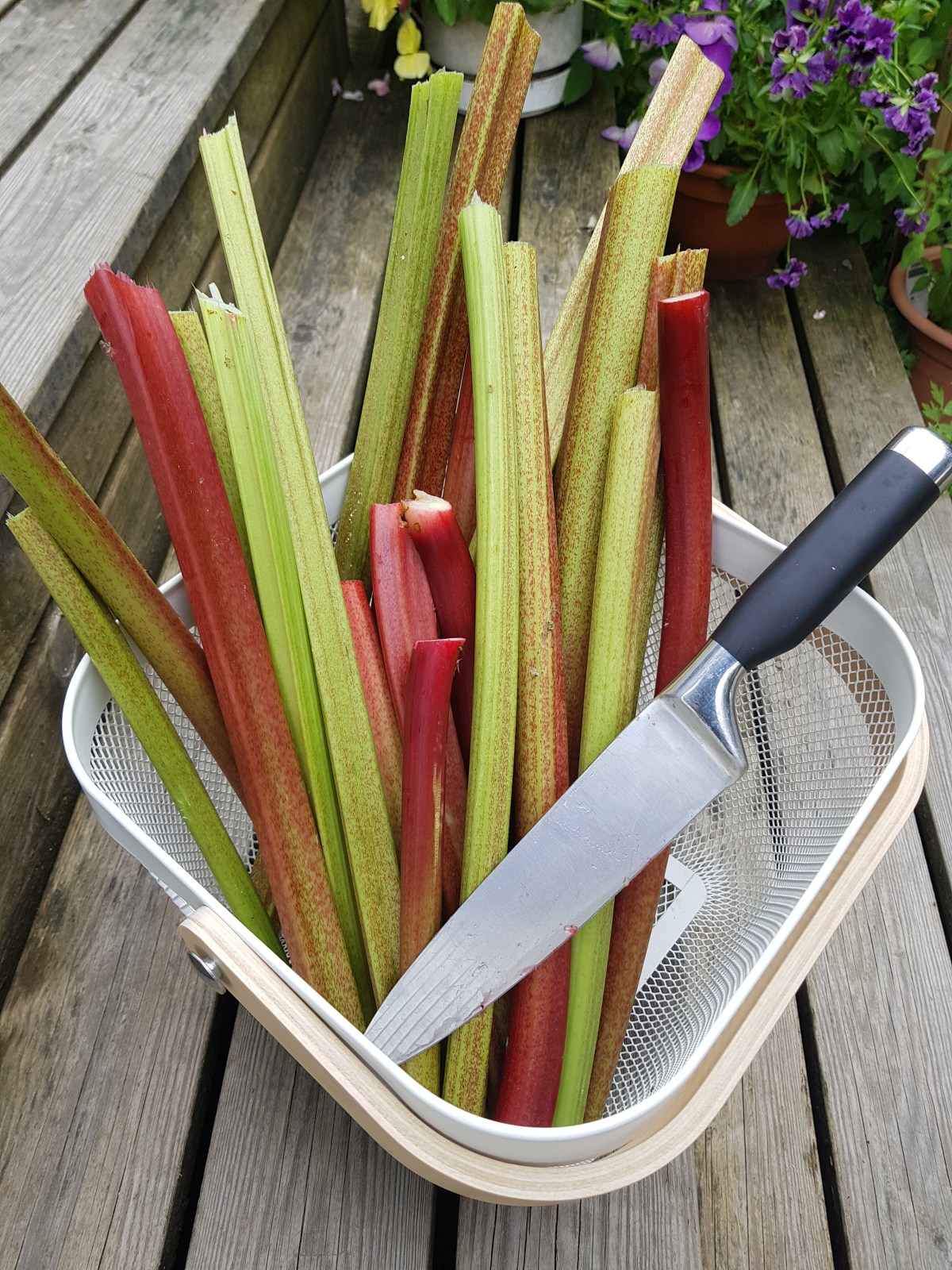
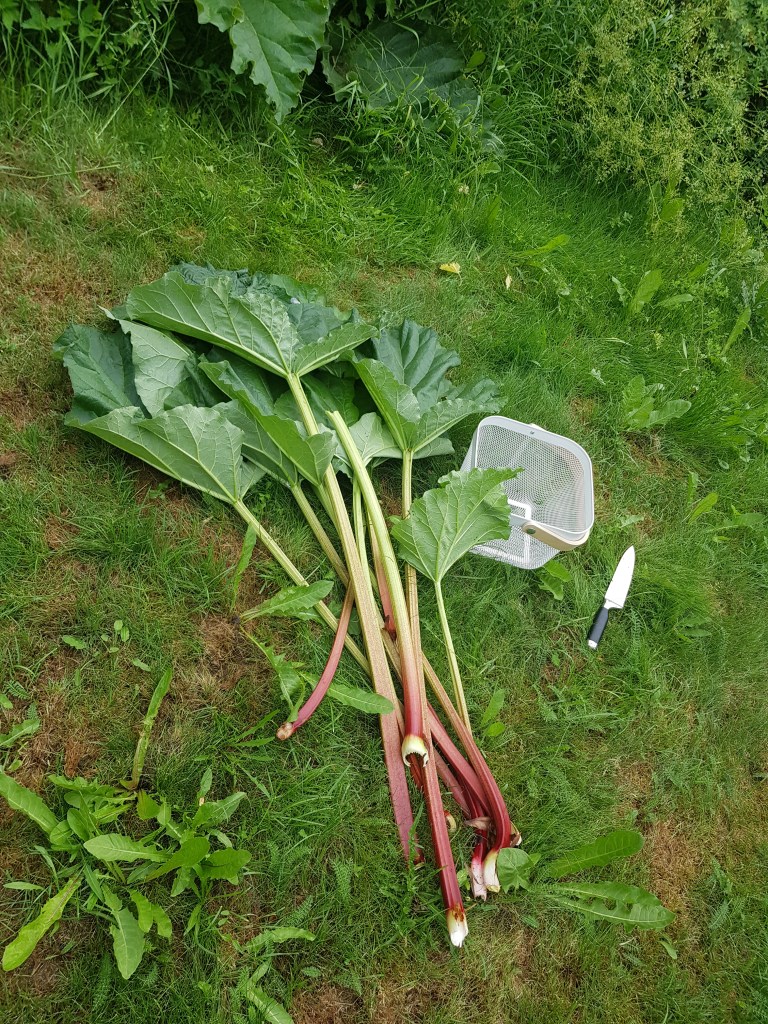
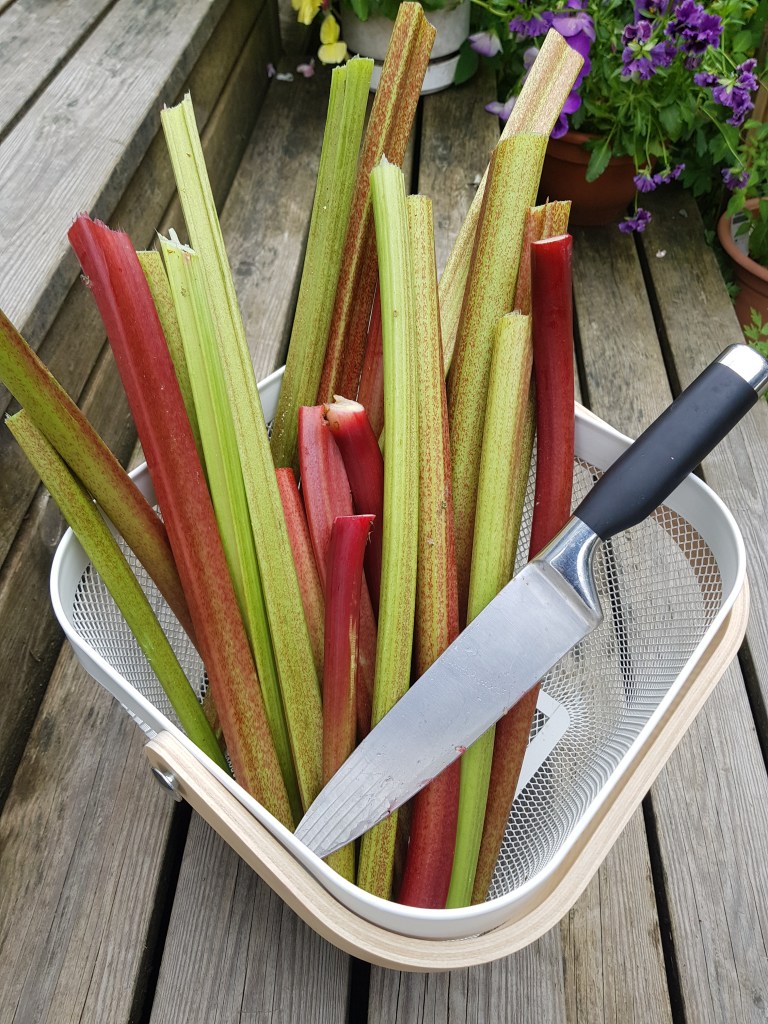
Although I was excited to harvest and taste rhubarb that first year, I was also nervous because of all the warnings about their poisonous parts. While I’m still cautious about thoroughly removing the leaves, I’ve become much less wary over the years. Especially after one of the neighbor’s kids, during a birthday party, casually asked to pluck a stalk to snack on raw. This has actually become something that I rather enjoy doing as well, though I prefer to dip it in some sugar to temper the sourness.

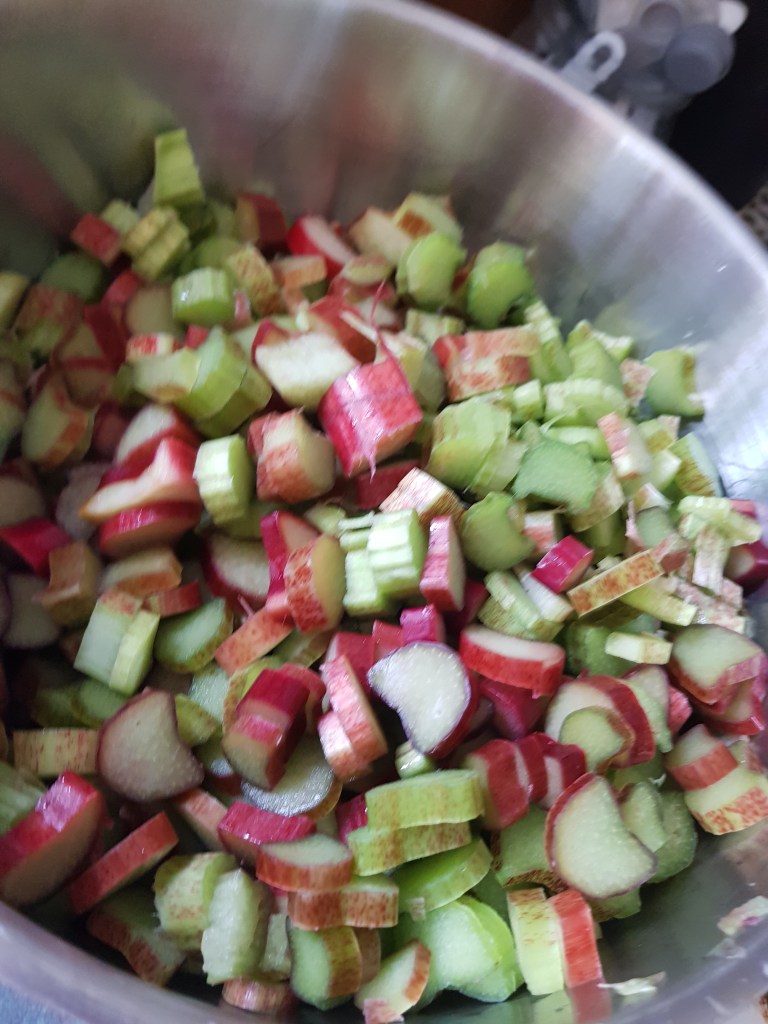
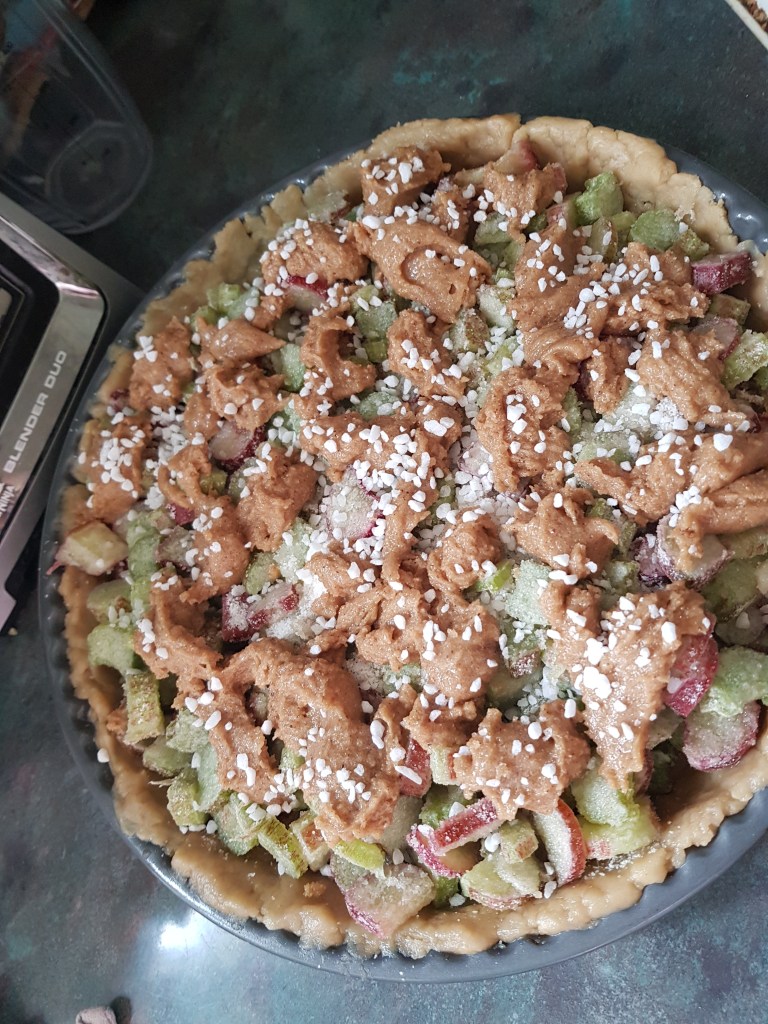
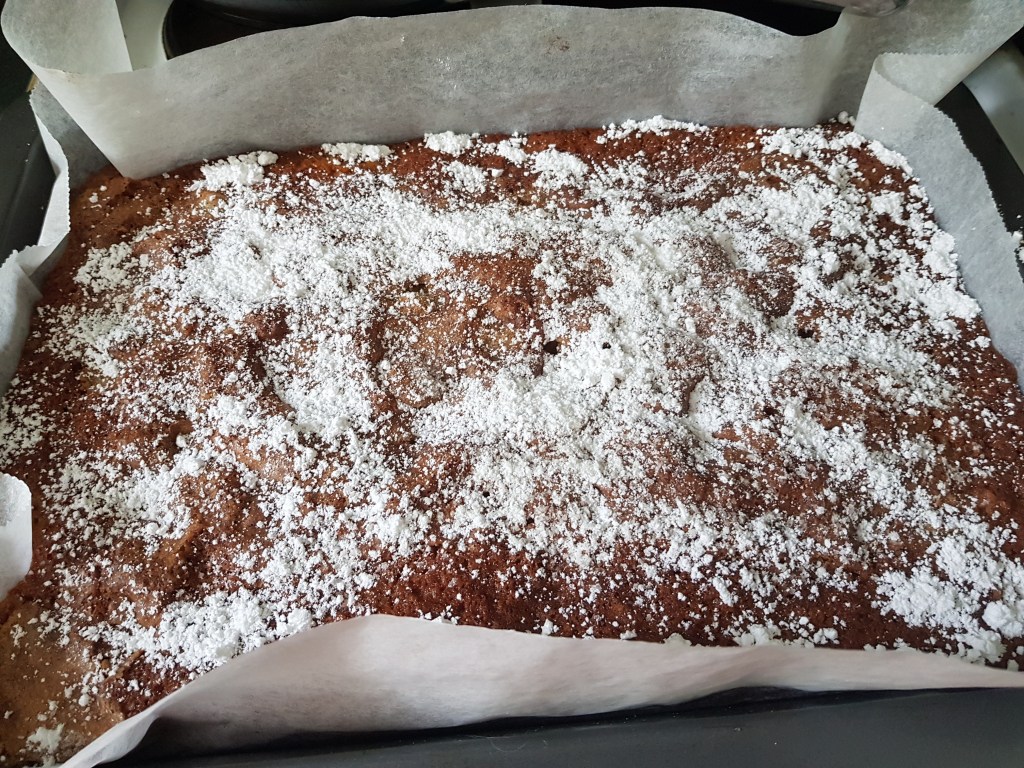
Aside from eating it straight off the plant or making desserts straightaway, I also harvest several stalks every summer to freeze for using over the rest of the year. Some of our favorite recipes are rhubarb pie, rhubarb cake, and rhubarb vanilla jelly.

Final count:

  • Rheum rhabarbarum ‘Victoria’ – 2 large and ancient clumps

Garden Inventory | Paeonia lactiflora ‘Garden Lace’

One more peony before we go back to the older stuff! This young lactiflora was planted in autumn 2022 and shot up really fast in the spring. It produced two huge buds in its first spring, which makes me hopeful for what it will do in the future.

Paeonia lactiflora ‘Garden Lace’ (lactiflora = kiinanpioni) opened just a day or two after ‘Sarah Bernhardt’. It has a Japanese anemone-type flower, which makes it stand out amongst my collection of frilly doubles. Sadly, I didn’t get a picture of the flower while on the plant because I was running around doing emergency thunderstorm cutting. Since this was the first year this plant flowered, I wasn’t certain how it would cope with rain and thought I’d err on the side of caution. I will leave some on the plant next year and see if they really do stand up to water as well as Google is telling me.

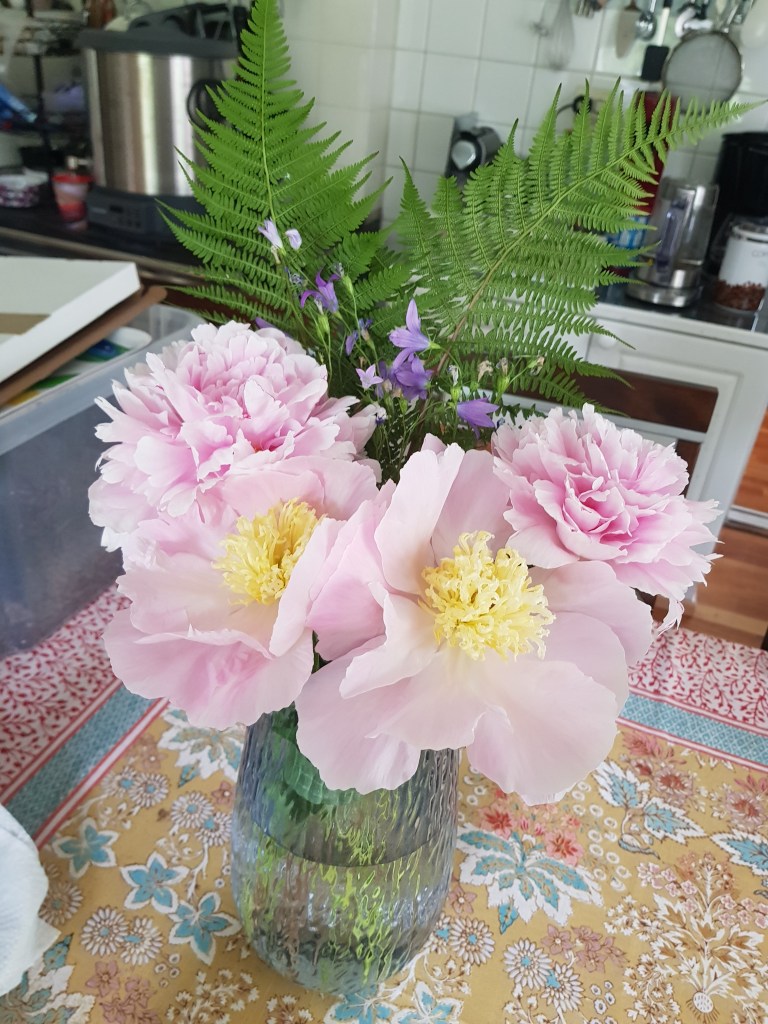
Not much in the way of observations yet, since it’s early days, but look at the size of those flowers! Each one was nearly the size of my fully opened hand. I first arranged them in the vase when they were still in bud and kept on having to shift everything around to make more room as they unfurled. The little yellow pom-pom in the middle is just too cute. It’s super fragrant, too!

Final count:

  • Paeonia lactiflora ‘Garden Lace’ – 1

Garden Inventory | Paeonia herbaceous hybrid ‘Lemon Chiffon’

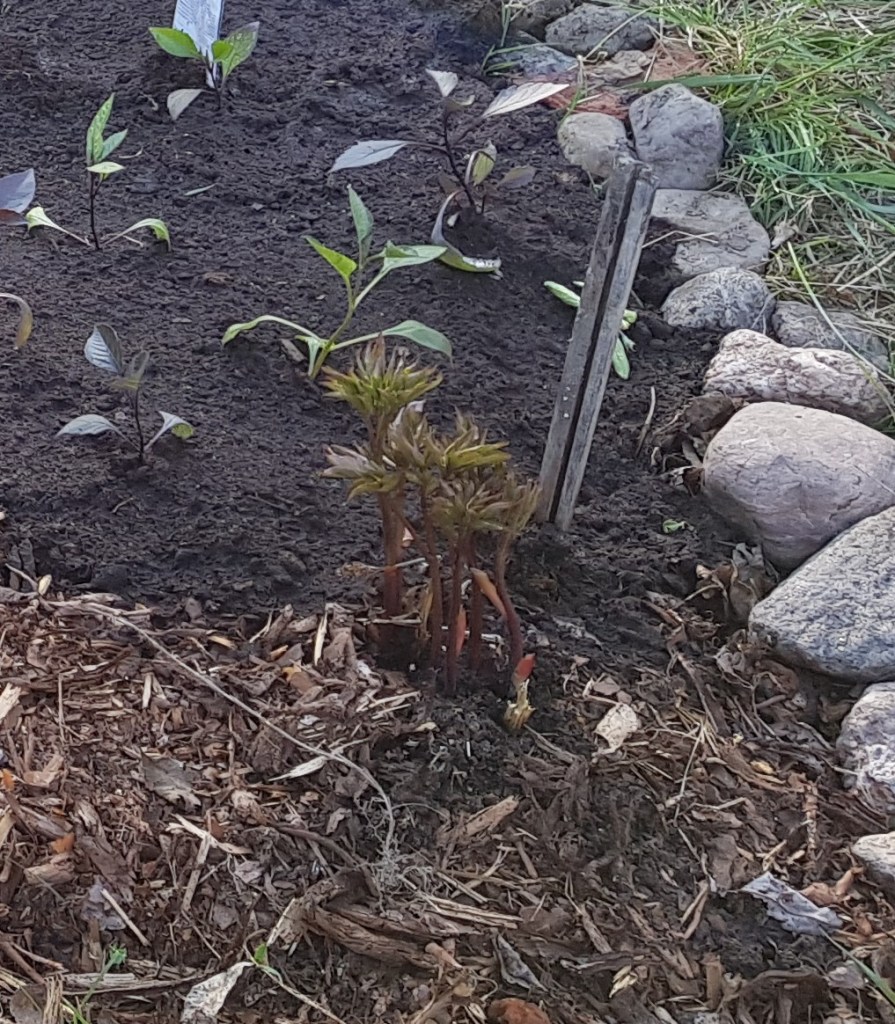
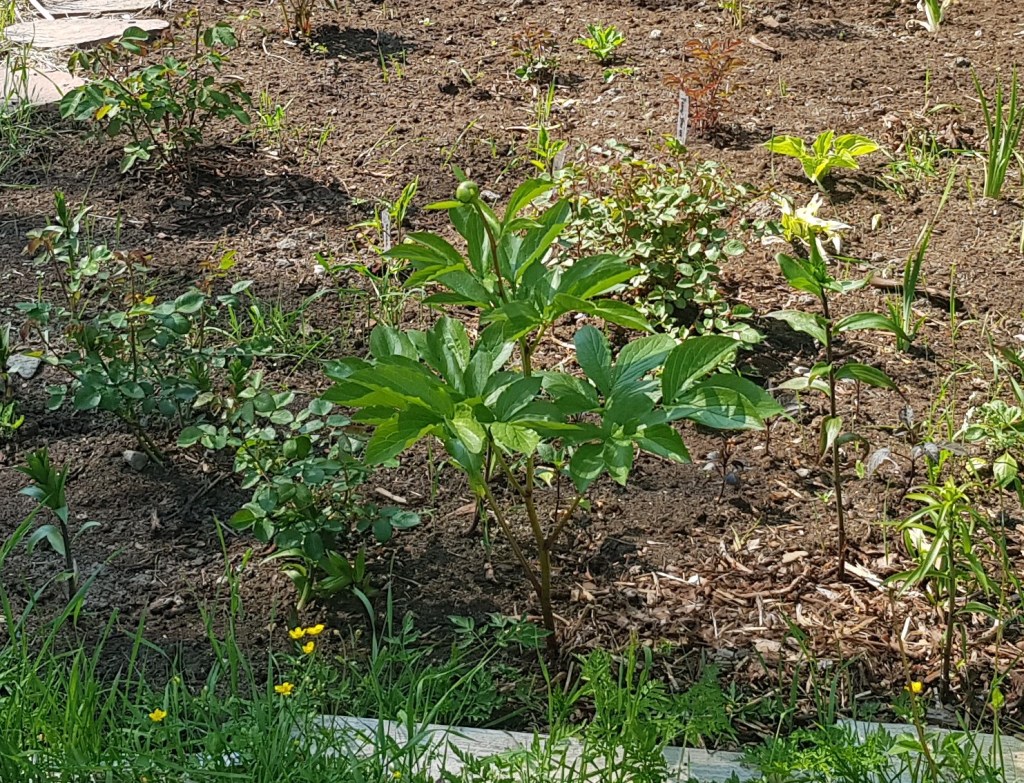
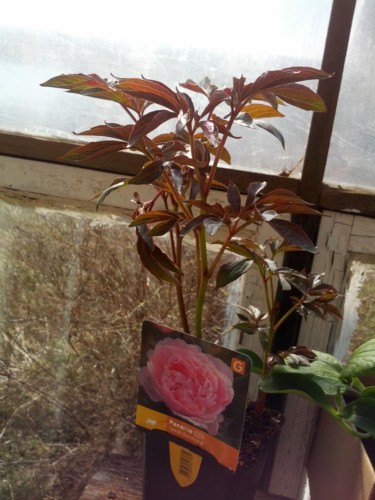
I’m taking a break from cataloguing the older plants today because I wanted to share one of my favorite debuts this season. This peony was planted out late summer/early autumn of last year and you can see what it looked like in the slideshow below. All I ever saw of it were two tiny leaf stalks, while the other three varieties I planted at the same time produced several shoots. It was a bit disconcerting.

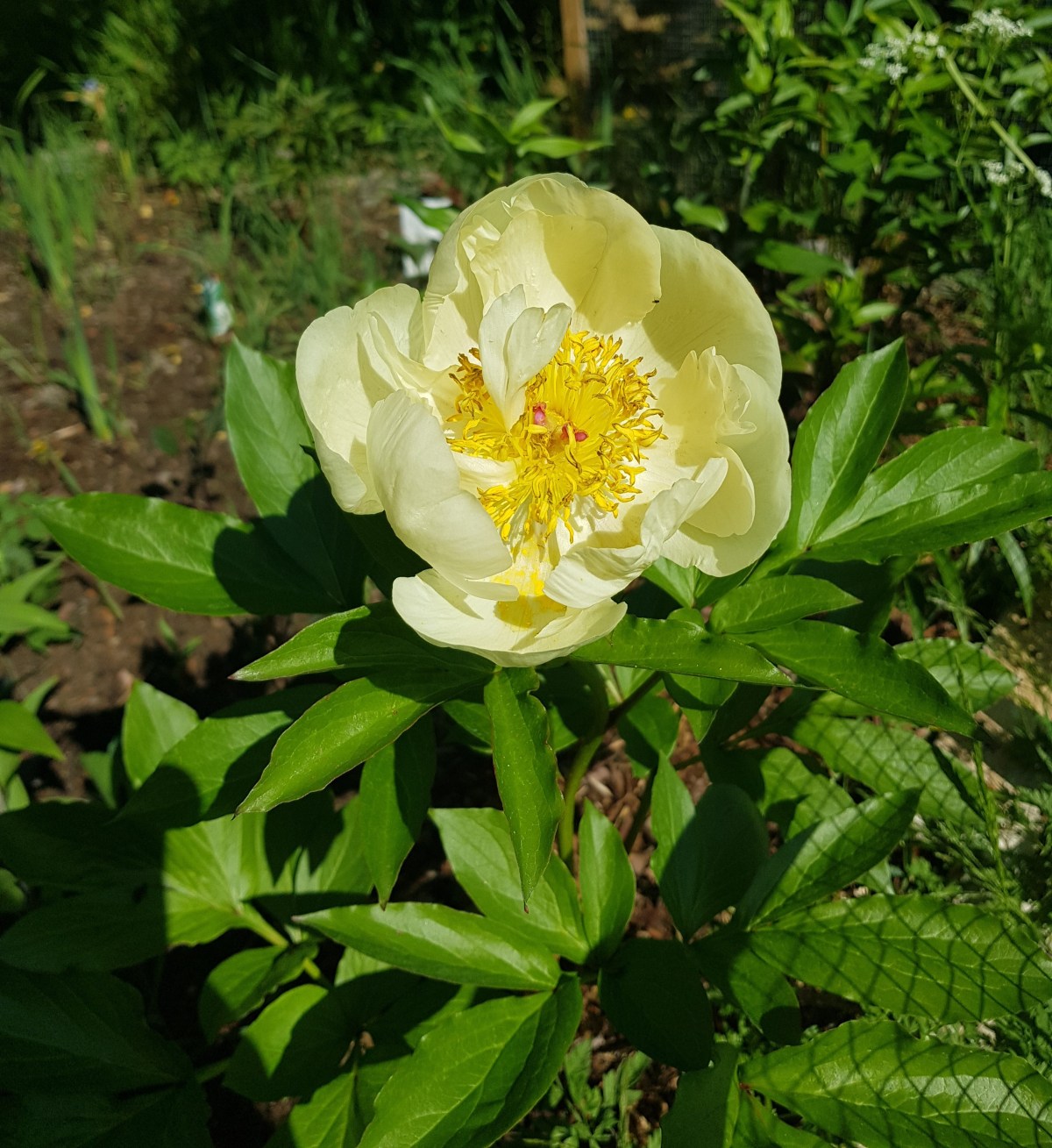
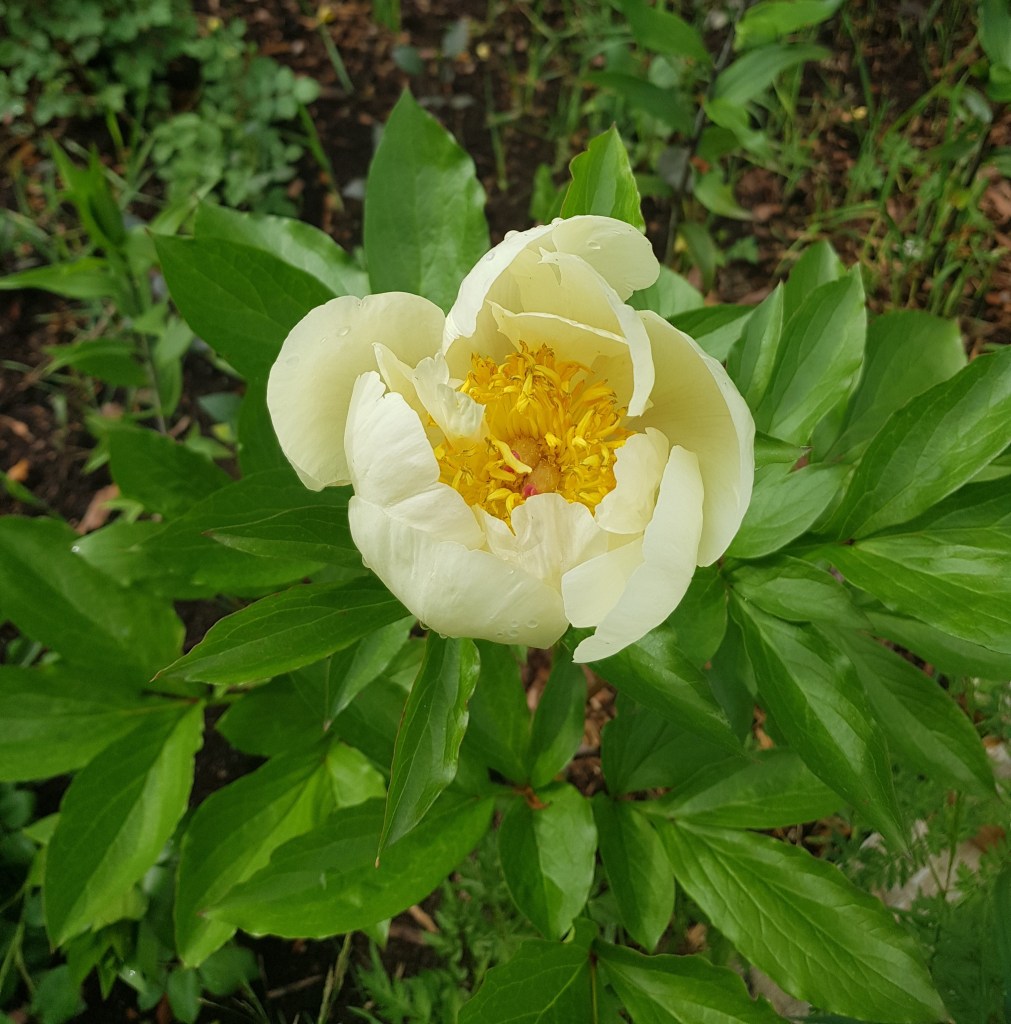
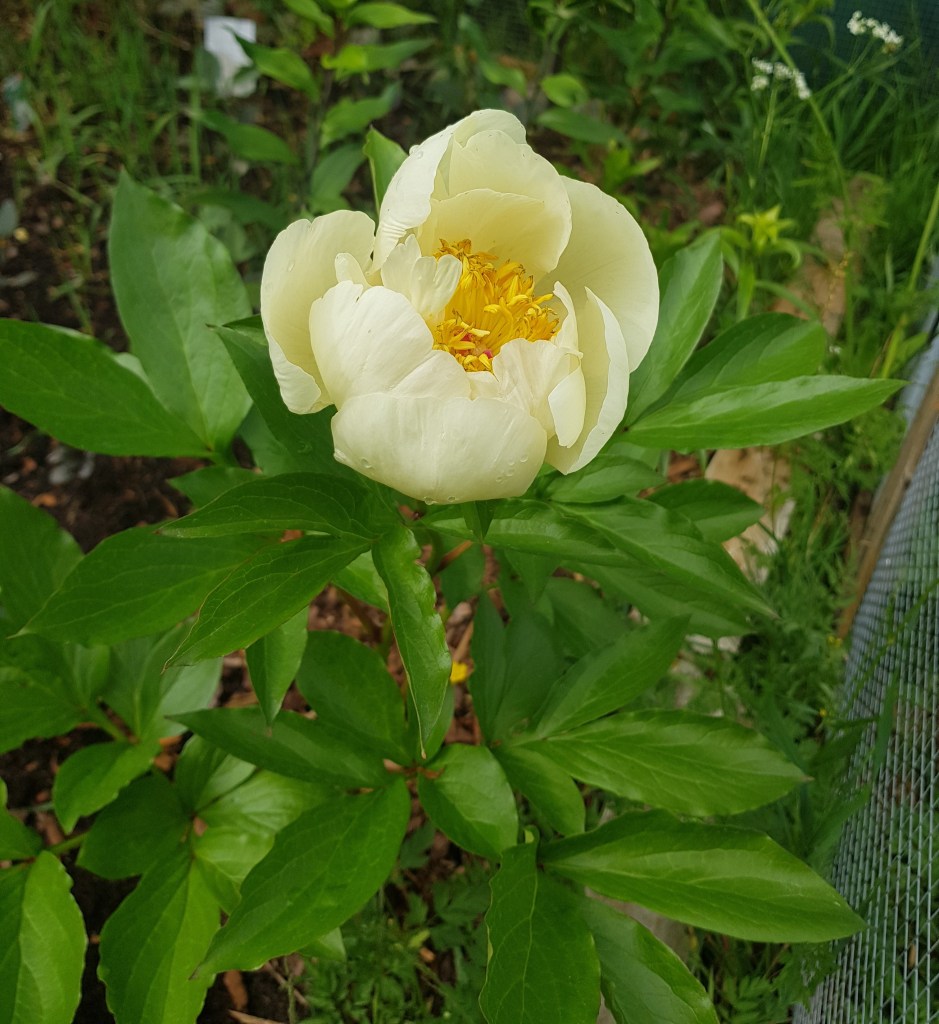
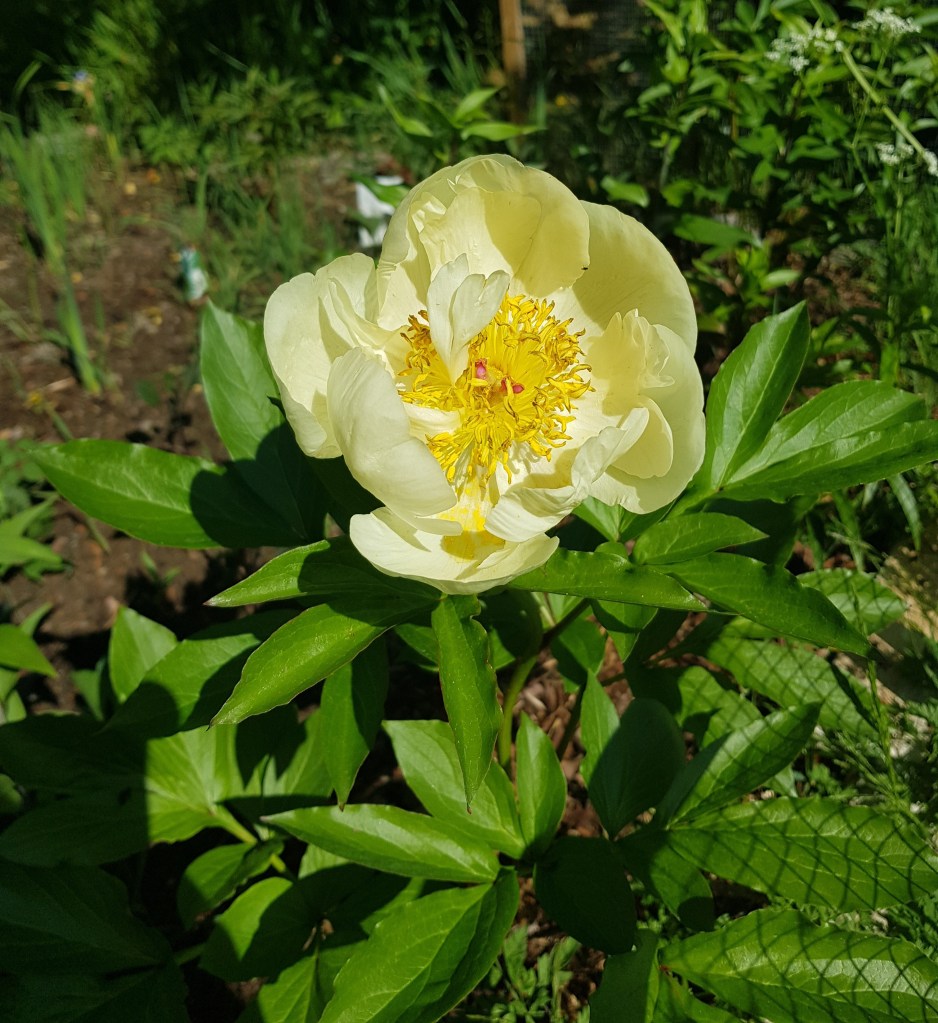
What I found out this year was that although I wasn’t seeing much happening above ground, Paeonia herbaceous hybrid ‘Lemon Chiffon’ was industriously building its root system below. This spring, it once again produced just one large stem but it easily outdistanced all its neighbors in height and leaf size. Although it’s labeled as a lactiflora hybrid, I suspect there must be a tree peony somewhere in its lineage. It also produced a very large and very fragrant creamy yellow bloom — the first peony in the cutting garden to do so. There’s just something so refreshing about yellow peonies. The flowers are supposed to grow more doubled as the plant matures, so I’m looking forward to increasingly spectacular displays from this little one.

Final count:

  • Paeonia herbaceous hybrid ‘Lemon Chiffon’ – one promising ingenue of a plant

Garden Inventory | Paeonia lactiflora ‘Sarah Bernhardt’

You know what they say about making the most mistakes with your first child? It applies well to plants, too. I grew up in southern California, zone 10. We were at the edge of possibility for heat-tolerant roses and peonies were not even a remote possibility. So when we moved into our house (zone 5/6 border), I had plenty of garden experience that ended up being absolutely useless. I killed at least five young roses that first year, planting them in a completely inappropriate location, having not had time to observe what the area was like over the year. I also planted one peony with them, which I’d bought on a whim because it was on sale. Guess which one is still alive and kicking?

Paeonia lactiflora ‘Sarah Bernhardt’ (lactiflora = kiinanpioni) was my first peony. I’ve got a good collection of thriving peonies nowadays, but back in 2012, Sarah was a complete novelty. It happened to be sitting on the shelf next to the roses and it looked like it might go well with them, so it came home with me.

Since I knew that roses and peonies had similar soil and light requirements, I then made the mistake of treating it exactly like a rose and planting it relatively deep. All the plants grew well enough their first spring and summer, only for everything to be flattened the first winter because the location I had chosen happened to be where our roof sheds the majority of its snow for half the year.

The roses did not return. The peony did, but I didn’t even notice it because it was just green foliage that was rapidly engulfed by the large bank of weeds that sprung up around it. Also, it never bloomed. The first few years, Google assured me that this was probably because of transplant shock. By year five, I was pretty sure there was another explanation and that perhaps it should be moved. However, I was dealing with a young toddler by then and not at all tempted to go wading through the jungle to find one ornery plant.

So there it stayed. For another four years. Yes, this thing sat in one place for nine years, neglected and throwing out nothing but leaves in a pile of weeds. I’d pretty much given up on it.

Then, three years ago, I saw something utterly unexpected — a big pink powder puff of a flower amongst the rampant horsetails and bergenias. Sarah had somehow managed to produce a flower. Last year, she gave us two. This year, there were four buds. Something had obviously happened. I hypothesize that the small maple (one of those weeds that never got pulled) growing next to it finally grew big enough that its roots pushed the peony upwards to a more comfortable depth. Some soil erosion possibly helped, too. Whatever the case, it has now achieved some sort of balance after nearly a decade of hanging tough.

Happy ending, more or less. Stubborn as this plant is, though, you can expect that there’s a twist. For the past three years that it has flowered, Sarah has inevitably managed to do so on the day of the first summer thunderstorm. I learned the first year that heavy rain will shatter double peonies faster than you can blink. It’s like she’s sitting there with a timer, waiting for the most inconvenient time to unfurl those flowers in some sort of cranky protest, willing the rain to get to them before I can.

Still, I’m glad that she’s still around, even if I have to run out before the storm every year.

Final count:

  • Paeonia lactiflora ‘Sarah Bernhardt’ – one stubborn but beautiful plant

Garden Inventory | Rosa pimpinellifolia ‘Plena’

Today we are continuing with the theme of old-fashioned garden plants that are particularly associated with Finnish midsummer! This rose is more common than the peony in my previous post and is still sold regularly in garden stores. It’s more surprising to see an established garden here without one than with. Ours came with the house and I wouldn’t be surprised if it was one of the original plants in the garden.

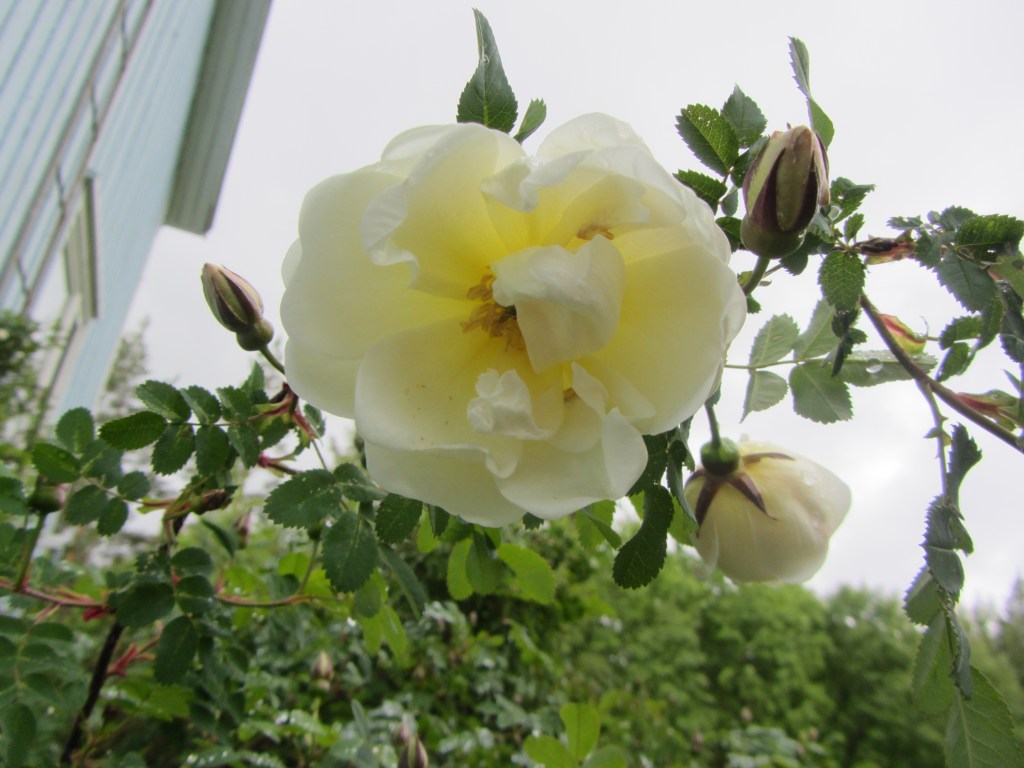
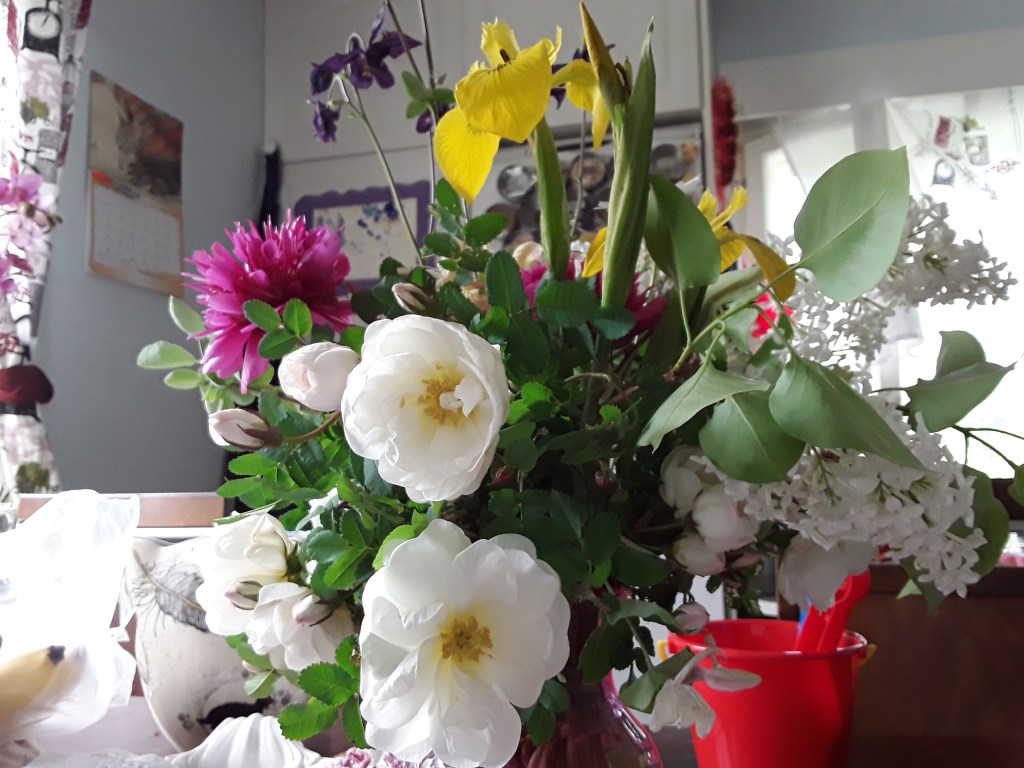
If there’s one thing I can say about Rosa pimpinellifolia ‘Plena’ aka the midsummer rose (Juhannusruusu), it is that it does exactly what it says on the label. By the second half of June every year, it is reliably covered in pretty little semi-doubled flowers that perfume the air for several meters in every direction. The pollinators go nuts for them and it’s magical to see the better part of an entire wall covered in creamy white roses.

Except. Of course there’s an except.

Except that, this thing is a very big, very mature specimen. We have shorter fruit trees. It’s also wide. Sprawling. The plant description states that it should be between one to two meters tall but I’m pretty sure ours is just short of three. It’s about that wide as well. I saw one webpage that described it as “thicket-forming” and might have snorted laughing. My only consolation is that it has most certainly reached the upper limit of its growth potential.

Also, it has an annoying habit of turning crispy and brown by July and then sitting around looking very sorry for itself for weeks on end. It’s amazingly tolerant of all kinds of weather, though, and is back to its lush self within a week of good rain.

To be fair, the complaints I have about this plant are mostly our fault for never having pruned or cared for the thing since moving in here. If you had something that big and spiney, though, you’d have second thoughts about going near it without heavy-duty tools and armor too. This is problematic because we now have a giant hedge of thorns, a la Sleeping Beauty’s enchanted castle, blocking the emergency exit ladder. While I’m sure none of us would have qualms about kicking aside a spikey shrub if there was a fire, it’s still not a situation I’d like to find ourselves in.
I suppose what all this comes down to is that my to-do list now has “cut back monster rose thicket” on it. It has just finished flowering, which is supposedly the best time to be doing this task. Armed with heavy-duty hedge trimming shears and a pair of leather gardening gauntlets, I will hopefully have this thing tamed in a future update.

Final count:

  • Rosa pimpinellifolia ‘Plena’ – one absolute unit of a shrub