Six on Saturday | 18th November 2023

First post of winter, brrr! Our nights have consistently been dipping below 0°C now, though not very far below most of the time. Enough to justify a fire in a woodstove and candles everywhere, though! There are about six hours between sunrise and sunset at the moment, though that’s closer to five hours of usable light on a good day, and it’ll drop to four by next month. It’s dark when I leave the house in the morning and dark when I get back from work, so the first time I’ve seen the garden all week was actually Friday afternoon. It keeps me from dwelling too much on outdoor chores, at least.

1. The last of those chores was to dig up the Jerusalem artichokes for storage in the root cellar. The bag I got wasn’t labeled, but I believe these are ‘Red Fuseau’ after reading some descriptions online. I planted only one tuber in the spring, so didn’t know what to expect. That resulting plant has given us a little over 20 tubers of various sizes, so that worked out pretty well! I plan to cook half of them in some sort of soup and plant up the rest this spring in their own bed. In the meantime, they are safely snoozing away in a root cellar bin.

2. Speaking of the root cellar, I was asked for specifics about carrot storage, so I thought I’d show you what I did. I’ve found that carrots and beetroots will survive the winter just fine in a mesh basket in the cellar, though they start to get wrinkly after a few months. Packing them with damp-ish material is supposed to help, so I chucked my first crop of carrots into a big bucket with sterile bagged potting moss. Potting moss mix is made from sphagnum moss (not peat!) which stays nice and airy, absorbs moisture well, and also seems to inhibit microbes. It serves as packing material in the winter and then is used for potting up plants in the spring!

After calculating the amount of space I needed for the rest of the root vegetables, I bought some stacking plastic feed bins to store the rest. Since I harvested the carrots during the wet season, I didn’t bother to dampen the moss, and let it instead suck out any excess moisture from the carrots, to be used later. Roots are placed in the moss so they don’t touch, with a layer of moss separating each layer of carrots like a giant veggie lasagna. Anything else that’s prone to drying out got similar treatment.

3. A walk in the garden this morning found everything covered by a light layer of snow. Not enough to make for pretty landscape photos yet, though. These rose hips have colored up well and provide welcome relief from all the brown and white. I’m leaving them for the birds, who are currently more interested in emptying the feeder under the kitchen window. That’s been refilled with oil sunflower seeds, which always attract a party. Speaking of sunflower seeds, I shall have to buy new packets for spring because the heads that I harvested last month got eaten by sneaky mice in the barn whilst they were drying! Lesson learned.

4. Back inside we go to visit some green friends. Here are two baby brugmansias. The one on the left is a white one I started from seed. The one on the right is a cutting from a local gardener and should have peach flowers. They will both take a few more years before they are mature enough to bloom, so I am happy that they have adjusted to life under a grow light on a windowsill.

5. Back at the beginning of 2021, I saw this thing on Pinterest about growing your own lemons from seed and decided to try it. They said to go buy a nice organic lemon from the store because those would have the best seeds. So I came home with this big, beautiful lemon from the fancy fruit section, which I let sit on the counter for a few days until I could have some uninterrupted gardening time. I dreamt of a pot full of fragrant little seedlings from this plump paragon of a lemon. Then I finally cut it open to find… it was all flesh and no seeds. Not one. Nada. Oh, the disappointment. It made great lemonade, though.

I still had a pot with a little greenhouse dome prepared for planting, so I rummaged through the fridge drawer and pulled out one of those six-in-a-plastic-net-bag bargain lemons from Lidl and cut the seeds out. They all sprouted and I was giving out baby lemon trees that spring to anyone who wanted one. Here is the one I kept, 2.5 years later.

6. One of our current propagation projects. My son’s Echeveria disintegrated this past summer. Whether it was due to overwatering, underwatering, or some other factor (probably cat-related), we are not certain. He was upset. This kid loves his succulents. I told him not to worry, we could plant them like seeds and get more plants! Thankfully, I was not proven a liar. Look at all the baby Echeverias!

Thanks for visiting and please do check out what the other SoSers are doing over at Jim’s page!

Six on Saturday | 11th November 2023

It’s supposed to rain for most of this weekend, but I’ll be ducking out during the lighter portions to harvest what I can because winter officially begins for us next week. The nighttime temps will be consistently below 0ºC, the snow will fall, and the ground will be frozen solid after a few weeks. I’ve left more vegetables out later than I normally would this year and I must say that it’s worked out rather well! It’s given me a lot more time between harvesting each crop to prepare them for storage, which is just as important as growing them if they’re to be usable for the next six months.

1. The first time growing kohlrabi ‘Azur-Star’ has been a success. It was sharing a bed with golden beets and still produced a basketful of good-sized bulbs to use for the next couple of months. I’ve also really enjoyed using its leaves and stems in soups. I plan to give a whole bed to kohlrabi next year and grow both colors to see if there is any difference in flavor between them.

2. First time growing Hamburg parsley, which suffered a little from my mistakes. Which is a shame, because after nibbling on some of those tiny roots, I think I rather like the taste. The problem came when I didn’t thin them out and ended up with many tiny baby roots instead of bigger ones, much like what happens with carrots. I intercropped them in rows with radishes since those were pulled out much earlier on. Perhaps next year I will just mix the two seeds before sowing so that the spaces created when the radishes are harvested will be more uniform. I love that this is a twofer crop, providing fresh leaf parsley through the summer (which I also dehydrate for winter use after harvest) and nice mellow-tasting roots.

3. The salsify and scorzonera are still in their bed, being very cold-hardy. I put a thick fleece over them to keep the soil from freezing for as long as possible and will see how long I can harvest them this winter like that. I haven’t pulled any up, so don’t know how big they are yet. If they do get frozen in there, we might just have to wait until spring to taste them!

4. The baby lettuce bed with its plastic greenhouse cover is alive but doesn’t seem to have any interest in growing. I’m guessing the waning light is to blame. We’ll see how they do for the rest of the winter.

5. My biggest surprise this week came when I started harvesting my son’s carrot bed. I planted a bed of early Nantaise 2 carrots before the last frost and although it had a very healthy amount of green growth, the root harvest ended up being mediocre at best, perhaps because of the very dry spring conditions. We ended up with one large basket. The Berlicum 2 carrots that my son planted a month later had much less greenery, were growing in a shallower bed, and had been grazed on by local herbivores at some point, as you can see in the picture to the left. We figured that between the two beds, we’d have enough to last a couple of months, used sparingly. And yet.

So I went to pull them out this morning, mostly out of guilt because I had left his carrots too long last year and they’d all frozen to mush. And I kept pulling. And pulling. And pulling. There were tiny carrots and good-sized salad carrots and big old soup carrots and everything in between. I ended up having to turn over my stool and use it to carry carrots. Then went back and got another bucket to carry more carrots. It started raining heavier and I was. Still. Pulling. Carrots.

The moral of this story? I’m not sure, but this kid better not be lying about liking carrot salad.

6. Last of all, an update on the herb cuttings I took last month. The mints all rooted easily in water, as expected, and are now moved into their pots for growing out over the winter. The main plants are still in the garden, but these are backups because the ones outside don’t always survive. The three thymes also rooted amazingly fast and are now sitting around my olive tree like kindergartners at storytimethyme.

Thanks for visiting and please do check out what the other SoSers are doing over at Jim’s page!

Six on Saturday | 4th November 2023

So this has been an eventful week, though perhaps not one I’d like to repeat. I came down with a rather unpleasant virus at the end of last week which lasted well into the beginning of this one, keeping me from participating in Halloween events with my students. I also lost my voice, so I have been conducting classes with the help of a computer-generated voice (with associated frenetic typing and pauses) and plentiful gesticulations. At least the kids seem to find it entertaining.

1. Somebody flipped the “winter” switch on the night of the 30th, and we all woke up to full-on snowy conditions on Halloween. It stayed this way for most of the week, which would have been fine except that a lot of us still had summer tires on. Any advantage to that extra morning hour from daylight savings was mostly spent on leaving the house early so we could drive on the roads slowly and safely.

2. …and then the rain came last night and we’re back to autumn again for the next week or so. Cutting garden on the left, sports lawn in the middle, vegetable garden to the right. There isn’t much left to do other than putting away some ornaments and cutting down any lingering plant material.

3. My son gave me this Thanksgiving cactus for Mother’s Day. It flowered this week! Very pretty light pink blossoms. I think there were five of them, but I accidentally knocked off one of the buds when I moved it to my classroom window sill. I’ve never had one of these plants before and am very pleased with how easy it’s been to care for.

4. Wrapping up the garden has started me thinking about what projects to tackle next year. I’ve added a new row to the vegetable garden, but that’s mostly because we’re growing more of the things we like eating, so nothing new there. The cutting garden is well on its way, so next year will be more about fine-tuning what is already there. The patch in the picture below is an area next to the garage that needs a bit of cleaning up, and I’m now thinking it’d be the perfect place to put all my shade-loving woodland plants, with a bit of soil improvement. On the list of things to be moved here are: ostrich ferns, various sizes of hostas, columbines, lily of the valley, dicentras, and rhododendrons. There should be plenty of room to bring in some other stuff, too, so I would appreciate any suggestions you might have for zone 6 hardy plants that might do well here.

5. Not from my garden, but my mother-in-law dropped in earlier with these lovely roses for my birthday and I had to take a photo. Why do I not have any red roses in the garden? This is something that needs to be fixed next spring.

6. This is Munchkin. He is a Noctuidae moth caterpillar (known to many as a cutworm). He hitched a ride inside on the last of the gladiolus flowers the night before the first frost. I found him the next morning on the kitchen table about to be eaten by the cat and took pity on him. So now he is in a Nutella jar for the winter, keeping us company as a temporary-pet-come-science-project. Hopefully we will get to see him pupate and metamorphosize, since we didn’t manage to catch any butterfly caterpillars earlier this year. In the meantime, he has been amusing us by producing candy-pink poops from eating pink flowers.

Thanks for visiting and please do check out what the other SoSers are doing over at Jim’s page!

Garden Inventory | Ribes rubrum ‘Aili’
Before moving to Finland, I’d never met a currant bush of any sort before. The most common ones in gardens only grow in temperate climates, so they were never really an option in Southern California. Even in the rest of the US, they’re not as common as other berries — even though the federal law against them was lifted in the 1960s, several states still have their own laws regarding growing them. There was a whole thing about them being associated with a strain of rust that was affecting the logging industry, but that’s just a Google away so we will skip that part. All this meant that although I’d read about currants and gooseberries in books, I never saw a real one until moving here in 2010.

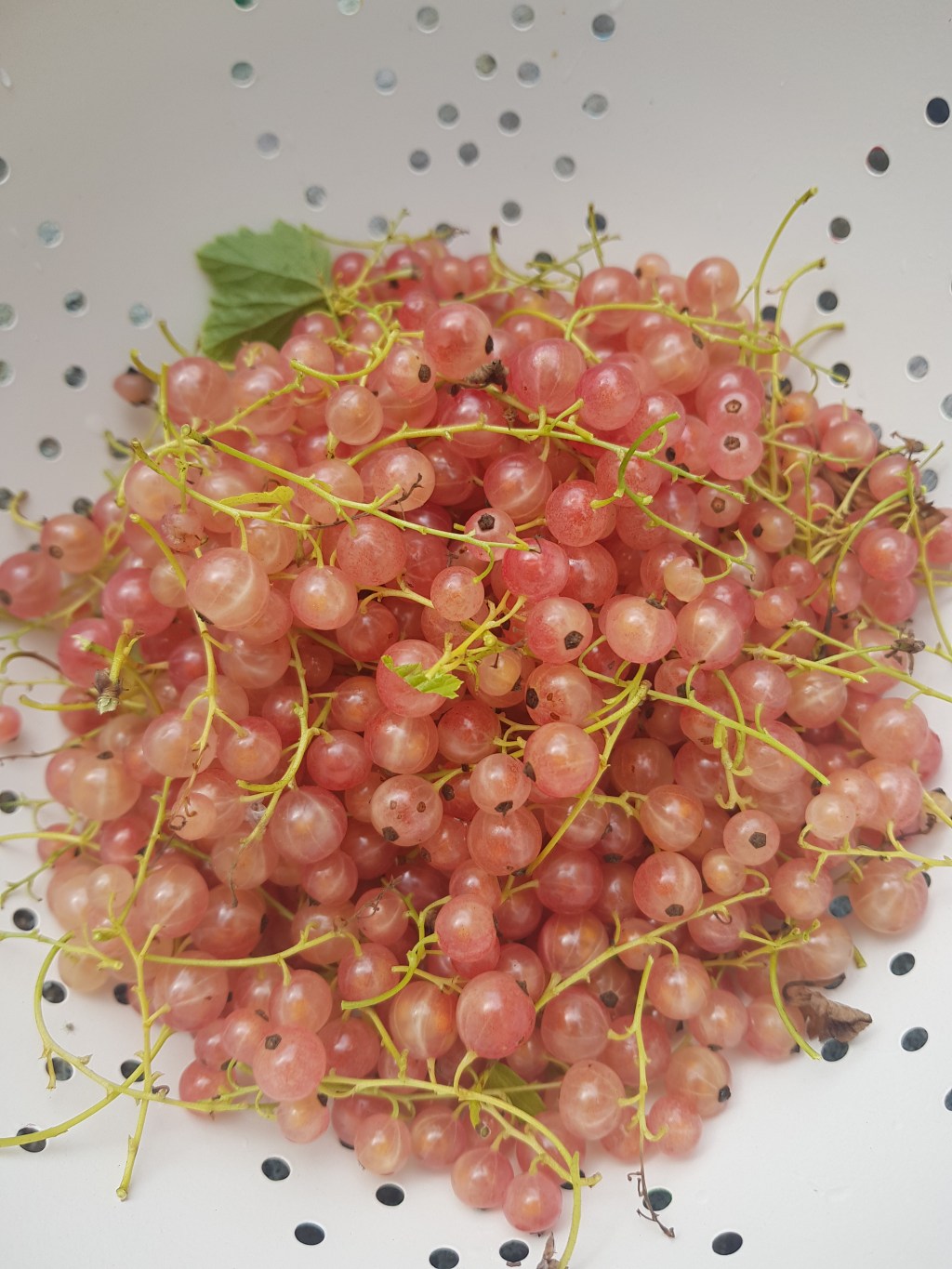
Ribes rubrum ‘Aili’ (vaaleanpunainen herukka) was the second currant bush I purchased for the garden, back in 2019. I had planted a whitecurrant the previous year and decided it needed company. There were also lots of blackcurrants and redcurrants left by the previous owners, but those were on the older side and would need replacing within the next several years. The main reason I wanted to write about ‘Aili’ first is simply because it’s the prettiest of all my currants. It’s not all superficial, though — the gorgeous pink berries are also sweeter than redcurrants and the plant has been much more reliable than the whitecurrant. This little shrub has given me the least trouble and most reward as a first-time grower of ribes, so I have developed a great fondness for it.

As you can see from the first picture, this plant was flowering from the first day I got it. The first year, it was unceremoniously plunked into a hole in the lawn, a few feet away from the whitecurrant and roughly where I expected my vegetable patch to eventually expand. It sat this way patiently for the next two years until said expansion actually happened, and I got around to giving it a little wooden collar, compost, and mulch. That seemed to be all it needed to put up several more branches and double its height. It got so big that I was able to take six cuttings this summer, which are now happily overwintering in the spinach bed until they are big enough to put out in the garden next spring.

‘Aili’ produces about as many berries as any redcurrant would, since that is what it was bred from. Since I’ve started giving it a decent top dressing of compost every spring, it’s been growing rapidly and producing more and more trusses each year. This year’s batch was only enough for fresh eating and smoothies, though I did consider mixing it with the white currants and making a small batch of pretty rose-tinged jam. I should have enough next year to do this purely with pinkcurrants, though!

Final count:

Ribes rubrum ‘Aili’ – 1 healthy shrub and (hopefully) 6 rooted cuttings next spring

Six on Saturday | 28th October 2023

A year and a month ago, I shared a weekend project where I added shelving to our root cellar which had been sitting unused under the house for a good couple of decades. Since I’ve finished storing most things in the root cellar this autumn, it seemed a good time to catch up on how it’s worked out this past year!

1. The stairway downstairs, with temperatures warmer than the basement but cooler than the house proper. This also happens to be the perfect place to store onions (hanging along the wall) and baskets of apples (in the corners). Last winter, we had a big box of apples stashed here for over six months in perfect condition that provided not only convenient fruit but a lovely aroma as you went down the stairs.

2. The view from the door into the root cellar. The small shelves attached to the wall on the left came with the house. I installed the middle set of three shelves last year. The set of three more shelves to the right was installed this past spring. I’m considering taking out the small shelves next year and lengthening the middle set of shelves, as well as adding another set along the wall to the right of the door, to give the whole room a more uniform appearance. That is, if the shelves don’t end up being discontinued, which seems to be a real concern at the moment.

3. Anything that does better in cold storage is kept down here. That includes jars of various canned preserves and juices, dried herbs, packaged items from the store, and baskets of root vegetables.

4. Spare jars, pots, dormant bulbs, and overwintering plants are along this side.

5. This year, I’m storing my garden carrots in this big bin filled with potting moss. It keeps them from drying out, which was the main problem I had last year when I kept them out in mesh baskets like the potatoes.

6. You can see in the pictures from last year that I originally was keeping my potatoes in cute little rattan baskets. This proved to be an epically bad idea, as the material soaked in too much moisture and started molding after only a few weeks, ruining the entire batch of potatoes inside it. Everything ended up going straight into the compost heap and I ordered these metal mesh baskets to store anything that remained. They have been enormously useful for all sorts of purposes over the year and are now back on potato duty for their second winter.

Thanks for visiting and please do check out what the other SoSers are doing over at Jim’s page!

Six on Saturday | 21st October 2023

Our first frost arrived this past Thursday! Maybe a little earlier than expected, but still within the normal range. All the tender plants and bulbs are either (1) sitting on a house windowsill, (2) safely tucked away in the barn to dry out a bit, or (3) already slumbering away in the root cellar. All the spring bulbs have (finally!) been planted. Vegetable and flower beds are steadily getting covered or mulched depending on what is left in them. Just about the only tasks left are to plant a few remaining shrubs and do post-frost cleanup. This is the first winter I’ve been this organized, so pardon if I sound overly excited. I might finally be getting the hang of this gardening thing.

1. Aronia mitschurii ‘Viking’ lines part of our driveway and always provides lovely color in the cold season. It is usually laden with berries until after December, but it looks like the birds got to them early this year. One of these days, I might get around to picking some for the juice, but we are usually so overrun with berries by this late in the season that I can’t muster the energy to do another round.

2. Rodgersia aesculifolia’s big leaves look like they’ve been sprinkled with powdered sugar.

3. In the cutting garden, Rudbeckia hirta ‘Prairie Sun’ and Antirrhinum braun-blanquetii are some of the last few still standing.

4. Summer crops beds, harvested and tucked in for the winter. I’m not the only one who insists on saving all the cardboard pizza boxes for this purpose, am I? The new row of beds to the left is being filled with assorted garden waste to break down in place over the winter. These covered beds will get a fresh topping of compost in the spring before new plants go in.

5. I got this set of wire towers on a whim. They’re cute but on the short side. Not sure what I’m going to use them for (sweet peas maybe?), but they’ll be nice for winter interest when everything else is covered in snow.

6. Shredded newspaper mulch! I started doing this a few years ago and it worked out so well that I’ve gone larger scale with it this year. The parts of the flower bed that I planted with spring bulbs, as well as the vegetable beds housing perennials, are covered in hand-shredded newspaper. The paper gets wet and freezes in position, leaving gaps for air under it. Then the snow covers everything, providing a nice insulating layer. The worms munch away on their paper buffet all winter, cozy and protected. The majority is broken down by the time spring rolls around, when a fresh layer of compost covers the rest!

Thanks for visiting and please do check out what the other SoSers are doing over at Jim’s page!

In a Vase on Monday | 16th October 2023

A mixed vase this week with something old and something new. The white dried hydrangea is Hydrangea paniculata ‘Grandiflora’ (I asked the person who planted it this time to make sure since Google was giving me too many different options), and the new little pink blooms underneath it are Hydrangea paniculata ‘Living Angels Blush’. Some aronia leaves help reinforce the autumn colors and perk up the faded white flowers. Apologies for the bad lighting, the vase is sitting in the front hallway, and I’m afraid of moving it at this point in case it shatters the flowers!

This is a post for Rambling in the Garden’s In a Vase on Monday meme!

In a Vase on Monday | 9th October 2023

It hailed overnight yesterday. That’s not to say that we’ve had a frost yet — it’s been chilly at night but not quite cold enough to upset all but the tenderest of tropicals so far. The temperatures have been fluctuating like crazy, though. The hail melted as soon as the sun rose, but it was still enough of a warning to let me know it’s time to start mulching the perennials and pulling up those summer tubers.

So we’ve come to the “last call vase” portion of the year. When I’m okay with cutting just about anything that hasn’t set seed (and some things that have), knowing that they’ll have a better chance of making it a week inside than out. You can see that the ‘Moonwalker’ sunflowers below have already taken a bit of a beating from being whipped around in the wind and weather the night before. The golden birdfeeder sunflowers are doing better, but they were also on shorter plants. In my optimism, I cut a big dahlia that looked like it might still open, but have since learned that dahlias don’t do much after cutting. So that will probably get removed later today. A couple of ‘Prairie Sun’ Rudbeckia, a little red bedding dahlia, and bunches of viburnum berries round out the bunch. I’m rather sad that the dahlia won’t open, because its big orangey-pink pouf would have been a nice stepping stone between the yellows above and reds below. Maybe next time.

This is a post for Rambling in the Garden’s In a Vase on Monday meme!

Six on Saturday | 7th October 2023

These pumpkins are not from my garden. I purchased them from a local farm and they are now sitting in my classroom, waiting to be turned into jack-o-lanterns by my students later this month. I’m including them because they are such gorgeous pumpkins and I wanted to have some on this blog, even if my own vines were quite dismal this year. If you’re curious about what’s happening in my garden, here are six things now!

1. I have started cleaning up the unruly stand of weeds and baby plum trees that has been plaguing the view from my kitchen window for years. Before I expanded the vegetable garden, it was just a slight eyesore. With the new row in place, it also became a potential source of weeds and blocked a pathway, so cleanup time it was. As usual, I forgot to take a “before” picture for before/after comparisons until I was well into the task. So to the left, you have a “one-quarter into the process” picture instead. On the right, is the current situation. I will finish pruning the trees in late spring since I didn’t want to make any major cuts to the trees we’re keeping, lest they get fungal infections.

2. I have been ogling this Fiskars ergonomic bulb planter all year. My bulb order arrived this past week and I finally had a reason to purchase it! After destroying two flimsy hand-held bulb planters, I was ready to upgrade. Walking out of the store, I felt like I was carrying a medieval weapon — this thing is a meter long and made of heavy steel. It has enough heft to bludgeon any unsuspecting muggers that might come along…. while you’re planting daffodils in the cutting garden at your house in the countryside. As you do.

3. Whilst pulling weeds and planting bulbs, I found a hiding anise hyssop (Agastache foeniculum), winter sown back in January of 2022. I hadn’t seen any sign of them since, so thought that they had all died out. While two little plants aren’t a very impressive survival rate, I’m happy that they’re there and hope that they come back stronger next year.

4. In perhaps an even more dismal showing than the agastache, here is the single nicotiana that actually survived to maturity from an entire packet sown this spring. It’s having a second flush of flowers, probably because of the increased rain. While I appreciate its efforts, I’m not sure if I’ll be planting these again.

5. The corn has finally been producing ears, though I’m not sure how they will fare with the falling temperatures. Then again, the weather has been anything but predictable this year, so I’m letting them carry on until the bitter end. If nothing else, some of them will be small enough to stir fry as baby corn.

6. An experimental bed of fall-sown baby lettuce mix, to see just how late I can keep it going. I’ve got a plastic cover for this bed when it gets cold enough, but suspect the main stumbling block will be when our sunlight dwindles to only a few usable hours per day. Still worth a try, though!

Thanks for visiting and please do check out what the other SoSers are doing over at Jim’s page!

Garden Inventory | Vitis vinifera ‘Zilga’

Alright, storytime! So not far from where we live, there’s an island with three nuclear power plants. The government has been conducting research projects there to find uses for the heat in the wastewater as the cooling system circulates it out of the plants. After all, we’re five degrees of latitude from the Arctic Circle and can use all the heat we can get, no matter what the season. So back in 2001, they ran plastic pipes carrying the heated water under a field, then planted it with grapes and other warm-season crops, effectively providing them with frost-free growing conditions all year round. They are also using the heat for small-scale fish farming. The projects are still ongoing, as far as I know.

Now, a decent percentage of the town population (yours truly and the previous occupants of our house included) have either worked on the island, currently have work associated with it, or have friends and family who have. That’s why cuttings from those experimental grapevines are now living in our garden.

Vitis vinifera ‘Zilga’ (viinirypäle) is a vigorous blue grape of Latvian extraction. It is very cold-hardy, withstanding temperatures down to -40°C, and enthusiastically productive. I suppose even with heated ground, it’s not bad to hedge your bets. Our plants must be nearing two decades old by now, and are in the prime of their lives.

I am not a particularly experienced pruner, so these vines have had to deal with my attempts at learning over the years. Mostly, I just try to keep them neat and ventilated. I made the mistake of allowing them to go unpruned last year and the greenhouse vine has now escaped its confines, insinuating itself into the shrubbery and trees beyond. The vine trellised to our outbuilding has engulfed its supports and most of the wall as well. We have meters and meters of vine, it’s insane. My plan for early next spring is to prune both vines back hard, around the same time as the apple trees. I’ll use the abundance of woody materials to construct a decorative garden hut next to the vegetable beds, hopefully big enough for kids to play in.

Did I mention that these things produce a LOT of grapes? They’re pretty tasty, too, with a hint of blueberry. However, there’s no way our family can eat that many grapes. They are also individually on the small side with plenty of seeds, which makes them not as appealing to kids, despite being very sweet and juicy. Mostly, I steam juice the fruit and can it for use over the winter, often mixed with apple or berry juice. This year, I plan to make grape jelly for the first time. They also make a nice rosé wine and our grapevines’ parents are indeed being used for that purpose. We’re not really wine drinkers, though, so juice it is.

The other thing I always forget to try with these plants is stuffed grape leaves, which I like at restaurants. Hopefully, a note here will remind me next year. Anybody got a good recipe?

Final count:

Vitis vinifera ‘Zilga’ – 2 sprawling vines, one in the greenhouse and one threatening to consume the left side of our outbuilding