Six on Saturday | 4th November 2023

So this has been an eventful week, though perhaps not one I’d like to repeat. I came down with a rather unpleasant virus at the end of last week which lasted well into the beginning of this one, keeping me from participating in Halloween events with my students. I also lost my voice, so I have been conducting classes with the help of a computer-generated voice (with associated frenetic typing and pauses) and plentiful gesticulations. At least the kids seem to find it entertaining.

1. Somebody flipped the “winter” switch on the night of the 30th, and we all woke up to full-on snowy conditions on Halloween. It stayed this way for most of the week, which would have been fine except that a lot of us still had summer tires on. Any advantage to that extra morning hour from daylight savings was mostly spent on leaving the house early so we could drive on the roads slowly and safely.

2. …and then the rain came last night and we’re back to autumn again for the next week or so. Cutting garden on the left, sports lawn in the middle, vegetable garden to the right. There isn’t much left to do other than putting away some ornaments and cutting down any lingering plant material.

3. My son gave me this Thanksgiving cactus for Mother’s Day. It flowered this week! Very pretty light pink blossoms. I think there were five of them, but I accidentally knocked off one of the buds when I moved it to my classroom window sill. I’ve never had one of these plants before and am very pleased with how easy it’s been to care for.

4. Wrapping up the garden has started me thinking about what projects to tackle next year. I’ve added a new row to the vegetable garden, but that’s mostly because we’re growing more of the things we like eating, so nothing new there. The cutting garden is well on its way, so next year will be more about fine-tuning what is already there. The patch in the picture below is an area next to the garage that needs a bit of cleaning up, and I’m now thinking it’d be the perfect place to put all my shade-loving woodland plants, with a bit of soil improvement. On the list of things to be moved here are: ostrich ferns, various sizes of hostas, columbines, lily of the valley, dicentras, and rhododendrons. There should be plenty of room to bring in some other stuff, too, so I would appreciate any suggestions you might have for zone 6 hardy plants that might do well here.

5. Not from my garden, but my mother-in-law dropped in earlier with these lovely roses for my birthday and I had to take a photo. Why do I not have any red roses in the garden? This is something that needs to be fixed next spring.

6. This is Munchkin. He is a Noctuidae moth caterpillar (known to many as a cutworm). He hitched a ride inside on the last of the gladiolus flowers the night before the first frost. I found him the next morning on the kitchen table about to be eaten by the cat and took pity on him. So now he is in a Nutella jar for the winter, keeping us company as a temporary-pet-come-science-project. Hopefully we will get to see him pupate and metamorphosize, since we didn’t manage to catch any butterfly caterpillars earlier this year. In the meantime, he has been amusing us by producing candy-pink poops from eating pink flowers.

Thanks for visiting and please do check out what the other SoSers are doing over at Jim’s page!

Garden Inventory | Ribes rubrum ‘Aili’
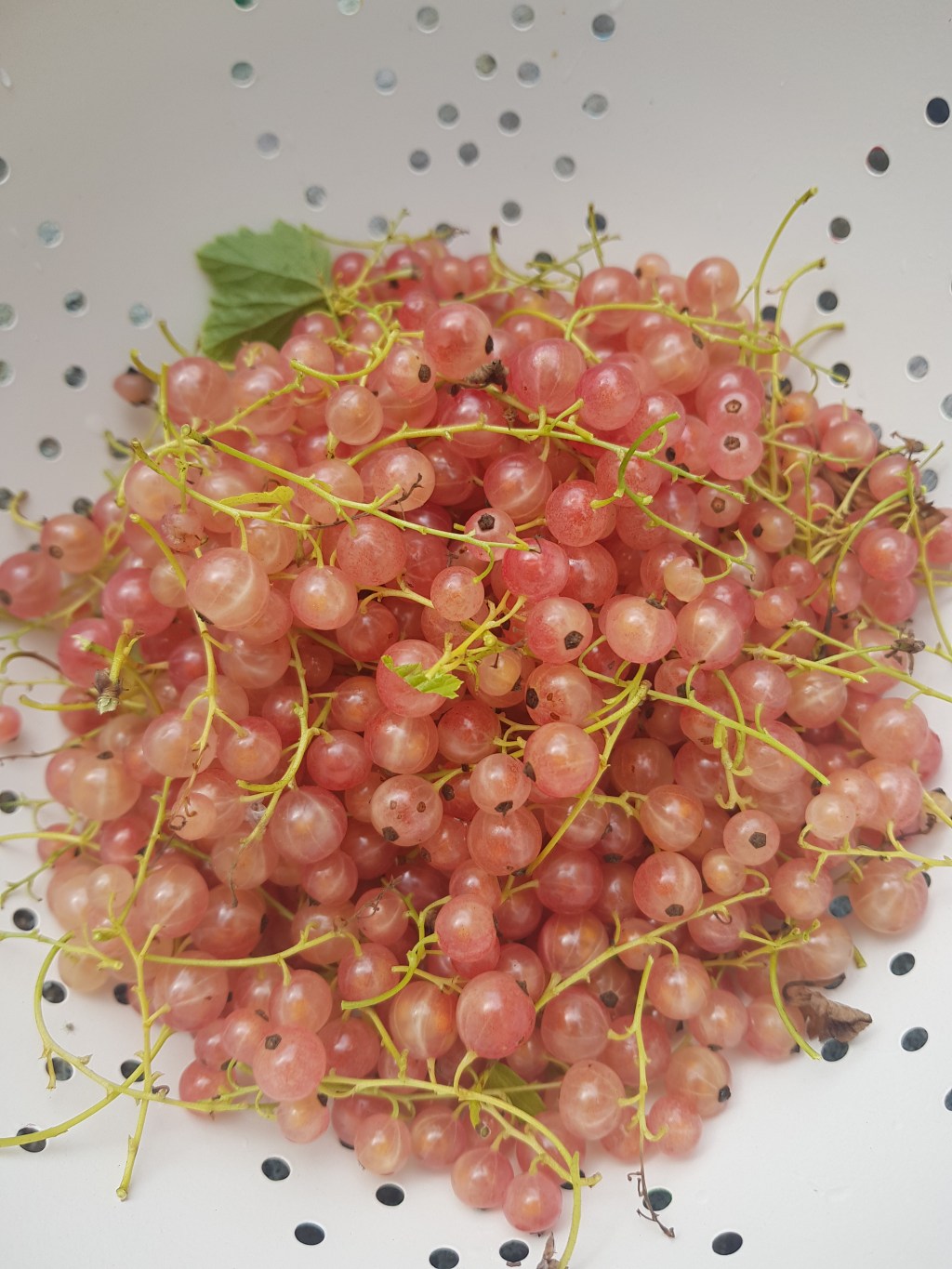
Before moving to Finland, I’d never met a currant bush of any sort before. The most common ones in gardens only grow in temperate climates, so they were never really an option in Southern California. Even in the rest of the US, they’re not as common as other berries — even though the federal law against them was lifted in the 1960s, several states still have their own laws regarding growing them. There was a whole thing about them being associated with a strain of rust that was affecting the logging industry, but that’s just a Google away so we will skip that part. All this meant that although I’d read about currants and gooseberries in books, I never saw a real one until moving here in 2010.

Ribes rubrum ‘Aili’ (vaaleanpunainen herukka) was the second currant bush I purchased for the garden, back in 2019. I had planted a whitecurrant the previous year and decided it needed company. There were also lots of blackcurrants and redcurrants left by the previous owners, but those were on the older side and would need replacing within the next several years. The main reason I wanted to write about ‘Aili’ first is simply because it’s the prettiest of all my currants. It’s not all superficial, though — the gorgeous pink berries are also sweeter than redcurrants and the plant has been much more reliable than the whitecurrant. This little shrub has given me the least trouble and most reward as a first-time grower of ribes, so I have developed a great fondness for it.

As you can see from the first picture, this plant was flowering from the first day I got it. The first year, it was unceremoniously plunked into a hole in the lawn, a few feet away from the whitecurrant and roughly where I expected my vegetable patch to eventually expand. It sat this way patiently for the next two years until said expansion actually happened, and I got around to giving it a little wooden collar, compost, and mulch. That seemed to be all it needed to put up several more branches and double its height. It got so big that I was able to take six cuttings this summer, which are now happily overwintering in the spinach bed until they are big enough to put out in the garden next spring.

‘Aili’ produces about as many berries as any redcurrant would, since that is what it was bred from. Since I’ve started giving it a decent top dressing of compost every spring, it’s been growing rapidly and producing more and more trusses each year. This year’s batch was only enough for fresh eating and smoothies, though I did consider mixing it with the white currants and making a small batch of pretty rose-tinged jam. I should have enough next year to do this purely with pinkcurrants, though!

Final count:

Ribes rubrum ‘Aili’ – 1 healthy shrub and (hopefully) 6 rooted cuttings next spring

Six on Saturday | 28th October 2023

A year and a month ago, I shared a weekend project where I added shelving to our root cellar which had been sitting unused under the house for a good couple of decades. Since I’ve finished storing most things in the root cellar this autumn, it seemed a good time to catch up on how it’s worked out this past year!

1. The stairway downstairs, with temperatures warmer than the basement but cooler than the house proper. This also happens to be the perfect place to store onions (hanging along the wall) and baskets of apples (in the corners). Last winter, we had a big box of apples stashed here for over six months in perfect condition that provided not only convenient fruit but a lovely aroma as you went down the stairs.

2. The view from the door into the root cellar. The small shelves attached to the wall on the left came with the house. I installed the middle set of three shelves last year. The set of three more shelves to the right was installed this past spring. I’m considering taking out the small shelves next year and lengthening the middle set of shelves, as well as adding another set along the wall to the right of the door, to give the whole room a more uniform appearance. That is, if the shelves don’t end up being discontinued, which seems to be a real concern at the moment.

3. Anything that does better in cold storage is kept down here. That includes jars of various canned preserves and juices, dried herbs, packaged items from the store, and baskets of root vegetables.

4. Spare jars, pots, dormant bulbs, and overwintering plants are along this side.

5. This year, I’m storing my garden carrots in this big bin filled with potting moss. It keeps them from drying out, which was the main problem I had last year when I kept them out in mesh baskets like the potatoes.

6. You can see in the pictures from last year that I originally was keeping my potatoes in cute little rattan baskets. This proved to be an epically bad idea, as the material soaked in too much moisture and started molding after only a few weeks, ruining the entire batch of potatoes inside it. Everything ended up going straight into the compost heap and I ordered these metal mesh baskets to store anything that remained. They have been enormously useful for all sorts of purposes over the year and are now back on potato duty for their second winter.

Thanks for visiting and please do check out what the other SoSers are doing over at Jim’s page!

Garden Inventory | Rosa ‘The Poet’s Wife’

Finally, we have the third plant from my 2022 rose batch. I’m so happy that all three ended up being such healthy plants, allaying my fears about growing roses in cold climates. Why did it take me so long to get roses, after having so many in our garden growing up? A dumb mistake, really.

I made one earlier attempt to plant roses during our first year at the house, back in 2012. My bad choice of location (a sunny but rocky slope with very poor soil and heavy snow dump over the winter) led to those not surviving the year. Perhaps the lesson in this is mostly about observing your garden for a year before trying to make any long-term plantings. After that, I tried to figure out solutions by reading articles about overwintering with burlap sacks, special mulches, and complicated pruning regimens, all of which only made me more anxious. It was only after I’d built my gardening confidence with a few years of vegetable garden success that I felt up to the challenge of trying roses again, only to discover that the first try had been nothing but a piece of bad luck. I’m catching up on a lot of lost gardening time now.

Rosa ‘The Poet’s Wife’ (ruusu) blooms not long after ‘Gertrude Jekyll’ and has been absolutely prolific this year. It is also, I’ve discovered, a sprawler. It’s been interesting to see how each plant can have such a different growth habit. I think one of its stems has managed to layer itself and is in the process of becoming a separate plant. Since it’s planted in the cutting garden amongst bulbs and annuals, this isn’t much of a problem so I’m letting it have its head to see how big it will get. I might just give it an arch if it gets too tall since it’s pretty close to the front of the garden anyway.

Final count:

  • Rosa ‘The Poet’s Wife’ – one rapidly expanding shrub

Six on Saturday | 21st October 2023

Our first frost arrived this past Thursday! Maybe a little earlier than expected, but still within the normal range. All the tender plants and bulbs are either (1) sitting on a house windowsill, (2) safely tucked away in the barn to dry out a bit, or (3) already slumbering away in the root cellar. All the spring bulbs have (finally!) been planted. Vegetable and flower beds are steadily getting covered or mulched depending on what is left in them. Just about the only tasks left are to plant a few remaining shrubs and do post-frost cleanup. This is the first winter I’ve been this organized, so pardon if I sound overly excited. I might finally be getting the hang of this gardening thing.

1. Aronia mitschurii ‘Viking’ lines part of our driveway and always provides lovely color in the cold season. It is usually laden with berries until after December, but it looks like the birds got to them early this year. One of these days, I might get around to picking some for the juice, but we are usually so overrun with berries by this late in the season that I can’t muster the energy to do another round.

2. Rodgersia aesculifolia’s big leaves look like they’ve been sprinkled with powdered sugar.

3. In the cutting garden, Rudbeckia hirta ‘Prairie Sun’ and Antirrhinum braun-blanquetii are some of the last few still standing.

4. Summer crops beds, harvested and tucked in for the winter. I’m not the only one who insists on saving all the cardboard pizza boxes for this purpose, am I? The new row of beds to the left is being filled with assorted garden waste to break down in place over the winter. These covered beds will get a fresh topping of compost in the spring before new plants go in.

5. I got this set of wire towers on a whim. They’re cute but on the short side. Not sure what I’m going to use them for (sweet peas maybe?), but they’ll be nice for winter interest when everything else is covered in snow.

6. Shredded newspaper mulch! I started doing this a few years ago and it worked out so well that I’ve gone larger scale with it this year. The parts of the flower bed that I planted with spring bulbs, as well as the vegetable beds housing perennials, are covered in hand-shredded newspaper. The paper gets wet and freezes in position, leaving gaps for air under it. Then the snow covers everything, providing a nice insulating layer. The worms munch away on their paper buffet all winter, cozy and protected. The majority is broken down by the time spring rolls around, when a fresh layer of compost covers the rest!

Thanks for visiting and please do check out what the other SoSers are doing over at Jim’s page!

Garden Inventory | Rosa ‘Scepter’d Isle’
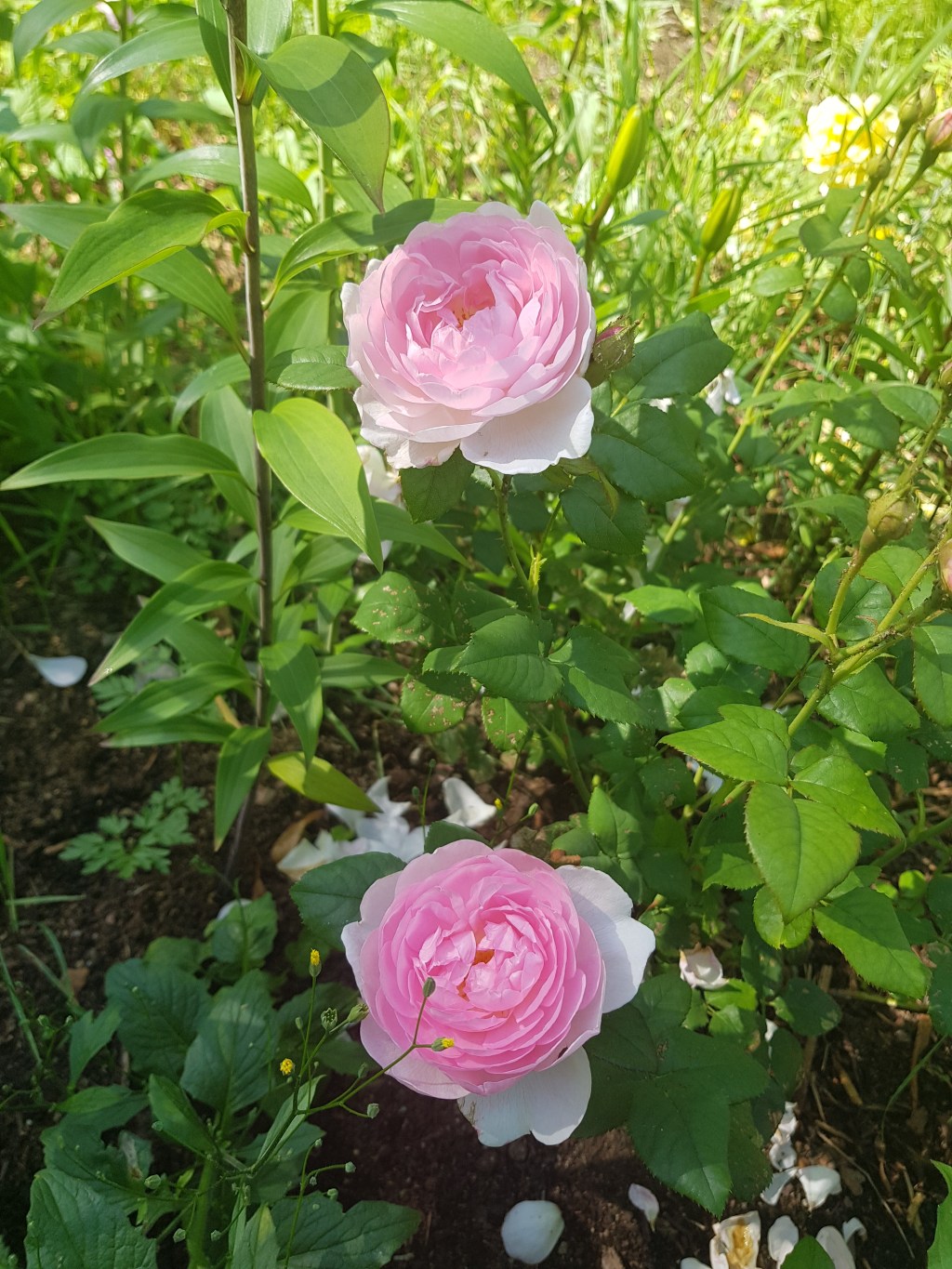
This Austin rose, from the same January 2022 batch as ‘Gertrude Jekyll’, struggled a little starting out but has made up for it over the past year. Aesthetically, it’s probably my favorite out of the three, though it’s a close race since they have all been charming in different ways.

Rosa ‘Scepter’d Isle’ (ruusu) is the last of my roses to bloom in the spring, but it makes up for it by offering big cupped blooms on stems that don’t seem to droop as much as the others. This plant had a little trouble in the start, shriveling in its pot despite having received a good soaking upon arrival. I was almost ready to email for a replacement when a new shoot appeared from just above the planting line. It has recovered well since then, gone through two flushes of blooms, and donated flowers for several vases over this past year. This particular plant is significant also because it marks the grave of my son’s late gerbil, so it is one of the few plants that will never be moved in the cutting garden.

Not too many notes yet, since these plants are still young, but I look forward to seeing how these little roses fill out over the next few years. They have already done a lot of growing in this season alone and changed my mind about how difficult keeping roses in our climate might be.

Final count:

  • Rosa ‘Scepter’d Isle’ – one rapidly expanding shrub

In a Vase on Monday | 16th October 2023

A mixed vase this week with something old and something new. The white dried hydrangea is Hydrangea paniculata ‘Grandiflora’ (I asked the person who planted it this time to make sure since Google was giving me too many different options), and the new little pink blooms underneath it are Hydrangea paniculata ‘Living Angels Blush’. Some aronia leaves help reinforce the autumn colors and perk up the faded white flowers. Apologies for the bad lighting, the vase is sitting in the front hallway, and I’m afraid of moving it at this point in case it shatters the flowers!

This is a post for Rambling in the Garden’s In a Vase on Monday meme!

Six on Saturday | 14th October 2023

Here’s a trip outside my garden, for a change of pace! This past week, we took a field trip to Turku to visit the Luostarinmäki Handicrafts Museum. It is a small section of the city with 18th-century wooden buildings preserved as a historical museum and a place to demonstrate traditional handicrafts. While there were no formal gardens, the many planted courtyards and larger park surrounding it were still very pleasant to stroll through on a brisk autumn day.

1. A path leading out to the park, where the trees are changing colors very nicely.

2. Sod roof houses! I love the look of them, even if the grass is looking a little more scraggly with the cold weather. They must be amazing and lush in the summer.

3. The tobacconist’s courtyard had a little sample garden of different types of tobacco. The flowers on the two bigger plants looked so similar to the flowering nicotiana in my garden! I knew they were related, but it’s still fascinating to see a big plant in front of you.

4. A little bed of yellow flowers that’s mostly gone over but was cheery next to all the darkened wood walls. Our hometown also has an 18th-century wooden quarter, but our buildings are actively inhabited, so they are painted bright colors and renovated inside. The difference between the two places is interesting.

5. A big old elm in the children’s playground. I haven’t seen one in quite a while. I think it’s an American elm? Not so good at trees.

6. Finally, a selection of pretty postcards and a little pastille case that I ended up getting from one of the souvenir shops! I like framing them and have a collection of various botanical prints all along our house staircase.

Thanks for visiting and please do check out what the other SoSers are doing over at Jim’s page!

Garden Inventory | Rosa ‘Gertrude Jekyll’
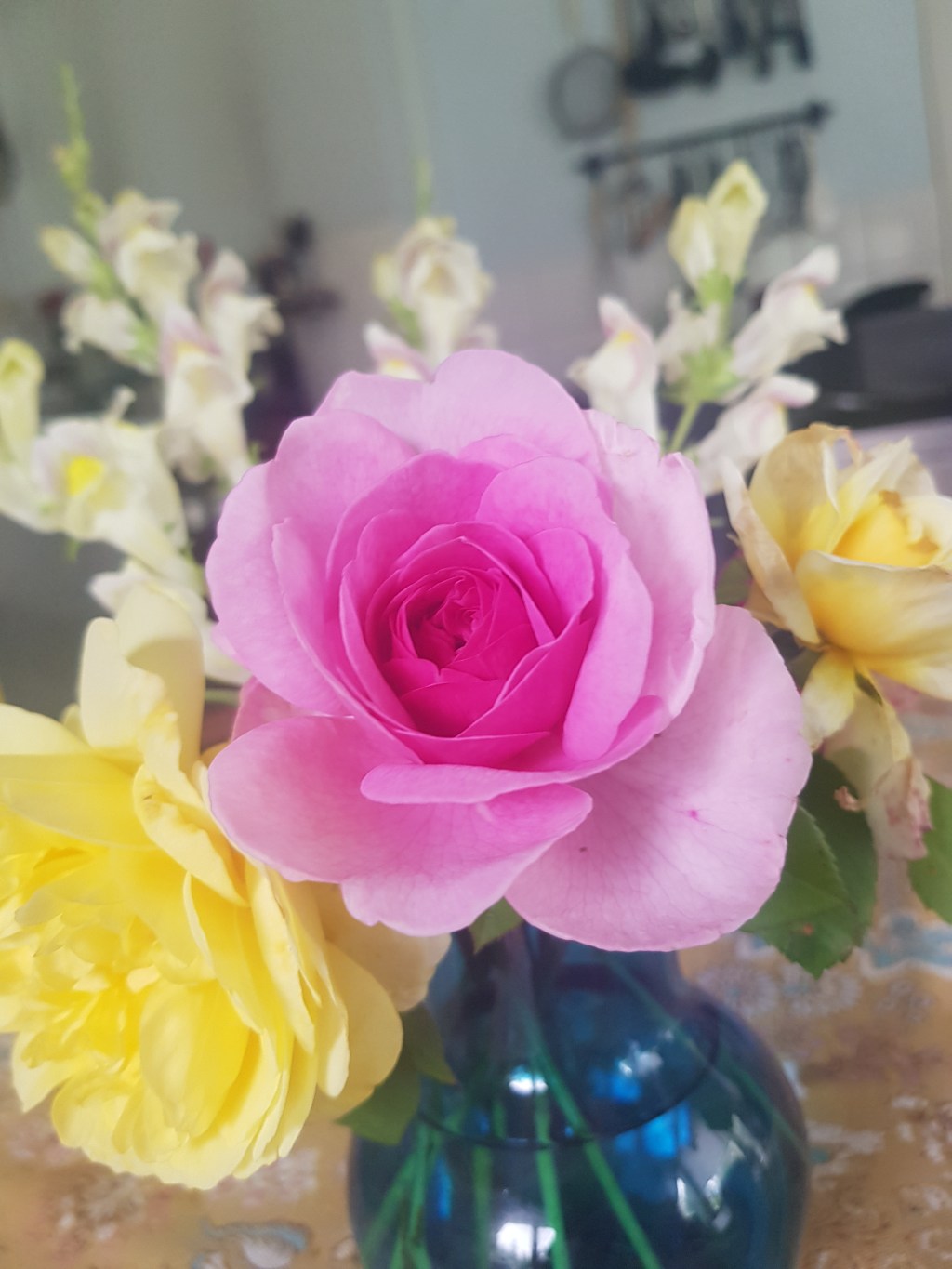
The very first David Austin rose I bought was ‘Fair Bianca’, back when I was in Southern California. It was a small perky shrub, happy to live in a stoneware pot in our very sunny front yard. Although that garden had towering hybrid teas and extravagant floribundas growing along most of the walls, ‘Bianca’ was the first rose that I chose for myself. Its shape and scent set it apart from the others and I’ve been wanting to grow more varieties ever since.

More than a decade later, we bought a house in Finland with plenty of room for a rose garden. It would take a little longer still to set it up, but in January of 2022, I placed my first order for roses straight from the David Austin online store. Sadly, ‘Bianca’ would be discontinued by then, though I still keep an eye out for it whenever possible. Instead, I went with three that topped the list for being fragrant and floriferous, and those are the ones I’ll be writing about in the next few posts.

Rosa ‘Gertrude Jekyll’ (ruusu) was the first rose in my basket that year and it has been the first to flower each spring since. It’s put on a good amount of growth this year and I look forward to seeing how big it gets in subsequent years since most bloggers seem to agree that it’s extremely vigorous.

In the beginning, though, I wasn’t so sure that it would even survive. The roses arrived in March, which is still the dead of winter for us. Having never ordered bare-rooted plants before, I couldn’t help being worried by their denuded state, despite having done enough research to know they should be fine. My hot water canner got called into service as a soaking container since there was nothing else big enough after the baby tub went into storage. Then the plants got potted up and placed by the windowsill, where they stayed until temperatures were warm enough for them to transition outside about two months later.

Gertie was by far the easiest to maintain during that early period and ever since, sprouting eagerly in its pot and eventually giving me flowers before they were even planted into the ground. It remains very fuss-free in the garden as well and I cannot recommend it enough, thorns and all. I was able to cut stems of highly perfumed roses to take inside for weeks during the first flush, and the autumn flush has been just as generous. Overwintering involved nothing more than mounding up some extra mulch and compost around the base of the plant at first frost. Depending on how tall it manages to get (and based on the reports, I’ve every belief it will be quite a bit), I might be adding some more of this rose to the mixed hedge in future years.

Final count:

  • Rosa ‘Gertrude Jekyll’ – one rapidly expanding shrub

In a Vase on Monday | 9th October 2023

It hailed overnight yesterday. That’s not to say that we’ve had a frost yet — it’s been chilly at night but not quite cold enough to upset all but the tenderest of tropicals so far. The temperatures have been fluctuating like crazy, though. The hail melted as soon as the sun rose, but it was still enough of a warning to let me know it’s time to start mulching the perennials and pulling up those summer tubers.

So we’ve come to the “last call vase” portion of the year. When I’m okay with cutting just about anything that hasn’t set seed (and some things that have), knowing that they’ll have a better chance of making it a week inside than out. You can see that the ‘Moonwalker’ sunflowers below have already taken a bit of a beating from being whipped around in the wind and weather the night before. The golden birdfeeder sunflowers are doing better, but they were also on shorter plants. In my optimism, I cut a big dahlia that looked like it might still open, but have since learned that dahlias don’t do much after cutting. So that will probably get removed later today. A couple of ‘Prairie Sun’ Rudbeckia, a little red bedding dahlia, and bunches of viburnum berries round out the bunch. I’m rather sad that the dahlia won’t open, because its big orangey-pink pouf would have been a nice stepping stone between the yellows above and reds below. Maybe next time.

This is a post for Rambling in the Garden’s In a Vase on Monday meme!