Coco’s Sweater: Mock Turtleneck Sweater for Cats
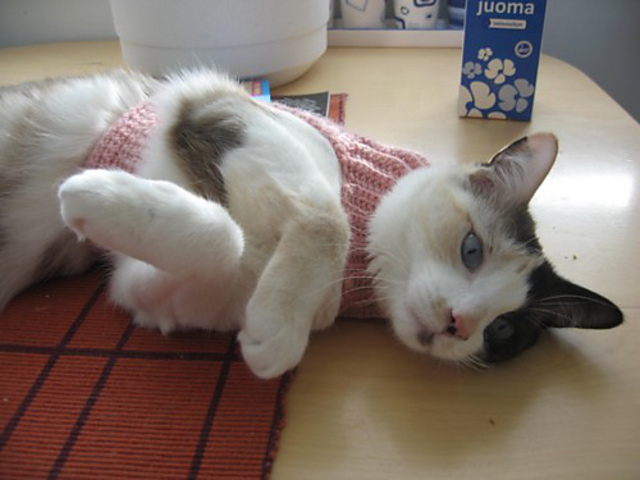
We lost Coco in late November. She was seventeen — a sassy Siamese calico mix we’d adopted off the streets of LA when she was just a kitten. She crossed an ocean with us and spent most of her life here in Finland. She outlived the apartment in California, the second apartment when we first arrived on a completely different continent, and made it all the way to this old house in the countryside where she could watch birds from every window.

But this post isn’t really about losing her. It’s about keeping her warm.


In 2011, we’d just moved from Southern California to Finland. Our first winter. The cats had never experienced cold — real cold, the kind that makes your nose hairs freeze. And Coco, being Coco, was not built for it.

She was a long cat. Tubular. The kind of cat who could stretch across your entire lap and then some, all elegant angles and too much spine for her own good. Regular cat sweaters didn’t fit her. They’d bunch up around her shoulders or leave her lower back exposed, and she’d wriggle out of them in protest within minutes.

So I made her one.

I finished it in the dark, actually, on a long car ride. I went off memory and some rough mental calculations, having checked the fit on the parts I’d finished by holding it up to her earlier that day. No pattern. Just a hook, some Novita yarn, and a very patient cat who tolerated being measured against crochet in progress.

It worked. The ribbed mock turtleneck stretched enough to slip over her head but held its shape once on. The single large armhole meant both front legs could move freely, no individual sleeves to fight with. The shaping in the back accommodated her shoulder blades when she shifted position. The belly shaping (added after the first version, when I realized she’d put on some winter weight) gave room for post-dinner pudge.

She wore that sweater for years. Not constantly (she wasn’t that kind of cat) but on the coldest days. When she’d seek out the warmest spots and still look disgruntled, the pink sweater would come out and she’d settle into it like it was her due.

I wrote up the pattern from memory after we got home from that car ride and posted it to Ravelry for free. That was March 2011. Since then, over 5,800 people have downloaded it, and 123 of them liked it enough to make their own version and post photos. It’s shown up in a few “best cat sweater patterns” lists over the years. Not bad for something I made in the dark.

The original pattern was… let’s say impressionistic. I knew what I’d done, but explaining it to someone else was another matter. “This updated version attempts to explain what I was actually doing,” the new PDF says, which is the kindest way to put it.

Version 2.0 has actual construction diagrams. Orientation notes so you know which way is up. Fitting tips. Two options for the belly shaping — my original asymmetrical version (reconstructed from memory, worked for Coco, no guarantees on geometric elegance) and a cleaner alternative that gets you to the same stitch count with more even increases.

The note in the pattern says: Your cat won’t judge you either way.

This is true. Your cat will judge you for many other things. Sweater math is the least of your concerns.

This was Coco in her sweater, back when it was new. That expression is not displeasure — that’s just her face. She was a cat of strong opinions and she wore all of them openly.

And this was Coco in her last month. Seventeen years old, still long, still opinionated, still seeking out the warmest spots in the house.

She didn’t need the sweater anymore by then. But I still have it — pink and a little felted from washing, shaped to a cat who no longer needs it.


The pattern is free. It always has been, and it stays that way.

If you have a long cat who gets cold, or a tubular cat who doesn’t fit standard sweaters, or just a cat you love enough to crochet for in the dark on a car ride — this one’s for you.

Download the pattern: Coco’s Sweater: Mock Turtleneck Sweater for Cats (PDF)

See it on Ravelry: Pattern page with project gallery

Make one. Send me photos. Tell me about your long cats.

Coco would approve. Probably. She had opinions about everything, but handmade knitwear was never one of her complaints.


The pattern was originally published in March 2011 and updated to Version 2.0 in December 2025. All original stitch counts preserved; construction notes, diagrams, and fitting tips added.

Hunted, Foraged, Traded, Inherited

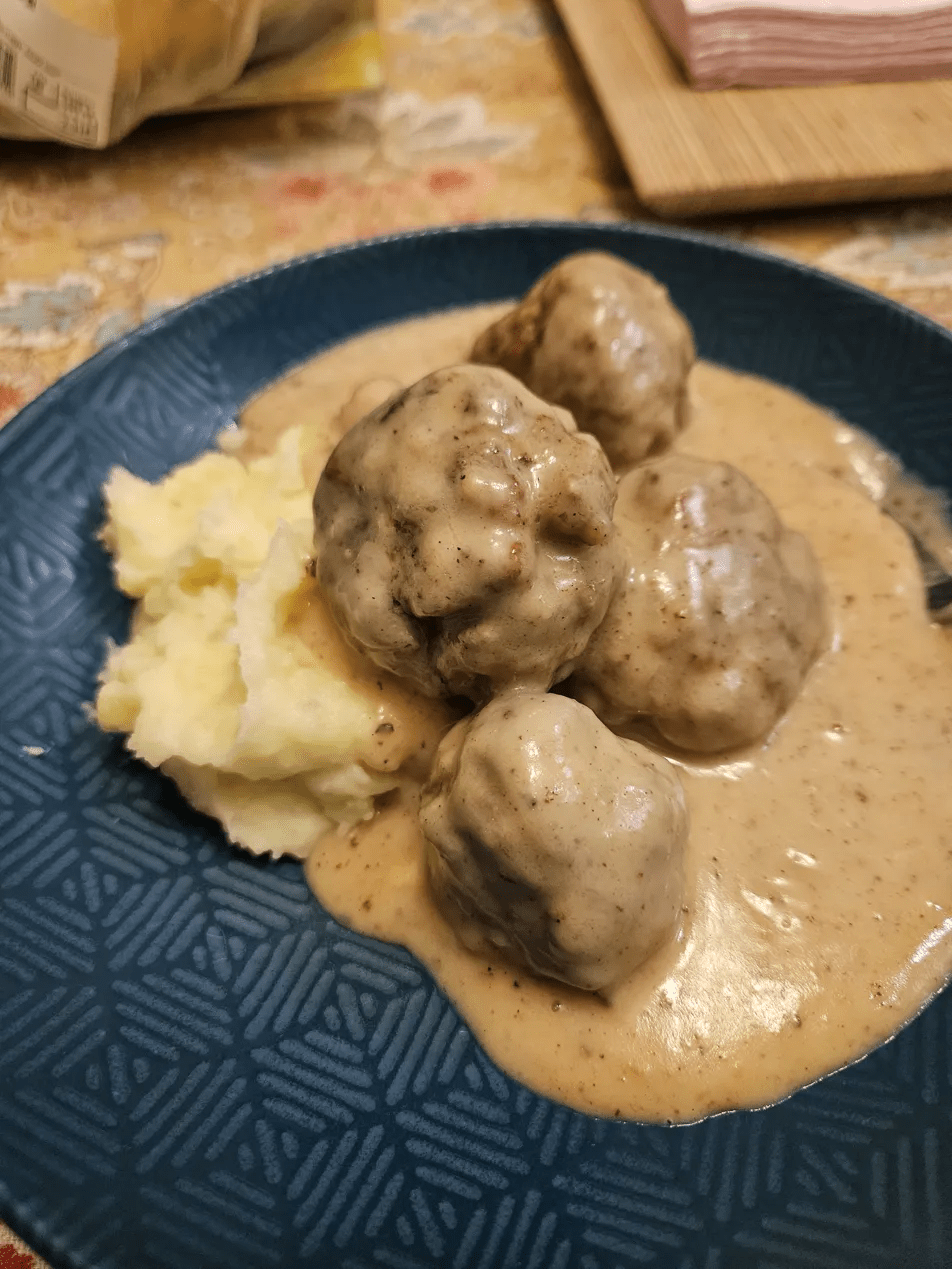
I was doing a freezer audit the other week. (There’s a longer story there involving some truly ancient beef liver and a reckoning with inherited food packrat tendencies, but that’s a confession for another day.) The point is: I found treasures. Vacuum-sealed venison osso buco from November 2024, bought through our local food circle from a university student who hunts with his father. Foraged chanterelles from autumn, fried in butter the day I picked them and frozen in little golden nuggets. A friend’s homemade berry wine I’d traded for with strawberry runners from the garden.

And suddenly I knew what dinner was going to be.


Here’s the thing about living somewhere long enough: your pantry starts telling the story of your life there.

In California, dinner came from Trader Joe’s. Maybe Costco if we were feeling ambitious. The ingredients had no biography beyond “aisle seven” and “on sale.” Which is fine! That’s how most people eat, and there’s nothing wrong with it.

But nearly fifteen years into Finland, my freezer reads like a local census. The venison came from a kid paying his way through university by selling what he and his father hunt – I bought a whole deer in one go, so this cut was maybe €5. The chanterelles came from a three-minute walk past my driveway, which happens to be forest. The berry wine came from a friend who wanted strawberry runners from my garden.

This isn’t virtue. It’s just… accumulation. You live somewhere long enough, you start knowing people. You trade things. You learn which parts of your own backyard forest fruit in September.

And apparently, you braise it all in a Taiwanese rice cooker.

The Tatung deserves its own paragraph. My dad worked for the company in the States – they sent him there from Taiwan – and when we moved into this house thirteen years ago, he had them send me a new one. Same model my parents have been using since I was a kid. It’s not a slow cooker – it’s a steam braiser. You put water in the outer pot, your ingredients in the inner pot, flip the switch, and walk away. When the water evaporates, it pops and clicks off. That’s it. No temperature monitoring, no timers, no anxiety.

My mom made aromatic beef stews in hers – the kind I still want to learn to make properly one of these days. I’m braising Finnish forest deer in mine. The Tatung doesn’t care about nationality. It just makes meat tender.

The actual cooking is almost anticlimactic after all that provenance. Brown the osso buco in cast iron until it develops that gorgeous crust. (Don’t skip this. Don’t crowd the pan. Patience.)

Deglaze with the berry wine – it’ll sizzle dramatically, scrape up all those beautiful brown bits. Nestle the meat into the Tatung with some celery and a bay leaf, pour the wine over, lid on, switch down.

Three hours later, the house smells like a restaurant and my kid walks in asking “what’s that smell?” in a tone that is, against all odds, not suspicious.

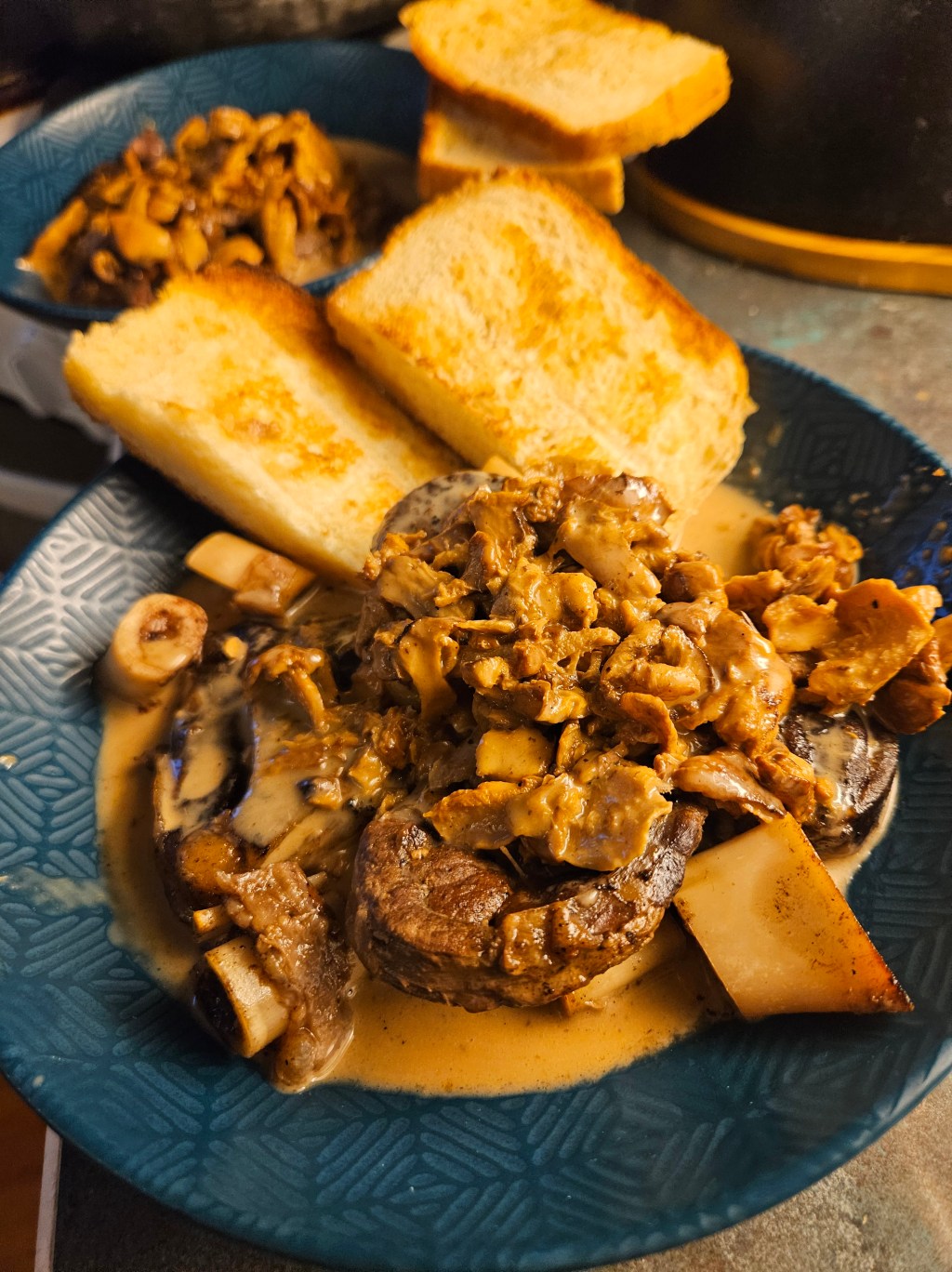
For the sauce: those butter-fried chanterelles go into a pan, hit them with a splash of the braising liquid if you want, then pour in the ruokakerma and let it simmer until it coats a spoon.

The cream mellows everything, so taste and adjust. Finnish cooking cream is one of those ingredients I genuinely miss when I’m back in the States – it’s meant for sauces in a way American heavy cream isn’t quite.

The verdict:

My son, who is eleven and has been known to reject entire meals over Wrong Onion Energy, ate braised venison osso buco with foraged chanterelle cream sauce. His complaint? The black pepper made it “a little spicy.” His negotiation? Cherry Coke to wash it down.

Reader, that’s a win. I’ll take it.

And me? I kept the marrow bones. Chef’s privilege. If you’ve never poked osso buco marrow out with a chopstick and eaten it straight, I recommend the experience. It’s buttery and unctuous and feels vaguely illicit, like you’re getting away with something.

If you saw “Braised Venison Osso Buco with Wild Chanterelle Cream Sauce” on a restaurant menu, you’d expect to pay €35 minimum. This cost me about €5 for the venison (bought in bulk, whole deer), maybe €2-3 in cream and seasonings. The chanterelles were free if you don’t count the walking, which I don’t, because that’s the point. The wine was traded for plants I was going to dig out anyway. The Tatung has been earning its keep for thirteen years.

But the real currency isn’t euros. It’s time. Time in a place. Time building the life that puts hunted venison in your freezer and foraged mushrooms in your butter and your friend’s wine in your braise.

This dish doesn’t have a nationality. Finnish ingredients, Taiwanese equipment, Californian cook. It just has a biography.

Mine, apparently.


Tatung Braised Venison Osso Buco with Chanterelle Cream Sauce

Serves 2-3 hungry people

For the braise:

  • Venison osso buco, ~600-700g
  • Red wine, ~½ cup (for deglazing)
  • Water, 1 cup (for Tatung outer pot)
  • Meat bouillon cube, 1
  • Celery, 2-3 stalks cut in chunks
  • Bay leaf, 1
  • Salt and pepper
  • Oil for browning

For the chanterelle cream sauce:

  • Chanterelles, fried in butter (fresh or frozen)
  • Ruokakerma (Finnish cooking cream), ½ to ¾ cup
  • Splash of braising liquid
  • Salt and pepper to taste

Method:

Brown the osso buco in a hot cast iron pan – 2-3 minutes per side until you get a proper golden crust. Work in batches. Patience.

Deglaze the pan with wine, scraping up all the fond.

In your Tatung (or slow cooker, or Dutch oven at 150°C): add water and bouillon to outer pot, nestle meat in inner pot, pour wine over, tuck celery and bay leaf around. Lid on, switch down. Walk away for 2.5-3 hours.

For the sauce: warm the butter-fried chanterelles, add a splash of braising liquid, pour in cream, simmer until it coats a spoon. Season to taste.

Serve over crusty bread. Keep the marrow bones for yourself.

The Great Hawaiian Bread Disaster (A Comedy of Errors in Four Loaves)
I wanted Hawaiian bread. That soft, slightly sweet, pull-apart stuff that makes excellent toast and even better French toast. I had a bread machine, I had a recipe, I had enthusiasm. What I did not have, apparently, was the ability to measure liquids correctly.

But I’m getting ahead of myself.

Attempt 1: The Brick

The recipe called for pineapple juice, butter, and milk. I had none of these things, because I live in the Finnish countryside and sometimes you just work with what’s in the house. So: homemade apple juice instead of pineapple. Oivariini (a Finnish butter-margarine hybrid, about 60% fat) instead of actual butter. And ruokakerma – Finnish cooking cream – instead of milk, reasoning that the extra fat would make up for what the Oivariini was missing.

Reader, it did not.

What came out of that bread machine was… bread-shaped. It was edible. My family ate it without complaint, because they are kind people who know better than to criticize free carbs. But it was dense. Tight crumb. More sandwich loaf than Hawaiian cloud.

I texted my baking buddy. “It’s dense,” I reported. “What did I do wrong?”

And this is where things went sideways.

The Research Phase (A Tragedy in Three Acts)

My baking buddy and I are both the type of people who, when faced with a problem, want to understand why. This is usually a good trait. This time, it was our downfall.

“It’s probably the fat ratios,” my buddy said. “Oivariini has less fat than butter, and you’re using cream instead of milk, so you’ve got this weird imbalance…”

“Finnish flour is different,” I added, because I’d been living here long enough to know that things just are different sometimes. “Higher protein content. It’s basically pulla flour.”

“PULLA,” my buddy exclaimed, with what I can only describe as excessive enthusiasm. “Finnish sweet bread needs more hydration because of the flour! That’s probably it!”

We were very pleased with ourselves. We had theories. We had understanding. We were going to nail this.

Attempt 2: The Crater

Armed with knowledge, I made adjustments. Different fat ratios. Attention to hydration. Confidence.

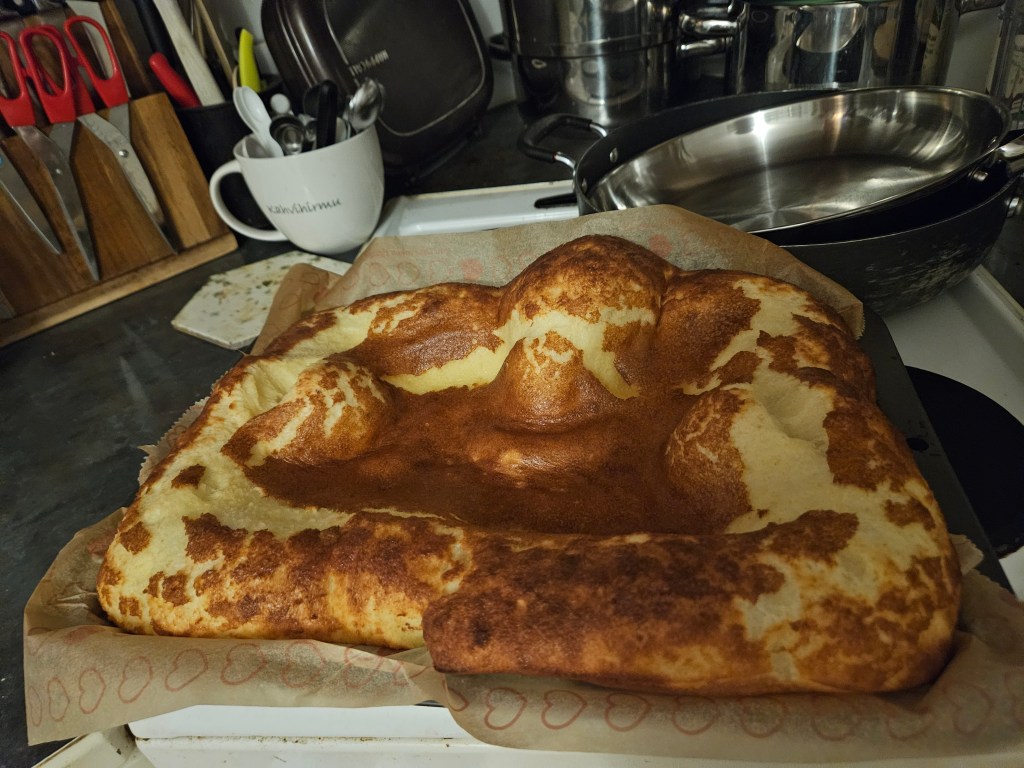
The bread rose beautifully in the machine. I could see the dome through the little window. And then, somewhere in the baking phase, it just… gave up. Collapsed inward like a failed soufflé. The inside was soggy. The crust had divorced itself from the crumb and was just sort of hovering there, a sad roof over a sadder interior.

“It’s worse,” I reported.

“HOW IS IT WORSE,” my buddy replied.

We troubleshot. We theorized. We discussed protein content and gluten development and enriched dough cycles. Finally, my buddy offered:

“It probably still tastes fine, just… architecturally challenged.”

Attempt 3: Getting Warmer (But Also Colder)

We regrouped. More research. We talked about gluten development. We talked about Finnish dairy products at length – the differences between laktoositon maitojuoma and actual milk, the water content of various butter substitutes, whether the enzymes in pineapple juice actually mattered for texture. We were practically writing a thesis.

“Houston, we have a problem?”

Another collapse. Another crater. BUT – and here’s the thing we should have paid more attention to – the actual texture of the bread, in the parts that weren’t underbaked soup, was fluffy. Light. Exactly what I’d been going for.

“It’s so close,” my buddy said. “The texture is right, the structure just can’t hold it. We need to reduce the liquid.”

“But I already reduced the liquid from attempt two…”

And then, finally, after three loaves and approximately nine thousand words of troubleshooting, one of us said:

“Wait. What does the recipe actually call for?”

The Revelation

My buddy put it best, later:

“At least we figured it out before attempt 7 when you’d already written the blog post blaming Finnish flour protein content and I’d created a whole conversion chart for American dairy to Finnish dairy that was TECHNICALLY CORRECT but COMPLETELY BESIDE THE POINT.”

Because that’s exactly what happened. The bread was screaming at us the whole time:

Bread: I’M WET

Us: Hmm yes but is it the gluten development or perhaps the enriched dough program that’s causing—

Bread: I’M SO WET

Us: —the structural instability, you see Finnish hiivaleipäjauho has approximately 11-12% protein whereas—

Bread: I AM LITERALLY SOUP

Us: Fascinating, let’s try a different flour.

The recipe called for about 300ml of liquid total. I had been using 430ml.

No wonder it kept collapsing. I wasn’t making bread, I was making batter.

To summarize:

  • 1.0: Learning
  • 2.0: Learning harder
  • 3.0: Learning while drowning
  • 4.0: BREAD

Attempt 4: Actually Reading the Numbers

I measured the liquid. The actual amount. 300ml. I put everything in the bread machine and closed the lid and my baking buddy and I held our collective breath for three hours.

The dough looked different from the start – smoother, tighter, not the shaggy wet mess of the previous attempts. An actual ball of dough, pulling cleanly away from the sides of the pan. When the baking phase started, the smell was incredible. Buttery and sweet.

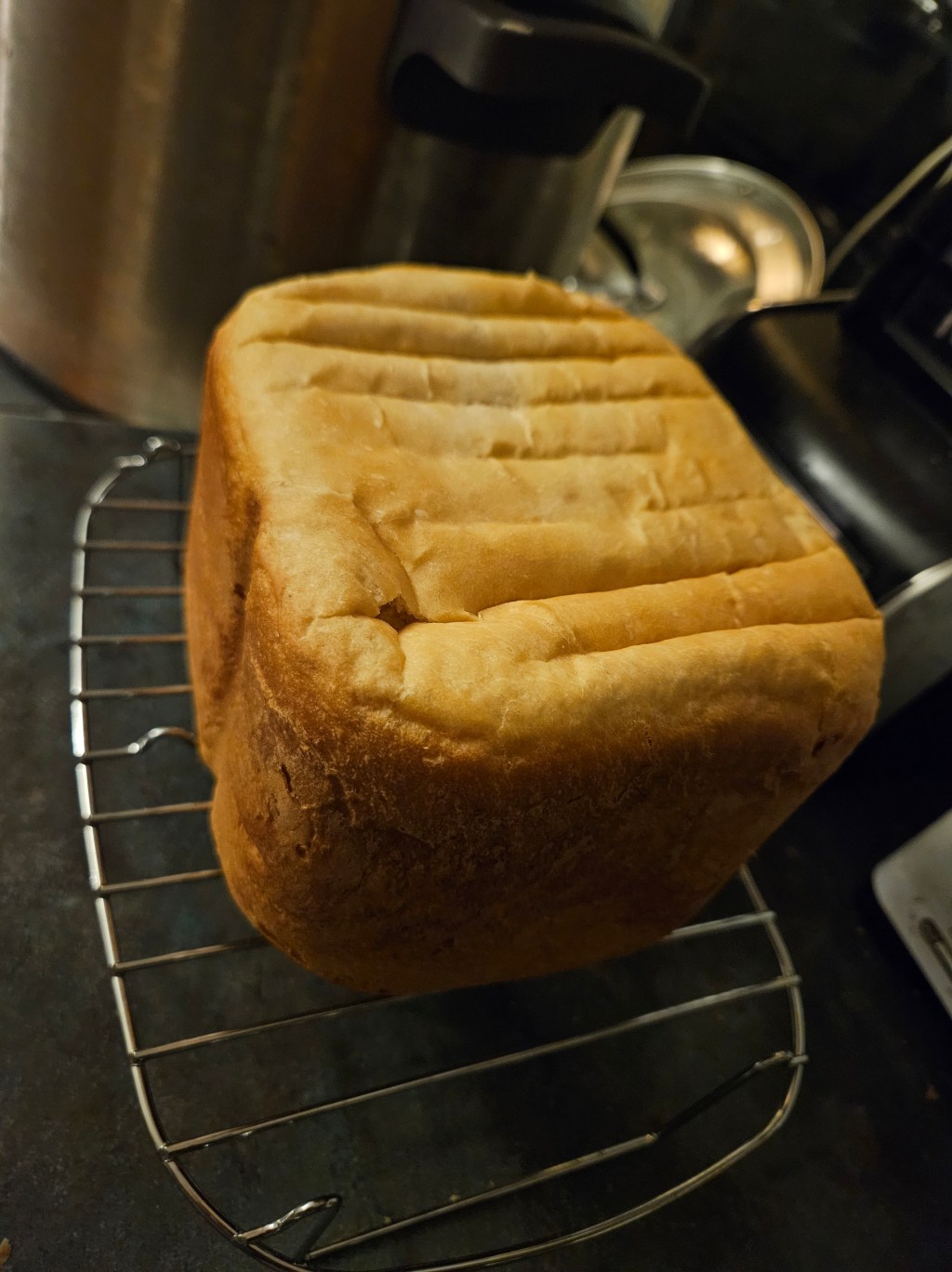
It faceplanted on the cooling rack when I tipped it out, because of course it did, but WHO CARES. Look at that dome. Look at that color. Look at that actual, structural integrity.

It’s soft. It’s sweet but not too sweet. It squishes like Hawaiian bread is supposed to squish.

My husband ate two slices before I could even put it away. My kid ate it like it was from the store, and not like he was doing me a huge favor by consuming my failures. Which is the only review that matters.

What I Actually Learned

So here’s the thing: all that research wasn’t wrong, exactly. Finnish flour IS higher in protein. Oivariini IS different from butter. The dairy substitutions DO matter. I now know a lot about adapting enriched bread recipes for Nordic ingredients, and that knowledge will be useful next time.

But none of it mattered because I hadn’t done the basic thing first.

It’s very easy, when you’re living somewhere new and everything feels slightly unfamiliar, to assume that your problems must have complicated explanations. Of course my bread isn’t working – Finnish ingredients are different! Finnish flour is different! I need to understand the system before I can succeed!

Sometimes, yes. And sometimes you just need to measure the milk.


The Recipe (As It Actually Works)

For the bread machine, 750g loaf, sweet bread setting

ADAPTED FOR FINNISH INGREDIENTS

Original recipe inspiration: https://www.behappyanddogood.com/super-soft-bread-machine-hawaiian-bread/

Ingredients:

  • 3 cups puolikarkea vehnäjauho (9-10% protein – NOT hiivaleipäjauho!)
  • ~180ml fruit juice (apple, pear, or pineapple)
  • ~120ml dairy (100ml Eila 1.5% lactose-free milk + 20ml ruokakerma)
  • 1 egg
  • 57g butter, room temperature
  • 50g sugar (¼ cup)
  • 1 tsp salt
  • 2 tsp instant yeast

Total liquid: ~300ml. This is critical.

Add wet ingredients first (juice, dairy, egg), then butter, then dry ingredients with yeast last in a little well. Run the sweet bread cycle. Check the dough after 5-10 minutes – it should form a smooth ball pulling cleanly away from the sides. If it looks like batter, you have too much liquid.

Remove from pan IMMEDIATELY when done. It will probably faceplant. The structure holds anyway.

For American bakers: you can probably just follow the original recipe. This adaptation is specifically for Finnish ingredients.

Window Stars and the Philosophy of Necessary Light
The first week of November caught me off guard this year, though really it shouldn’t have. You’d think after several Finnish winters I’d have learned by now that the darkness doesn’t arrive so much as it simply refuses to leave once it shows up on a Friday mid-afternoon. We’ve had nothing but overcast skies for days now — that particular shade of grey which makes you wonder if the sun isn’t just a pleasant shared delusion we’ve all agreed to believe in, like Santa Claus or the idea that you’ll eventually get around to organizing that one kitchen drawer.

I started putting up the window stars yesterday.

This is not something I would have understood the point of in my previous life in Southern California, where “holiday decorating” meant my parents would haul out our slightly lopsided artificial tree sometime around December 15th if we were feeling particularly festive. Maybe some lights would go up on the eaves, but that was largely a concession to neighborhood aesthetics — the kind of thing you did because everyone else was doing it and you didn’t want to be the house that looked like it was making some kind of statement about Refusing To Participate. Christmas lights were for decoration, for competition even, but never really for anything resembling actual function.

Here, though. Here it’s different.

The thing about Nordic darkness (and I mean the real kind, the November-through-February kind, not just “oh it gets dark earlier”) is that it fundamentally changes your relationship with light. You stop thinking of illumination as ambient, as something that just sort of exists in the background of your day. Instead, light becomes intentional. Light becomes architecture. You plan for it, you cultivate it, you place it with the same care you might give to arranging furniture or companion planting rotations. (Though to be fair, the vegetable situation up here requires a similar level of strategic planning, given that we’re working with approximately four months of “maybe you can grow things” weather.)

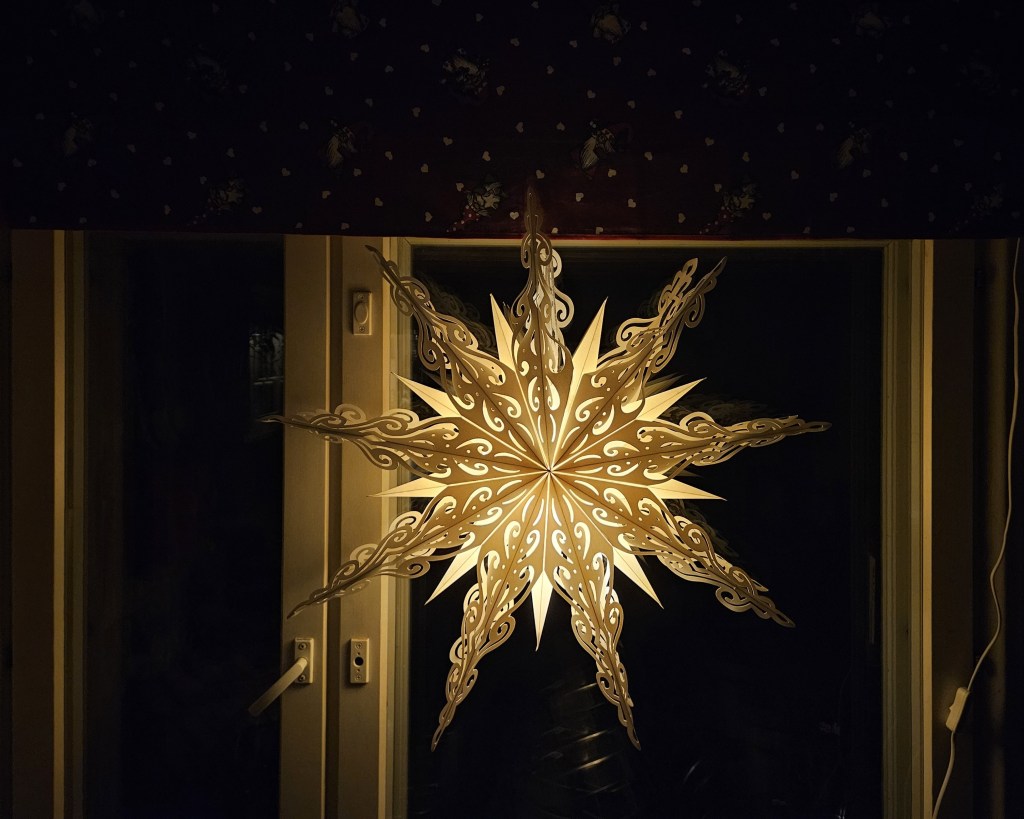
I’d noticed, in those first couple of winters, how all the houses had these glowing stars in their windows. Paper ones, plastic ones, elaborate ones made of thin strips of wood that cast intricate shadows. At first I thought it was charming in that vaguely folkloric way that makes expats get all misty-eyed about “authentic traditions.” And sure, it is traditional — Finns have been doing this for ages. But what I didn’t grasp until I’d lived through enough pitch-black 3 PM afternoons was that these aren’t just pretty decorations. They’re wayfinding.

Picture this: it’s a quarter past four and you’ve been working at your desk (or, let’s be honest, staring at your phone wondering how it’s already dark again) and you need to navigate from one room to another. You could turn on every overhead light in your path like some kind of illumination-obsessed eccentric, wasting electricity and money and completely destroying whatever cozy hygge* situation you’ve managed to cultivate. Or — and here’s where the Finnish pragmatism really shines — you could have gentle glowing landmarks stationed in your windows, providing just enough light to see where you’re going without having to fumble for switches or stub your toe on that chair that’s been in the same place for three years but somehow still catches you by surprise.

I started collecting these stars the way I suspect a lot of people do: by haunting the post-Christmas sales aisles where everything is marked down to nearly nothing because apparently the day after Christmas is when holiday decorations become about as desirable as last week’s newspapers. This is how I’ve acquired a small but respectable collection of paper stars in varying sizes, colors ranging from classic white to a rather assertive red that I’m not entirely sure about but which was too cheap to pass up. There’s one delicate lace-patterned one that I’m particularly fond of, though it’s so lightweight I have to be careful about opening windows near it.

The irony isn’t lost on me that I’ve become the person who puts up Christmas decorations in early November. Growing up, this would have seemed unconscionably premature — the kind of thing that prompted eye-rolling and muttered comments about “rushing the season.” But when your season involves three and a half hours of twilight passing for daylight, you take your festivity where you can get it. Besides, I’ve come to appreciate the Finnish approach to holiday timing, which seems to operate on the principle that if you’re going to haul yourself through several months of darkness, you might as well make it pretty while you’re at it.

So now our little blue and white house glows from within after 4 PM, with stars, candelabras and twinkle lights stationed in strategic windows like tiny lighthouses guiding us from room to room. I’ll add more of those candelabras soon — another fixture I’ve learned to appreciate, those simple brass or wooden structures with their promise of actual flame, though the electric ones work just as well and don’t require the same level of vigilance about not burning the house down. The cat seems uncertain about these new additions to her environment. She spent the last day watching the stars with that particular intensity cats reserve for objects they’re trying to decide whether or not to destroy.

Would I have chosen to put up holiday decorations this early in my California life? Probably not. But then again, I wouldn’t have understood why anyone would need to. When your winters involve temperatures dropping to a brisk 60°F and maybe having to wear a light jacket in the evenings, the whole concept of winter survival decorating doesn’t really compute. Here, though, where the darkness arrives like an overnight houseguest who overstays their welcome by several months, these glowing paper stars stop being quaint traditional crafts and start being what they actually are: tiny acts of defiance against the void. Or possibly just really sensible interior navigation aids. Both things can be true.

Actual screenshot from timeanddate.com – RIP Utsjoki.

Either way, I can now make it from the bedroom to the kitchen without turning on a single overhead light, guided entirely by the warm glow of discount stars I bought for two euros apiece. If that’s not the definition of successful adaptation to Nordic life, I don’t know what is.

* Hygge is totallly a Danish thing, actually, and I’m sure I’d get disapproving looks if anybody I knew read this. Look up kalsarikännit if you want a more authentic Finnish perspective on comfort.