Hunted, Foraged, Traded, Inherited

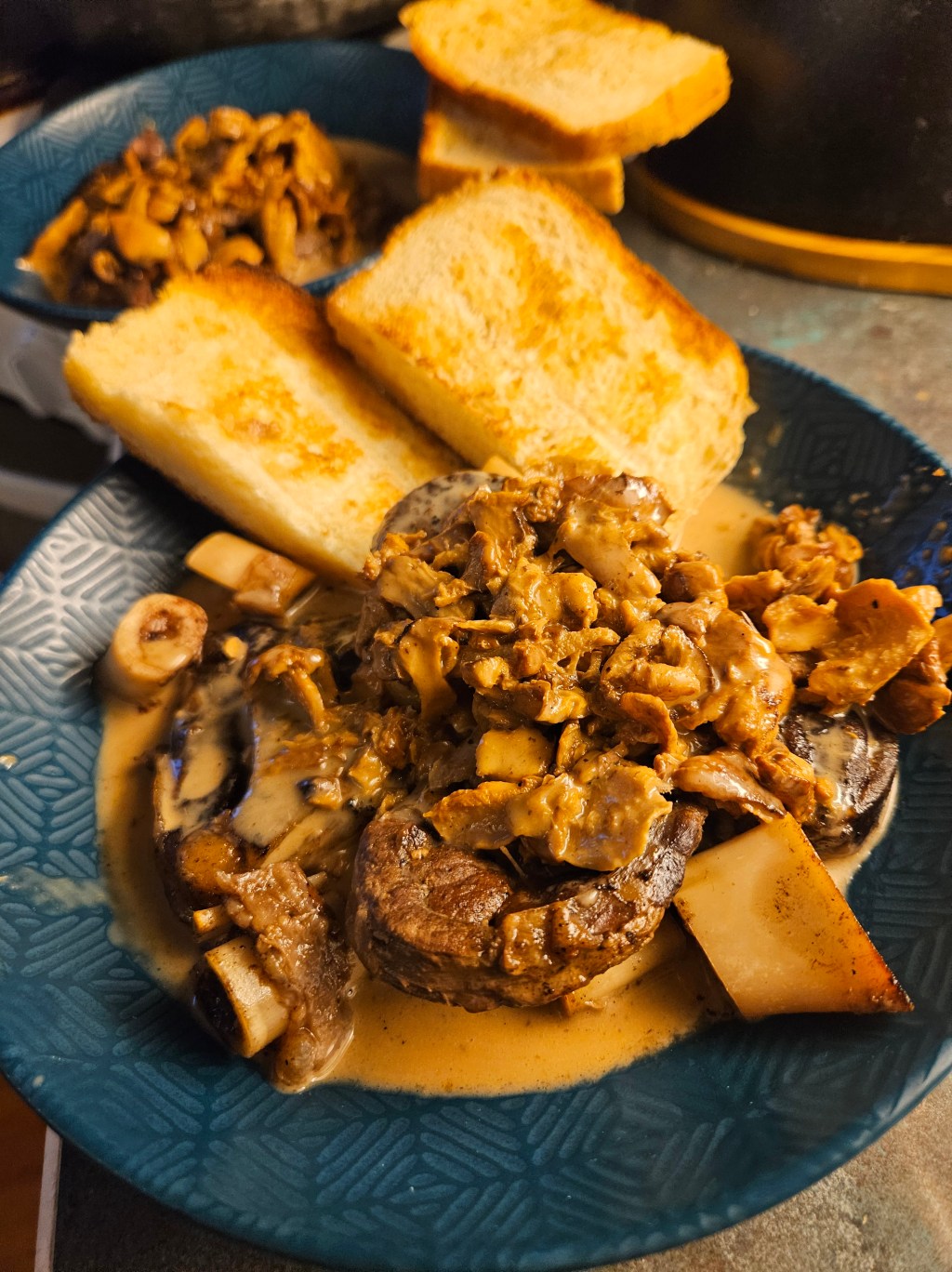
I was doing a freezer audit the other week. (There’s a longer story there involving some truly ancient beef liver and a reckoning with inherited food packrat tendencies, but that’s a confession for another day.) The point is: I found treasures. Vacuum-sealed venison osso buco from November 2024, bought through our local food circle from a university student who hunts with his father. Foraged chanterelles from autumn, fried in butter the day I picked them and frozen in little golden nuggets. A friend’s homemade berry wine I’d traded for with strawberry runners from the garden.

And suddenly I knew what dinner was going to be.


Here’s the thing about living somewhere long enough: your pantry starts telling the story of your life there.

In California, dinner came from Trader Joe’s. Maybe Costco if we were feeling ambitious. The ingredients had no biography beyond “aisle seven” and “on sale.” Which is fine! That’s how most people eat, and there’s nothing wrong with it.

But nearly fifteen years into Finland, my freezer reads like a local census. The venison came from a kid paying his way through university by selling what he and his father hunt – I bought a whole deer in one go, so this cut was maybe €5. The chanterelles came from a three-minute walk past my driveway, which happens to be forest. The berry wine came from a friend who wanted strawberry runners from my garden.

This isn’t virtue. It’s just… accumulation. You live somewhere long enough, you start knowing people. You trade things. You learn which parts of your own backyard forest fruit in September.

And apparently, you braise it all in a Taiwanese rice cooker.

The Tatung deserves its own paragraph. My dad worked for the company in the States – they sent him there from Taiwan – and when we moved into this house thirteen years ago, he had them send me a new one. Same model my parents have been using since I was a kid. It’s not a slow cooker – it’s a steam braiser. You put water in the outer pot, your ingredients in the inner pot, flip the switch, and walk away. When the water evaporates, it pops and clicks off. That’s it. No temperature monitoring, no timers, no anxiety.

My mom made aromatic beef stews in hers – the kind I still want to learn to make properly one of these days. I’m braising Finnish forest deer in mine. The Tatung doesn’t care about nationality. It just makes meat tender.

The actual cooking is almost anticlimactic after all that provenance. Brown the osso buco in cast iron until it develops that gorgeous crust. (Don’t skip this. Don’t crowd the pan. Patience.)

Deglaze with the berry wine – it’ll sizzle dramatically, scrape up all those beautiful brown bits. Nestle the meat into the Tatung with some celery and a bay leaf, pour the wine over, lid on, switch down.

Three hours later, the house smells like a restaurant and my kid walks in asking “what’s that smell?” in a tone that is, against all odds, not suspicious.

For the sauce: those butter-fried chanterelles go into a pan, hit them with a splash of the braising liquid if you want, then pour in the ruokakerma and let it simmer until it coats a spoon.

The cream mellows everything, so taste and adjust. Finnish cooking cream is one of those ingredients I genuinely miss when I’m back in the States – it’s meant for sauces in a way American heavy cream isn’t quite.

The verdict:

My son, who is eleven and has been known to reject entire meals over Wrong Onion Energy, ate braised venison osso buco with foraged chanterelle cream sauce. His complaint? The black pepper made it “a little spicy.” His negotiation? Cherry Coke to wash it down.

Reader, that’s a win. I’ll take it.

And me? I kept the marrow bones. Chef’s privilege. If you’ve never poked osso buco marrow out with a chopstick and eaten it straight, I recommend the experience. It’s buttery and unctuous and feels vaguely illicit, like you’re getting away with something.

If you saw “Braised Venison Osso Buco with Wild Chanterelle Cream Sauce” on a restaurant menu, you’d expect to pay €35 minimum. This cost me about €5 for the venison (bought in bulk, whole deer), maybe €2-3 in cream and seasonings. The chanterelles were free if you don’t count the walking, which I don’t, because that’s the point. The wine was traded for plants I was going to dig out anyway. The Tatung has been earning its keep for thirteen years.

But the real currency isn’t euros. It’s time. Time in a place. Time building the life that puts hunted venison in your freezer and foraged mushrooms in your butter and your friend’s wine in your braise.

This dish doesn’t have a nationality. Finnish ingredients, Taiwanese equipment, Californian cook. It just has a biography.

Mine, apparently.


Tatung Braised Venison Osso Buco with Chanterelle Cream Sauce

Serves 2-3 hungry people

For the braise:

  • Venison osso buco, ~600-700g
  • Red wine, ~½ cup (for deglazing)
  • Water, 1 cup (for Tatung outer pot)
  • Meat bouillon cube, 1
  • Celery, 2-3 stalks cut in chunks
  • Bay leaf, 1
  • Salt and pepper
  • Oil for browning

For the chanterelle cream sauce:

  • Chanterelles, fried in butter (fresh or frozen)
  • Ruokakerma (Finnish cooking cream), ½ to ¾ cup
  • Splash of braising liquid
  • Salt and pepper to taste

Method:

Brown the osso buco in a hot cast iron pan – 2-3 minutes per side until you get a proper golden crust. Work in batches. Patience.

Deglaze the pan with wine, scraping up all the fond.

In your Tatung (or slow cooker, or Dutch oven at 150°C): add water and bouillon to outer pot, nestle meat in inner pot, pour wine over, tuck celery and bay leaf around. Lid on, switch down. Walk away for 2.5-3 hours.

For the sauce: warm the butter-fried chanterelles, add a splash of braising liquid, pour in cream, simmer until it coats a spoon. Season to taste.

Serve over crusty bread. Keep the marrow bones for yourself.

The Great Hawaiian Bread Disaster (A Comedy of Errors in Four Loaves)
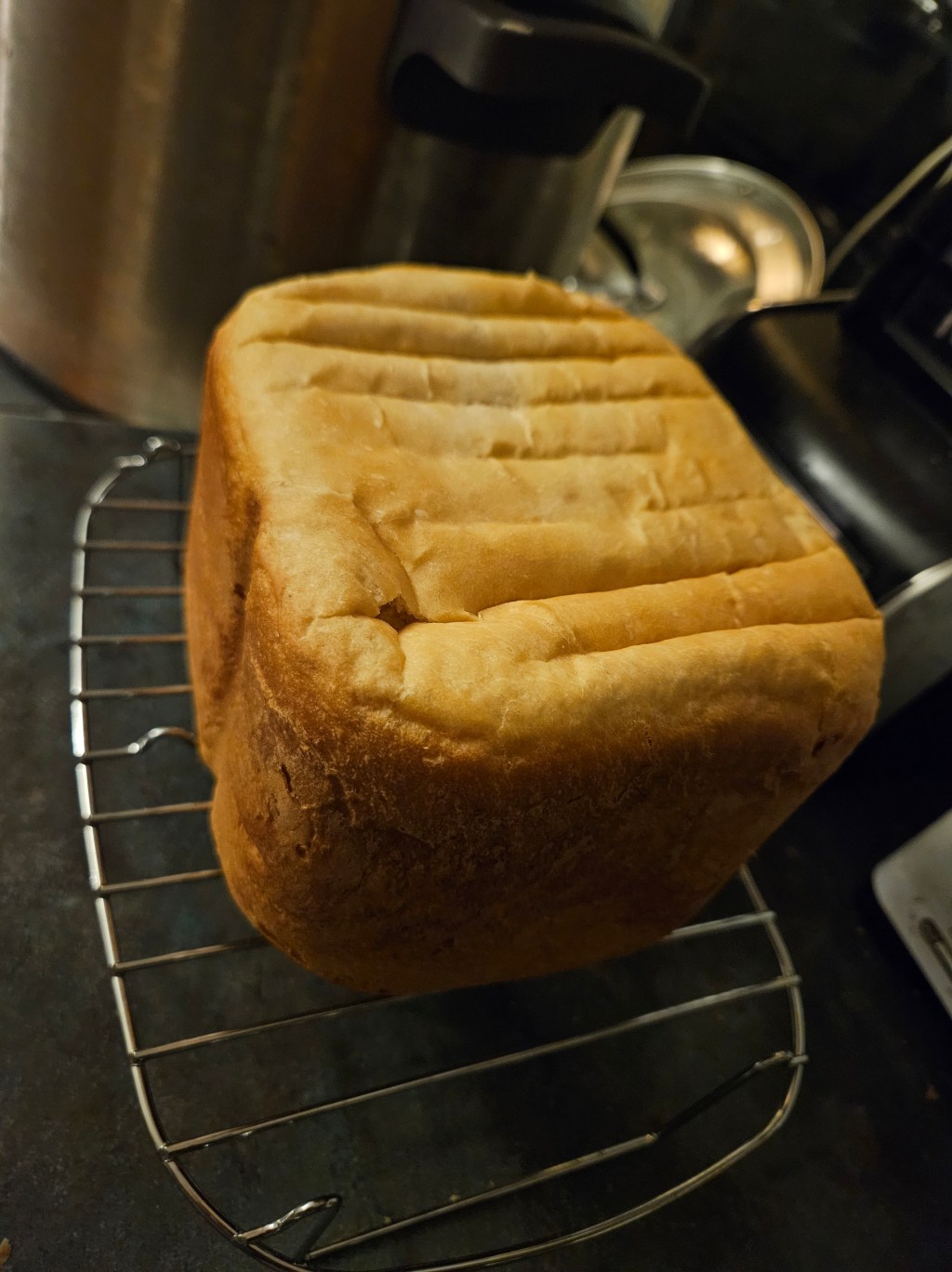
I wanted Hawaiian bread. That soft, slightly sweet, pull-apart stuff that makes excellent toast and even better French toast. I had a bread machine, I had a recipe, I had enthusiasm. What I did not have, apparently, was the ability to measure liquids correctly.

But I’m getting ahead of myself.

Attempt 1: The Brick

The recipe called for pineapple juice, butter, and milk. I had none of these things, because I live in the Finnish countryside and sometimes you just work with what’s in the house. So: homemade apple juice instead of pineapple. Oivariini (a Finnish butter-margarine hybrid, about 60% fat) instead of actual butter. And ruokakerma – Finnish cooking cream – instead of milk, reasoning that the extra fat would make up for what the Oivariini was missing.

Reader, it did not.

What came out of that bread machine was… bread-shaped. It was edible. My family ate it without complaint, because they are kind people who know better than to criticize free carbs. But it was dense. Tight crumb. More sandwich loaf than Hawaiian cloud.

I texted my baking buddy. “It’s dense,” I reported. “What did I do wrong?”

And this is where things went sideways.

The Research Phase (A Tragedy in Three Acts)

My baking buddy and I are both the type of people who, when faced with a problem, want to understand why. This is usually a good trait. This time, it was our downfall.

“It’s probably the fat ratios,” my buddy said. “Oivariini has less fat than butter, and you’re using cream instead of milk, so you’ve got this weird imbalance…”

“Finnish flour is different,” I added, because I’d been living here long enough to know that things just are different sometimes. “Higher protein content. It’s basically pulla flour.”

“PULLA,” my buddy exclaimed, with what I can only describe as excessive enthusiasm. “Finnish sweet bread needs more hydration because of the flour! That’s probably it!”

We were very pleased with ourselves. We had theories. We had understanding. We were going to nail this.

Attempt 2: The Crater

Armed with knowledge, I made adjustments. Different fat ratios. Attention to hydration. Confidence.

The bread rose beautifully in the machine. I could see the dome through the little window. And then, somewhere in the baking phase, it just… gave up. Collapsed inward like a failed soufflé. The inside was soggy. The crust had divorced itself from the crumb and was just sort of hovering there, a sad roof over a sadder interior.

“It’s worse,” I reported.

“HOW IS IT WORSE,” my buddy replied.

We troubleshot. We theorized. We discussed protein content and gluten development and enriched dough cycles. Finally, my buddy offered:

“It probably still tastes fine, just… architecturally challenged.”

Attempt 3: Getting Warmer (But Also Colder)

We regrouped. More research. We talked about gluten development. We talked about Finnish dairy products at length – the differences between laktoositon maitojuoma and actual milk, the water content of various butter substitutes, whether the enzymes in pineapple juice actually mattered for texture. We were practically writing a thesis.

“Houston, we have a problem?”

Another collapse. Another crater. BUT – and here’s the thing we should have paid more attention to – the actual texture of the bread, in the parts that weren’t underbaked soup, was fluffy. Light. Exactly what I’d been going for.

“It’s so close,” my buddy said. “The texture is right, the structure just can’t hold it. We need to reduce the liquid.”

“But I already reduced the liquid from attempt two…”

And then, finally, after three loaves and approximately nine thousand words of troubleshooting, one of us said:

“Wait. What does the recipe actually call for?”

The Revelation

My buddy put it best, later:

“At least we figured it out before attempt 7 when you’d already written the blog post blaming Finnish flour protein content and I’d created a whole conversion chart for American dairy to Finnish dairy that was TECHNICALLY CORRECT but COMPLETELY BESIDE THE POINT.”

Because that’s exactly what happened. The bread was screaming at us the whole time:

Bread: I’M WET

Us: Hmm yes but is it the gluten development or perhaps the enriched dough program that’s causing—

Bread: I’M SO WET

Us: —the structural instability, you see Finnish hiivaleipäjauho has approximately 11-12% protein whereas—

Bread: I AM LITERALLY SOUP

Us: Fascinating, let’s try a different flour.

The recipe called for about 300ml of liquid total. I had been using 430ml.

No wonder it kept collapsing. I wasn’t making bread, I was making batter.

To summarize:

  • 1.0: Learning
  • 2.0: Learning harder
  • 3.0: Learning while drowning
  • 4.0: BREAD

Attempt 4: Actually Reading the Numbers

I measured the liquid. The actual amount. 300ml. I put everything in the bread machine and closed the lid and my baking buddy and I held our collective breath for three hours.

The dough looked different from the start – smoother, tighter, not the shaggy wet mess of the previous attempts. An actual ball of dough, pulling cleanly away from the sides of the pan. When the baking phase started, the smell was incredible. Buttery and sweet.

It faceplanted on the cooling rack when I tipped it out, because of course it did, but WHO CARES. Look at that dome. Look at that color. Look at that actual, structural integrity.

It’s soft. It’s sweet but not too sweet. It squishes like Hawaiian bread is supposed to squish.

My husband ate two slices before I could even put it away. My kid ate it like it was from the store, and not like he was doing me a huge favor by consuming my failures. Which is the only review that matters.

What I Actually Learned

So here’s the thing: all that research wasn’t wrong, exactly. Finnish flour IS higher in protein. Oivariini IS different from butter. The dairy substitutions DO matter. I now know a lot about adapting enriched bread recipes for Nordic ingredients, and that knowledge will be useful next time.

But none of it mattered because I hadn’t done the basic thing first.

It’s very easy, when you’re living somewhere new and everything feels slightly unfamiliar, to assume that your problems must have complicated explanations. Of course my bread isn’t working – Finnish ingredients are different! Finnish flour is different! I need to understand the system before I can succeed!

Sometimes, yes. And sometimes you just need to measure the milk.


The Recipe (As It Actually Works)

For the bread machine, 750g loaf, sweet bread setting

ADAPTED FOR FINNISH INGREDIENTS

Original recipe inspiration: https://www.behappyanddogood.com/super-soft-bread-machine-hawaiian-bread/

Ingredients:

  • 3 cups puolikarkea vehnäjauho (9-10% protein – NOT hiivaleipäjauho!)
  • ~180ml fruit juice (apple, pear, or pineapple)
  • ~120ml dairy (100ml Eila 1.5% lactose-free milk + 20ml ruokakerma)
  • 1 egg
  • 57g butter, room temperature
  • 50g sugar (¼ cup)
  • 1 tsp salt
  • 2 tsp instant yeast

Total liquid: ~300ml. This is critical.

Add wet ingredients first (juice, dairy, egg), then butter, then dry ingredients with yeast last in a little well. Run the sweet bread cycle. Check the dough after 5-10 minutes – it should form a smooth ball pulling cleanly away from the sides. If it looks like batter, you have too much liquid.

Remove from pan IMMEDIATELY when done. It will probably faceplant. The structure holds anyway.

For American bakers: you can probably just follow the original recipe. This adaptation is specifically for Finnish ingredients.

My Favorite Matcha Smoothie (Or: How I Learned to Stop Worrying and Drink from the Blender Cup)
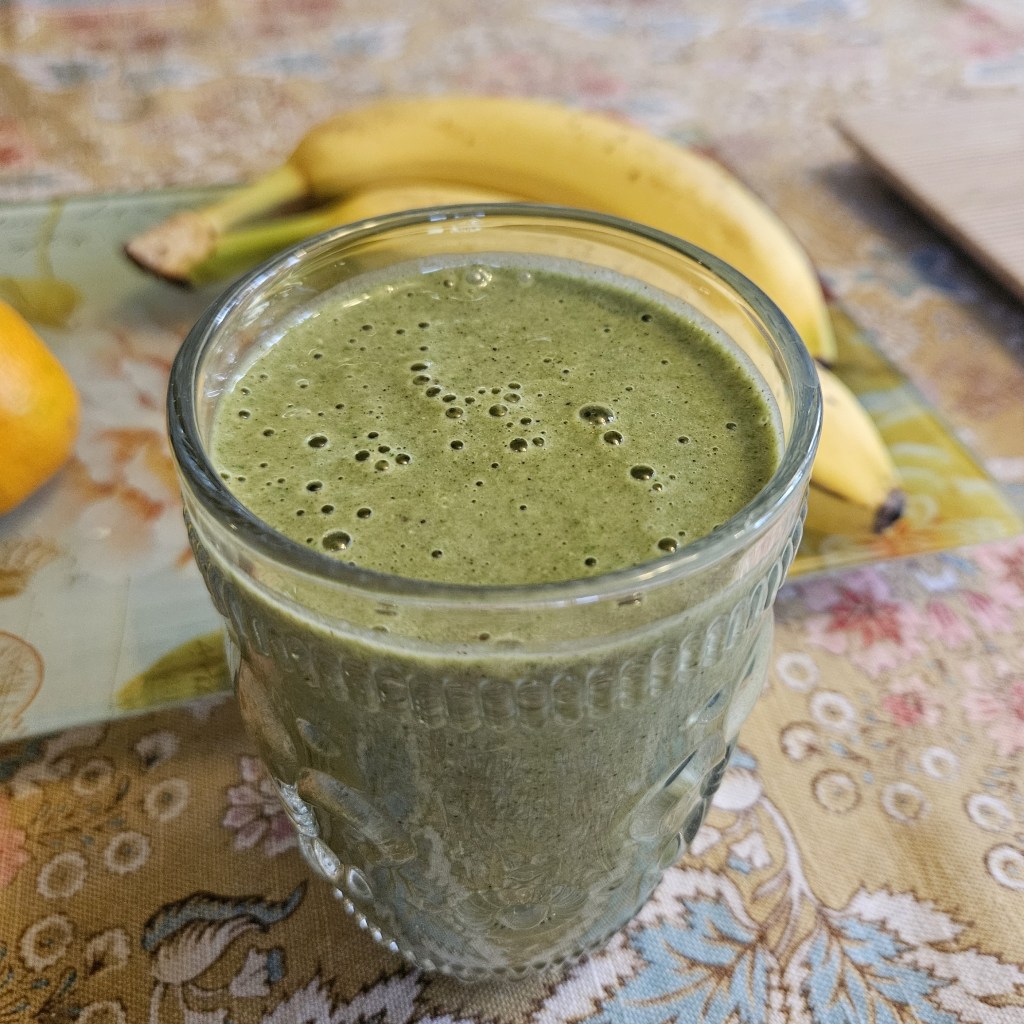
Full disclosure: this is probably the first time I’ve poured a smoothie into an actual glass in years, but blogs require pretty pictures, right? If we’re being real, I just chug this straight from the blender cup when I’m done because why the hell else would I buy them in that format?

I have a thing for smoothies. Always have, but you’d expect as much given my past. I also tend to get really obsessed with certain ones and have them on repeat for weeks on end, which seems to be my current situation with this banana matcha smoothie. I’ve even started adding the occasional splash of lavender syrup, just to give it that coffee shop flourish. Because really, the closest Starbucks is three hours away, and although it brings back fond memories when I see one, I’m not that devoted to the chain.

This one in particular is great because it actually keeps me full until lunch – so much so that I can pass by my son’s jars of breakfast cereal without wanting to pour myself a bowl. Which, if you knew how I feel about cereal, you’d understand is a significant achievement.

The Sourcing Problem

The one thing I’d like to improve upon with this recipe is sourcing. You know how they say you should always grow what you’ll eat in the garden? Next year, spinach is rocketing up to the top of my list next to strawberries and potatoes for things to plant enough of to last the year, because I’m going through frozen spinach like a Finnish winter goes through daylight hours. It would be so fulfilling to know I’m supplying my own, though I know it’s not particularly expensive. We have room in the garden and I need the motivation, so it works.

But enough philosophizing about spinach. Want to see the recipe?

The Base

  • 1 cup oat or almond milk
  • 1 tsp matcha powder
  • ¼ cup rolled oats
  • ¼ cup vanilla protein powder
  • 1 banana (sometimes frozen, sometimes fresh)
  • 4 cubes frozen spinach

Add-ins (as many or as few as you’d like – indulge your inner mad scientist)

  • 1 tbsp hemp powder (gives it depth and nuttiness which goes well with matcha)
  • 1 tbsp chia seeds (I’ve found this makes the taste a bit sharper, but do enjoy the thickened consistency)
  • 1 tbsp lavender syrup (for when going out for that matcha latte isn’t gonna happen)

Notes

I’ve used ¼ cup powdered milk with 1 tbsp vanilla sugar when out of protein powder before, and would totally do it again if I had any need to use it up. It gave a nice creamy consistency but changed the nutritional profile a bit.

Directions

Pop in ingredients in the order given, whiz until drinkable, give it a good shake to make sure there’s no powder gunked in the corners to surprise you, enjoy a fast and actually healthy breakfast.

(And then, if you’re me, drink it straight from the blender cup while standing at the kitchen counter, contemplating how happy you are not to have to do more dishes.)

Dandelion Jelly Time

For the past few years, I have been looking forward to the end of May because it means… jelly-making time! We’ve always observed an unofficial sort of No-Mow May, if only because things don’t really dry out and start growing until June anyway. Even the weeds take a while to get going this far north, so there doesn’t seem to be any point in fueling up the mower. Meanwhile, our lawn got a lot of impatient glares as I kept peeking out to see if there were enough fluffy yellow blooms yet to warrant getting out of my jam jars.

And finally, at the end of last week, there they were! Which was good, because our supply from last year was just about depleted. Out of all the flower jellies I have experimented with, dandelion was the only one that leaped to “be sure to make enough to last for the year” status. It tastes like honey, but in a scoopable jiggly format, which makes it especially kid-friendly.

There are tons of recipes online for making floral jelly, so I’m not going to format one here. My food blog days are far behind me and this is mostly a diary to share with family and friends. Also, I use a mishmash of US and EU measurements that I’m sure will annoy people on both sides of the Atlantic.

Right! I make my infusions in 1.8L IKEA jars because we have so many of them around for storing dry goods. Each one gets 4-4.5 cups of dandelion petals. I think one of the best parts of making this jelly is sitting in a patch of flowers on a sunny day, lazily plucking petals and listening to audiobooks.

Once the jar is full, it’s filled with boiling water and steeped for 24 hours. It gets moved to the fridge after it cools down a bit. Actual cooking process, speed run: 8 cups infusion, 1.5 teaspoons citric acid, 35g pectin powder, and 7 cups sugar. With bulk pectin powder, I find it easier to mix half the sugar and all the pectin in a shaker, then slowly stir it into the warm infusion. Everything dissolves so much easier that way. When the liquid is looking smooth, turn the heat up and stir in the rest of the sugar, then let it boil for one minute. Meanwhile, the hot water canner is warming up the jars and the lids, which are then pulled out just in time to be filled with jelly. They are processed for 10 minutes, then tucked away in the root cellar to set and store.

What do we use all that jelly for? Sandwiches, mostly. I also like it in porridge and yogurt. The picture above is of homemade peanut butter and dandelion jelly sandwiches from a couple of summers ago. Which reminds me, I really should be make more bread this summer…

A Weekend Project

So. Much. Storage.

Root cellars. I love the idea, but in practice, it’s taken me a bit longer to get the hang of them. Like all farmhouses of a certain age, ours had one built into the basement as a matter of course. We saw it, along with a vintage loom and spinning wheel, while poking around downstairs very early on. Then I sort of let that knowledge drift to the back of my mind for the next several years. It was always either too cold, too dark, or too damp to feel like making a trip down there, it seemed. Especially when there was a perfectly serviceable pantry and freezer to store most of our food in.

Then I started getting into making juices and jams from all the fruit we would pick every autumn and before I knew it, there was no more room on the shelves in the kitchen and my jars had started taking up an alarming amount of space in the laundry cabinet. Add to that a particularly generous haul of potatoes from the garden this year, and I was in dire need of storage space. It was time to rethink the root cellar.

I cleaned up a bit before the delivery guy got there, so this isn’t even that bad anymore.

As you might imagine, the place didn’t look too hot after a few-cough-several decades of neglect. Luckily, we are talking about what is basically a hole in the ground. In this case, a quick sweeping of the walls and floor pretty much got it into serviceable shape.

Courtesy of a certain Nordic furniture and home goods superstore.

I went with a sturdy-looking outdoor shelving unit made from acacia wood, making sure it was expandable since I fully plan to line all the walls in the next few years. One day spent building, then the next was spent scurrying up and down the stairs, feeling like a very industrious hamster amalgamating my stash.

At the time of writing, I have only about half the shelves filled. There is still a harvest of carrots to bring in and some apples to wrap up, so that will be taking up more space in the weeks to come. How this will all hold up during the winter, when temps drop well below freezing, will be the real test. Not for the root cellar, perhaps, since it has been here for better part of a century, but definitely for me getting down there to grab things for daily use. Hopefully, making it a little more organized will help!

The view from the other corner, showing the double wooden doors for extra insulation.